
TOPIC FOCUS
Turn review findings into controlled decisions
Record each issue against the affected revision, identify the owner and disposition, update source files consistently, and retain the evidence used for release.
Production readiness depends on a frozen design package, documented return paths, thermal and mechanical constraints, fabrication and assembly rules, verification coverage, and controlled change approval.
Record each issue against the affected revision, identify the owner and disposition, update source files consistently, and retain the evidence used for release.
A DFMA checklist cannot replace project review. Product use, stackup, components, enclosure, assembly route, programming, test access, compliance, and reliability requirements determine the applicable checks.
Use this topic-specific checklist with the linked engineering reference. Record the actual project conditions and the agreed acceptance scope.
| Decision | Input to confirm | Record to retain |
|---|---|---|
| Design release | Source files, firmware, BOM and drawings | One revision-controlled handoff |
| Open issues | Fabrication, assembly, thermal and test findings | Owner, decision and closure evidence |
| Pilot decision | Verification coverage and approved changes | Release record for next build |
These records provide context for the topic. They do not replace review of the current files, materials, quantities, tests, or acceptance conditions.
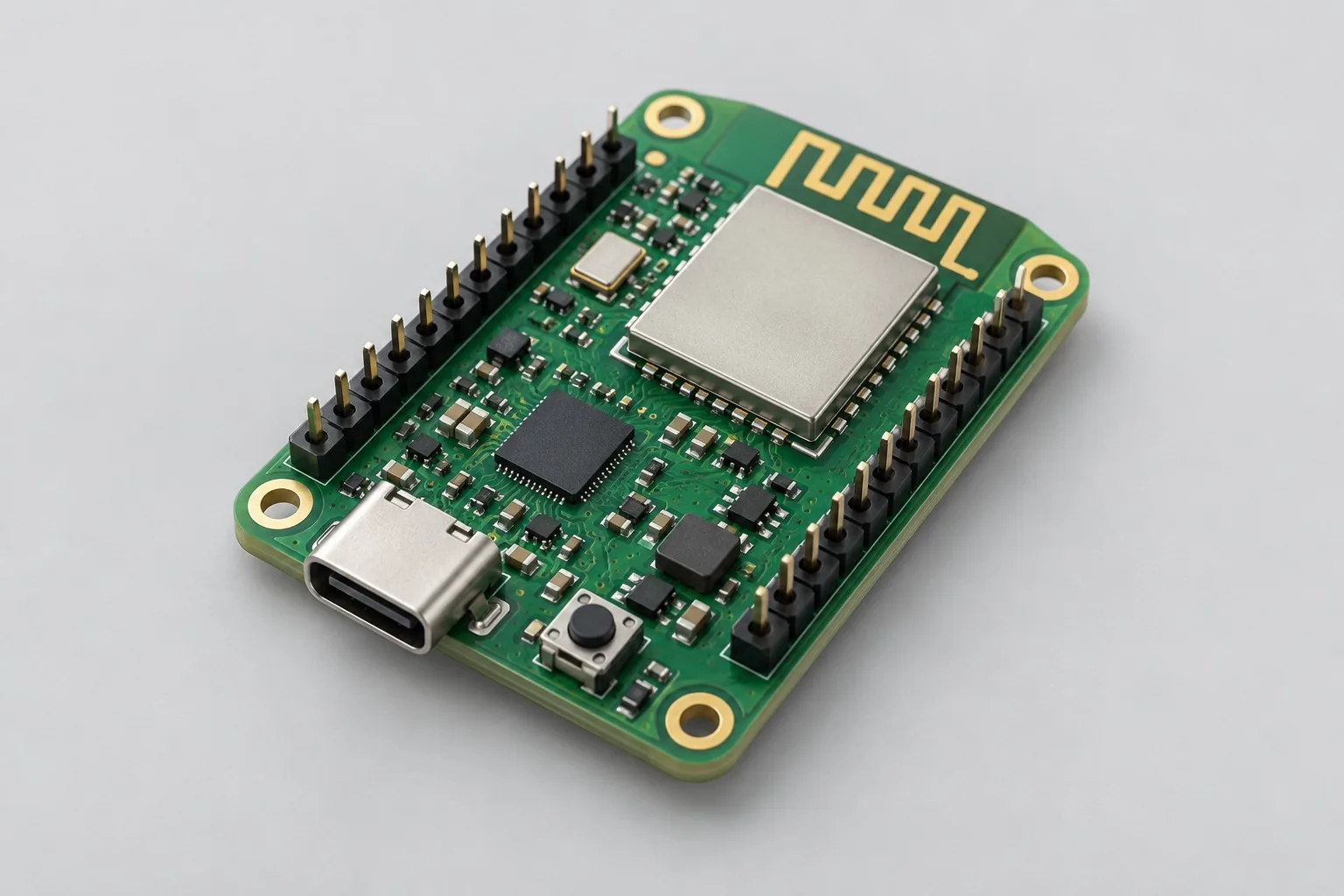
WiFi/Bluetooth core board design: for the 35mm by 30mm target, UART/SPI access, and actual enclosure, define two work packages. Module versions check antenna clearance and bridging; IC versions add crystals, matching, and RF debugging. Align prototypes, network configuration, and in-enclosure communication tests before comparing development effort and subsequent materials, rather than module/IC prices alone.
A compact wireless-board design reference for connecting routing and assembly constraints.View Configuration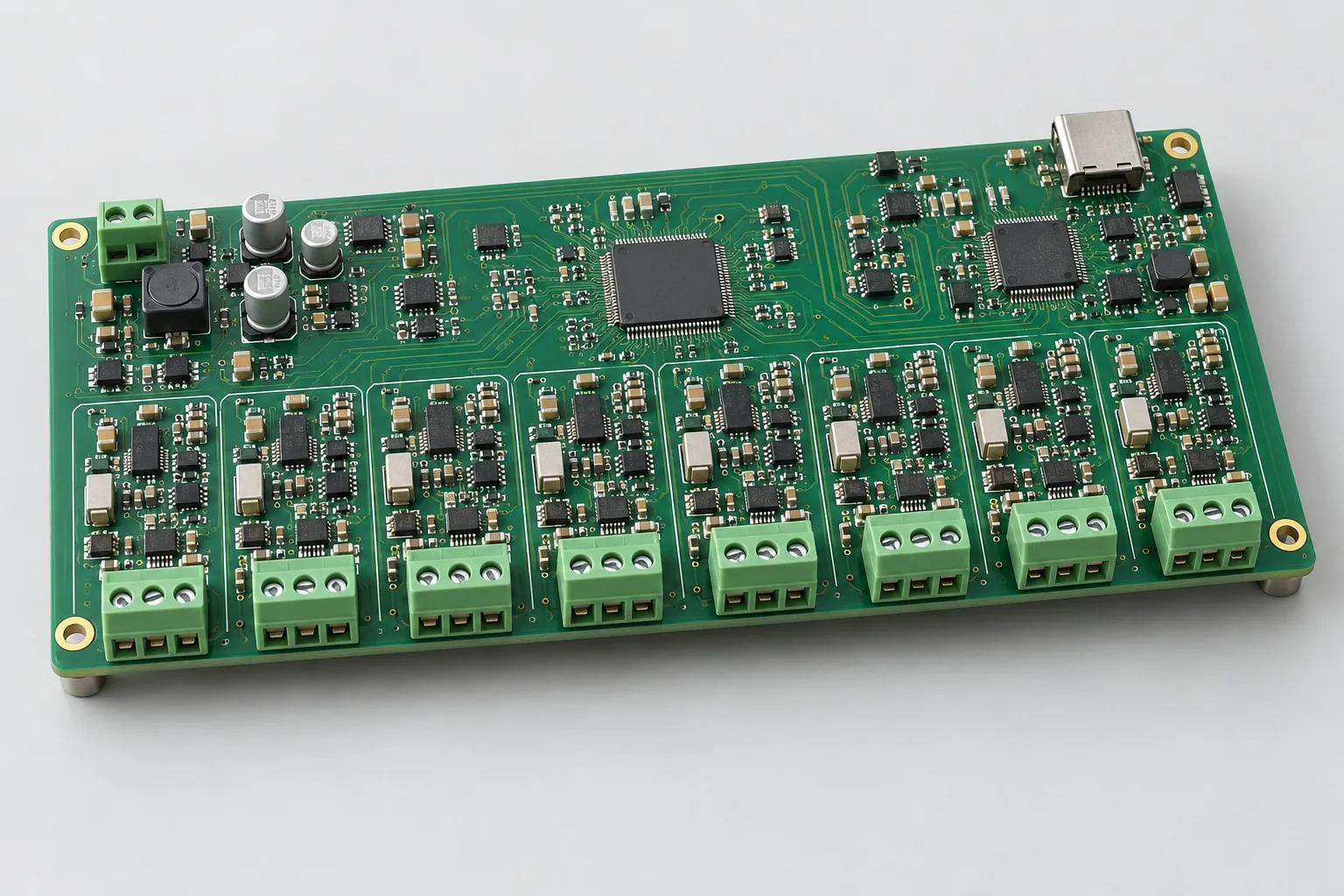
Eight-channel simultaneous acquisition board design: request separate quotations for eight front ends/error budgets, common clocks, SPI buffering/upload, and per-channel calibration. 8kSPS per channel is a reference target; align input ranges, storage formats, and upload endpoints when comparing quotations. PCB-only work cannot be compared directly with development including host calibration software.
An acquisition-board design reference for reviewing signal, power, and verification needs.View Configuration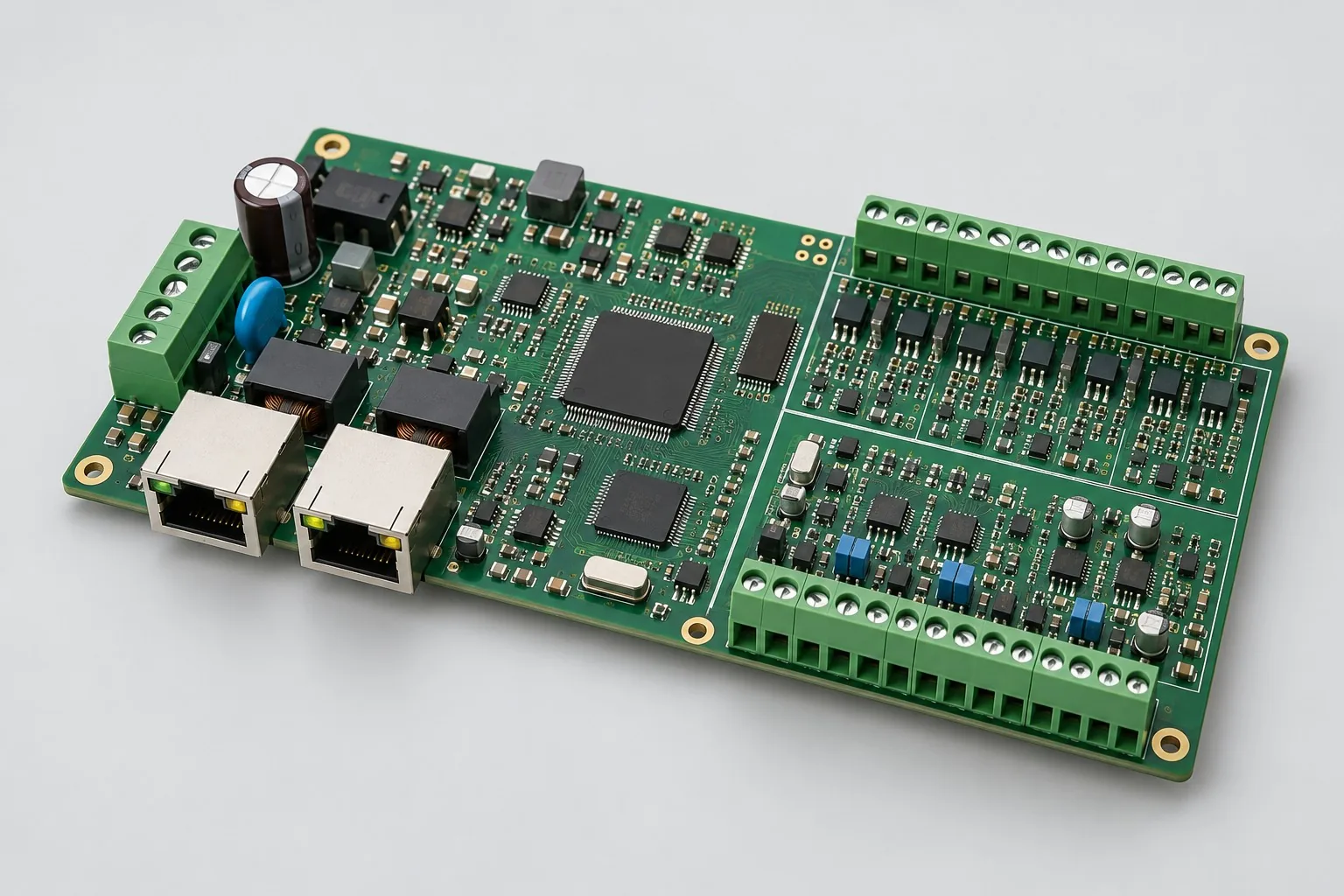
Industrial Ethernet control board design: list endpoints and tasks for reference 1-port 10/100M, 2-port RS485, optional CAN, and 8 inputs/4 outputs. Hardware includes input protection, PHY, and field I/O; software includes protocols, logs, and rollback. Quote network-saturated/concurrent-load prototypes separately rather than estimating all industrial development from one Ethernet port.
An industrial Ethernet design reference for coordinating interfaces and production data.View Configuration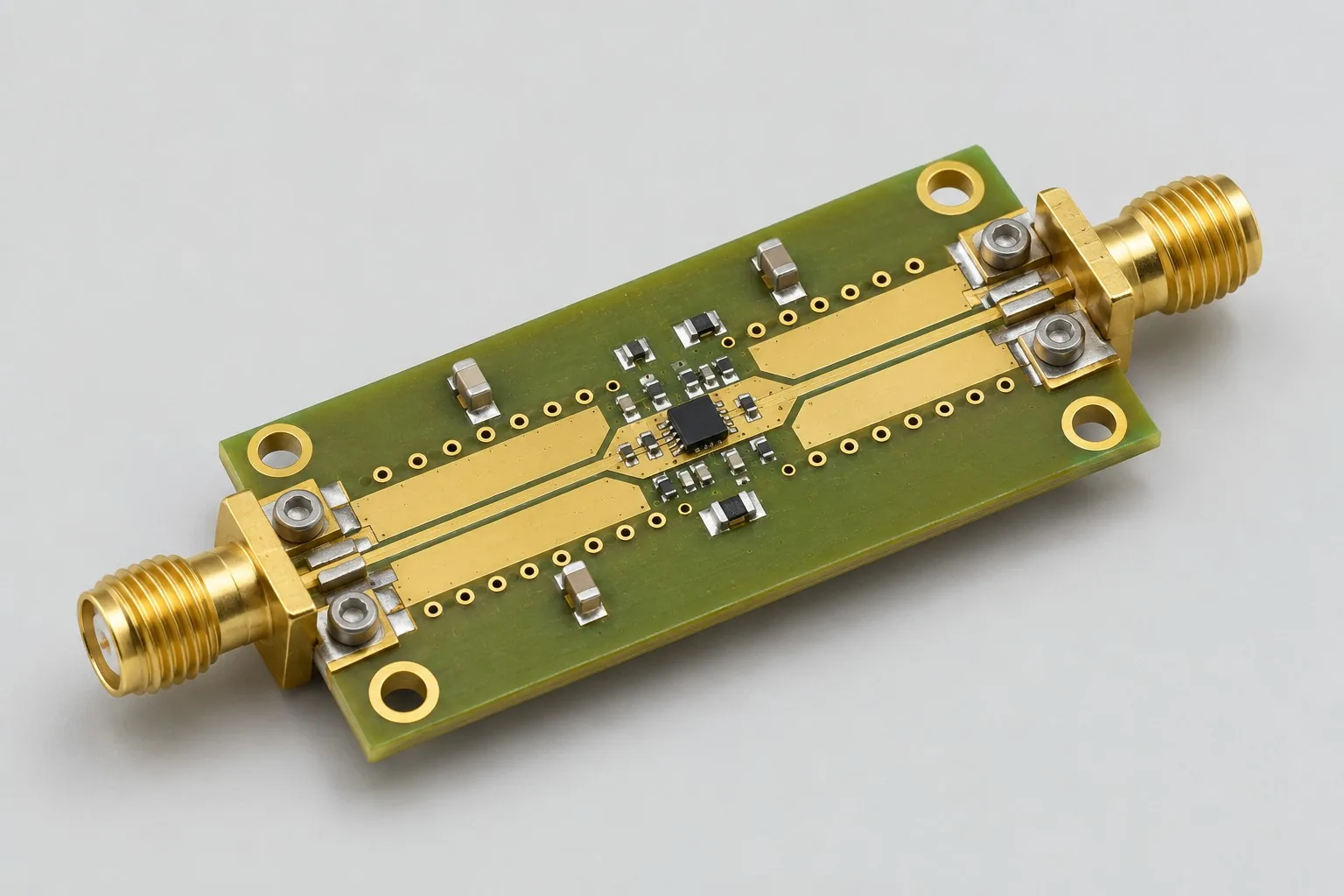
5.8 GHz microwave PCB design: first commission 5.8GHz passive through paths, port transitions, and same-board reference structures, then insert filters for comparisons at identical reference planes. Active-gain extensions require separately selected in-band devices, biasing, and stability tests. Quote all three work packages separately; obtain comparable loss data before expansion so passive pricing is not mistaken for active-system pricing.
A microwave-board design reference where layout, material, and fabrication review are linked.View Configuration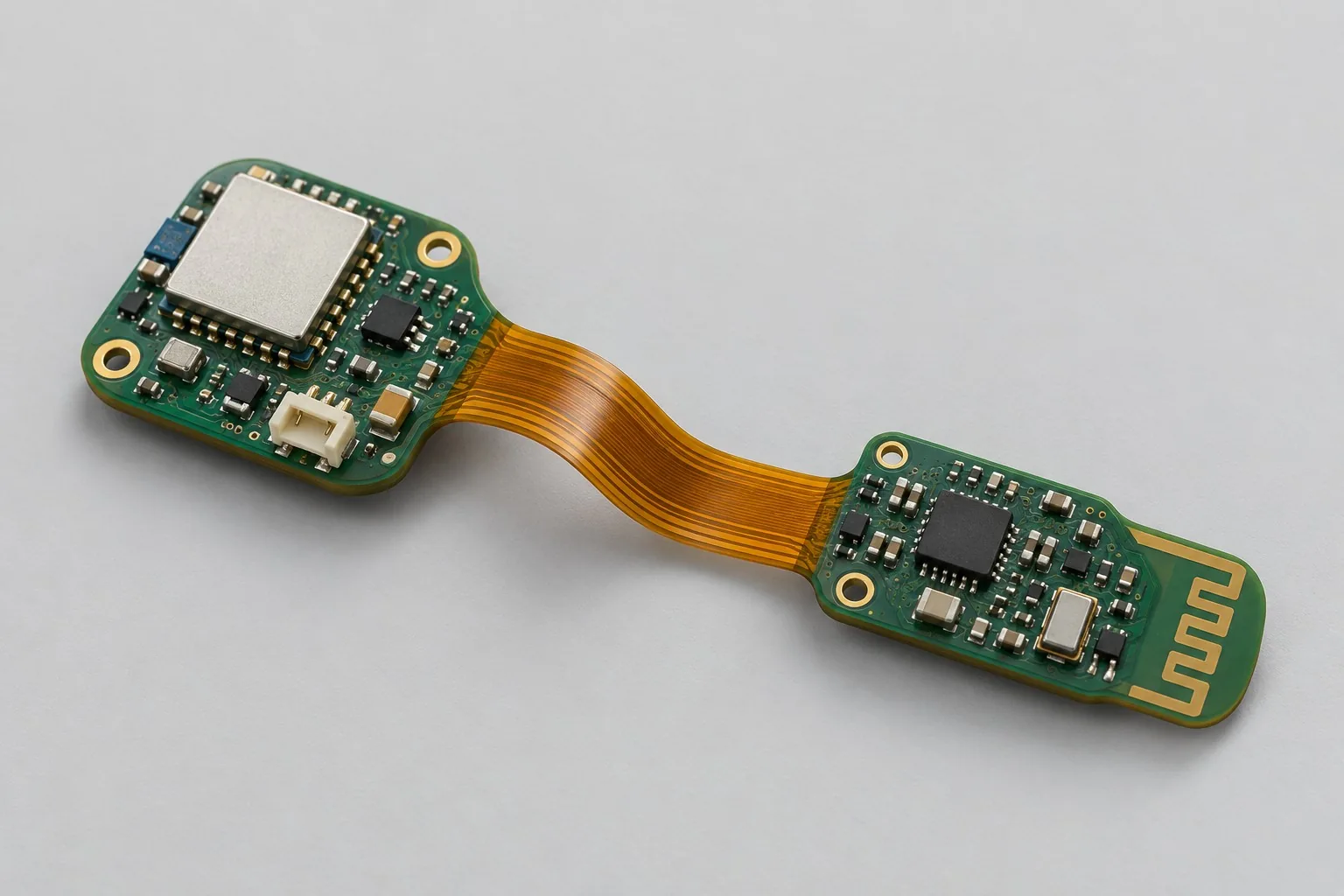
Wearable rigid-flex design: bundle basic motion acquisition, Bluetooth, and single-cell lithium power; separately list optional GNSS, charging structures, and system battery-life tests. Rigid 4-layer/flexible 2-layer construction awaits joint review. Confirm static forming/worn-position verification first; do not ambiguously bundle dynamic lifetime, positioning, and system tests into one rigid-flex fee.
A wearable rigid-flex design reference for mechanical, fabrication, and assembly coordination.View ConfigurationUse this reference to check the essential inputs, then continue to the articles for specific methods and exceptions.
This checklist adds cross-process issue tracking, approval authority, manufacturing-release gates, and change-regression scope. Via-in-pad, material-substitution, and test-access examples explain how fabrication feedback updates design/first articles, preventing revision conflicts after local issue closure.
Read Topic ReferenceFive articles are shown per page, newest first. Page 2 of 2.
Compare related decisions. Browse all engineering topics
Share the available fabrication files, BOM, drawings, quantities, target schedule, test scope, and acceptance requirements. The response will be based on the actual project conditions.

Tell us the product use and which files are available. We can define the next engineering step even when the data package is not complete.