FR4 PCB fabrication: structures for loads, analog circuits, and power distribution
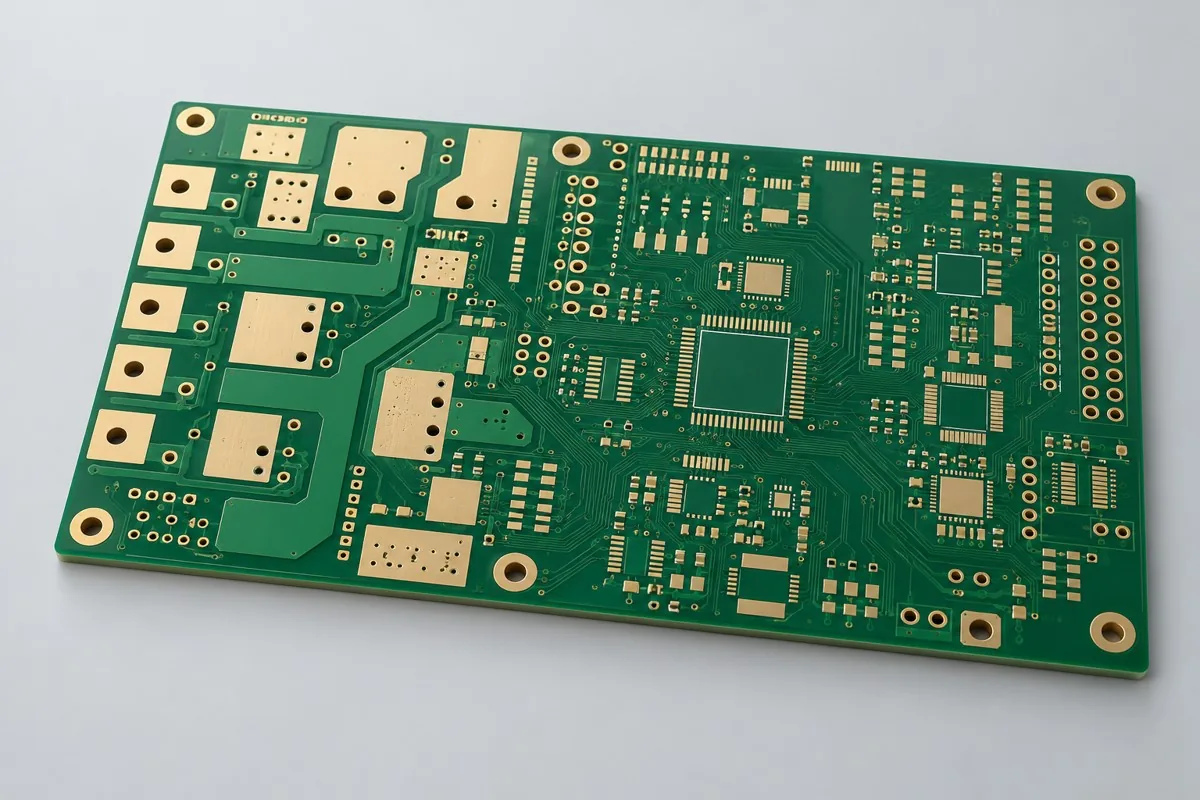
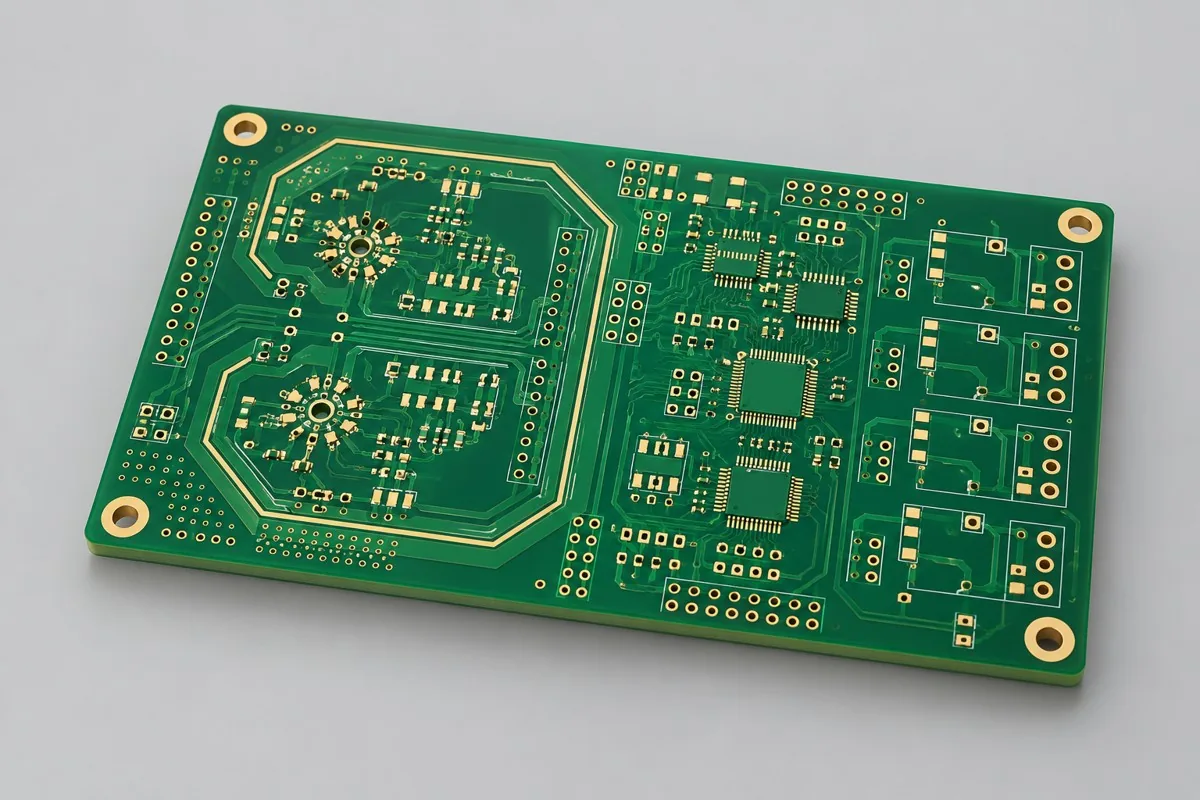
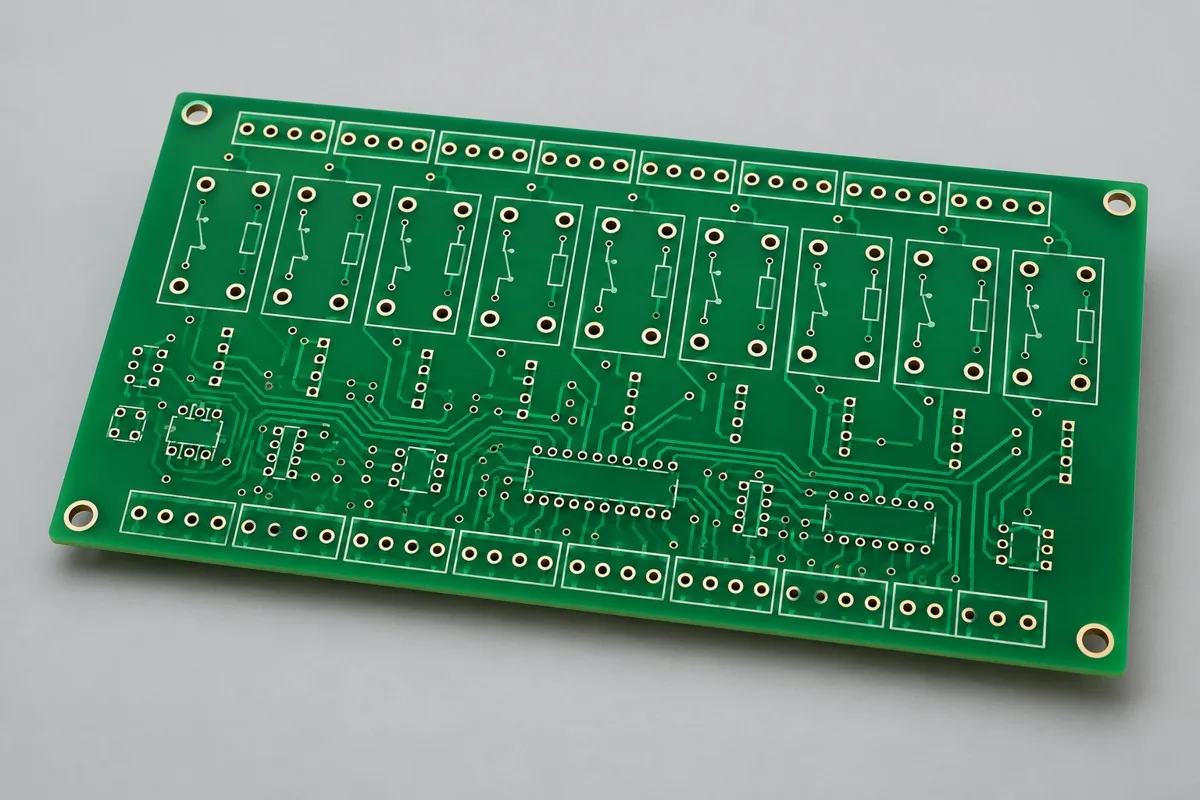
FR4 bare-board procurement starts with circuit tasks to determine structure: relay boards need load-related holes and slots, analog acquisition boards need guard rings and grounding, and power/digital boards need copper weight and via arrays. Provide corresponding nets and fabrication drawings for quotation, with material, hole-diameter, and electrical-test records delivered; reference thicknesses do not replace order-specific approval.
Ordinary FR4 also requires specific manufacturing drawings
Relay boards focus on through-hole component holes and isolation slots, analog boards on high-impedance areas and return paths, and power boards on copper weight/thermal paths. Generic laminate specifications cannot replace each product's approved requirements.
FR4 fabrication: hole, guard-ring, and copper-weight drawings
After selecting a product in this category, submit through-hole component holes, isolation slots, high-impedance guard rings, layer-by-layer copper weight, and return-path boundaries. Match each change to the Engineering Reference Configuration, using the same revision for fabrication drawings, inspection locations, and material approvals; define specialized verification and report scope before quotation.
Back to all PCB products · Manufacturing file knowledge
Material and Process Reference
Consult selected PCB configuration
How should I choose double-sided, four-layer, or six-layer FR4 boards?
Selection priorities for double-sided relay boards, four-layer analog acquisition boards, and six-layer power/digital boards are load paths, sensitive return paths, and multi-interface reference planes respectively. More layers do not automatically improve function, and fewer layers do not necessarily lower system cost.
How should layer counts be determined for relay, analog acquisition, and gateway boards?
Check return paths, power, and interface density while ensuring routability. If reducing layer count on a complex board adds jumpers, patch wires, or debugging costs, compare complete project costs.
FR4 PCB pricing and selection FAQ
How much do FR4 PCBs cost? Choosing two, four, or six layers
A project-specific quotation requires review of the available files, quantity, materials, requested tests, delivery destination, taxes, shipping, and trade terms. Add specified materials, processes, and inspections not yet included to the total cost. Standard board references do not cover every configuration of this product. Any formula on this page organizes cost inputs; it is not a quoted rate.View cost items, calculation conditions, and sources.
How should I compare quotations from FR4 PCB manufacturers?
Align materials, layer count, and hole tables, then compare electrical testing and panel quantities. Relay loads, analog return paths, and multi-interface reference planes differ; a low-layer-count board price does not directly establish the lowest project cost.
Besides layer count, what material information does an FR4 quotation need?
Specify grade or permitted range, board thickness, copper, and surface finish, with a complete hole table. The generic FR4 label cannot define stackup or thermal/impedance conditions.
What procurement details must be reconfirmed when changing from two to four layers?
Approve each layer's role, reference planes, and via connections first, and use the new revision for manufacturing and inspection. Added layers do not automatically upgrade functionality; prototype regression testing follows affected nets.
Does a low FR4 board unit price include jumper assembly?
Bare-board quotes exclude component and jumper assembly. Calculate fabrication, assembly, and application verification separately to prevent manual assembly from offsetting savings from fewer board layers.
If alternative FR4 materials are allowed, how can I prevent suppliers from quoting different boards?
List permitted candidates and required stackup, thermal, and electrical conditions, with itemized responses for substitutions. Compare total costs after approving the same manufacturing package.
Consult FR4 PCB quotation: describe the application, existing configuration, and expected quantity so we can discuss bare-board fabrication requirements, inspection, and delivery conditions.
How much do FR4 PCBs cost? Choosing two, four, or six layers
Quotes should separately account for specified materials and board thickness, layer count and hole structure, surface finish and electrical testing, panel quantity, and engineering preparation. List initial-order setup charges separately from per-batch and per-board charges; for equal quantities, also align revisions, delivery configurations, and tax and freight terms to identify whether price differences reflect configurations or excluded work.
Quotation terms depend on the approved files, quantity, material supply, tests and delivery requirements.
Prepare a structured RFQ or use the short inquiry form.