Why does low-volume PCB assembly cost more per unit? Allocating prototyping costs
Quotes should separately account for each revision's stencil and first article, feeder loading, line changeovers and small-package handling, prototype fixtures and calibration, and firmware and testing for different variants. List initial-order setup charges separately from per-batch and per-board charges; for equal quantities, also align revisions, delivery configurations, and tax and freight terms to identify whether price differences reflect configurations or excluded work.
Quotation terms depend on the approved files, quantity, material supply, tests and delivery requirements.
Prepare a structured RFQ or use the short inquiry form.
Why do low-volume PCB assembly and volume production prices differ?
Small batches contain fewer boards but still require setup; calculate changeover and verification separately for different revisions. Increasing quantity after aligning revisions spreads setup costs, but components and per-board testing do not automatically disappear at volume.
For small batches of speakers and instruments, should I build functional prototypes first or procure production materials?
Freeze the module, speaker, and battery combination for speakers first, and the measurement range and calibration method for instruments. If board revisions remain necessary, prioritize prototype verification rather than purchasing large quantities of unconfirmed materials early to reduce unit price.
Low-volume PCB assembly: outsourcing and acceptance
Low-volume PCB assembly suits R&D trial production and boards requiring multiple retained revisions. Low-volume SMT quotations must distinguish stencil, feeder loading, line changeover, component, and calibration/testing charges. Confirm material variants, quantities, and change records separately for wireless speakers and instrument acquisition boards, and freeze the BOM and firmware before volume production.
Speakers and instruments are two prototype examples: check module/speaker/battery/enclosure combinations for speakers and measurement ranges/reference sources/calibration for instruments. Review other boards according to quantity, documentation,material supply, revisions, and testing tasks, retaining labels and records for each variant.
Differences in assembly and test paths
Verify materials first for small quantities of cut tape, trays, and different revisions; compare setup charges, tooling development, and per-board assembly separately rather than looking only at board quantity.
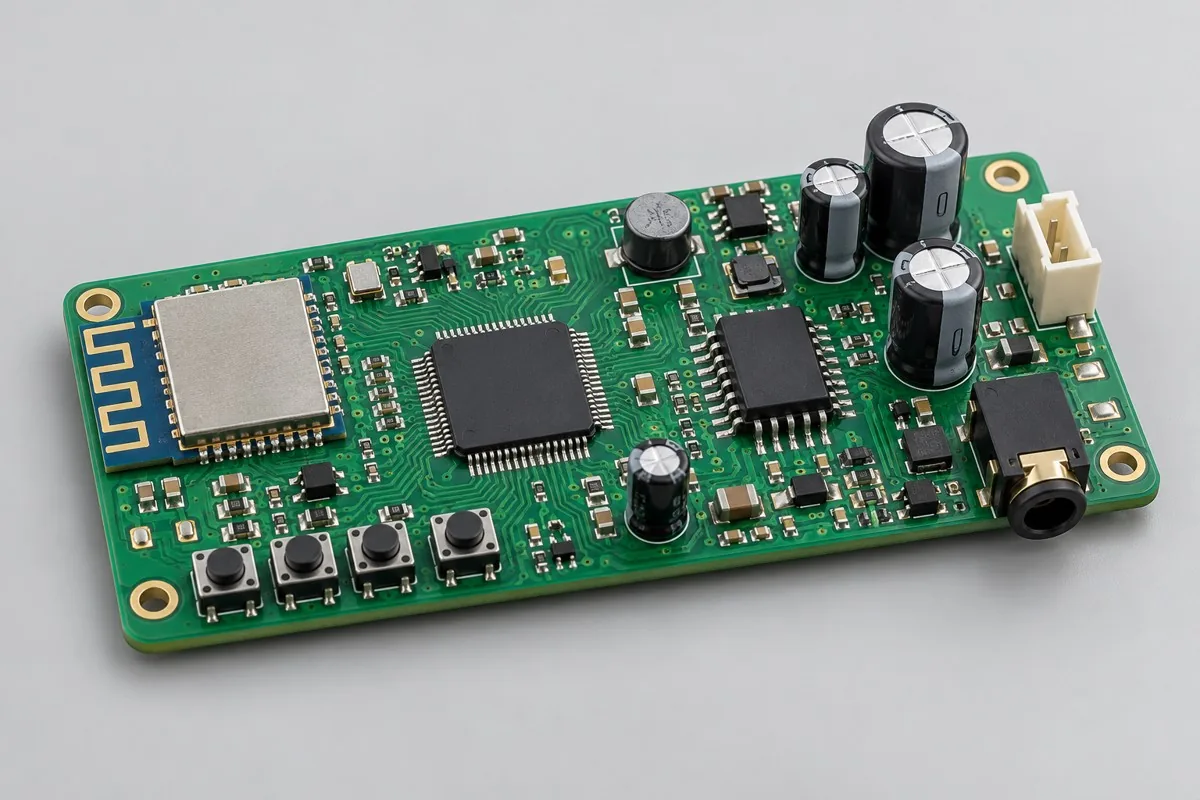
Small-Batch Wireless Speaker Control Board
SMT → subsequent socket installation → firmware → load/pairing tests. Start with the configuration table when investigating mixed module revisions, incorrectly fitted DNP parts, and reversed speaker connections. Create acceptance records for every variant, separate listening impressions from board-level electrical results, and identify temporary jumper wires in the issue list.
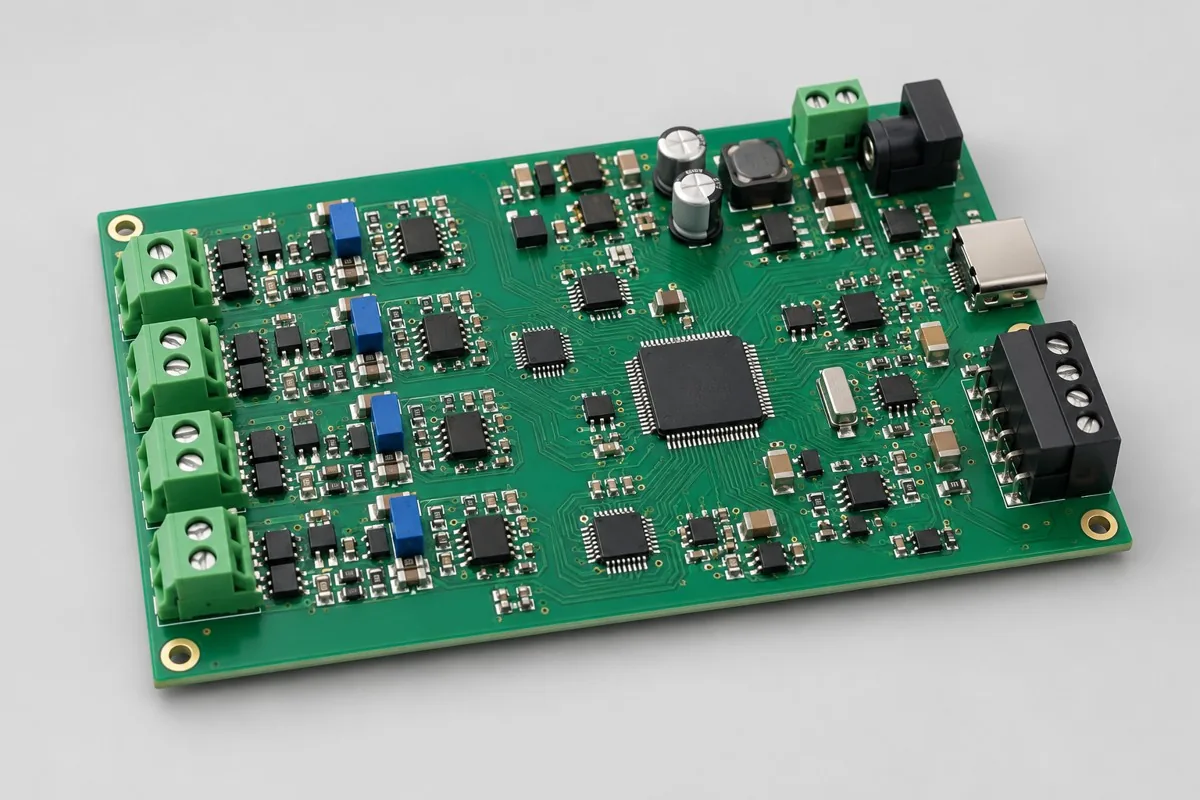
Small-Batch Instrument Acquisition Board
SMT → subsequent interface soldering → programming → calibration by measurement range. Writing calibration coefficients to the wrong board, incorrect input-network values, and wiring confusion are high-risk prototype issues. Set variant-specific limits and measurement-range labels for acceptance, recalibrate after analog-path rework, and record reasons for component changes.
Material shortages, parameter tuning, and revisions determine low-volume costs
For inquiries, list material loss allowances, authority for obsolete key parts/substitutions, quantities by revision, and test support. Record first-article issues, manual tuning, and the final frozen revision separately; prototype success does not automatically constitute production acceptance. Commissioned tasks: verification samples, revised small batches, or delivery of frozen revisions; product examples do not limit service scope. Documentation revisions: BOM/CPL/DNP/assembly drawings, firmware, and test specifications; changes must link to actual board identifiers.
Component supply, quantity and delivery
Delivery includes variant, component-change, and issue records; before volume production, finalize the BOM/parameters, remove temporary jumper wires, and verify permanent fixtures.
For orders, align Gerber/BOM/CPL/DNP and assembly drawings, quantities, consigned/procured material lists, and firmware verification. Costs and delivery include setup, board assembly, programming/calibration/testing, and accessories; establish lead time after all materials are available and test cases are frozen. Confirm stencil/carrier/fixture preparation, assembly operations, programming/calibration, and supporting tests on this page as separate charges. Agree replenishment/loss allowances, surplus materials, and inventory affected by changes in advance; list delivery milestones after material readiness and scheduling are confirmed. Regression-test component/interface/structure/firmware changes against the relevant tests, and record prototype issues separately from production release.
Material and Process Reference
- Engineering reference | SMT packages and assembly methods: pads, stencils, and thermal processes: a package/assembly method index only; not evidence that the product configurations on this page are models produced by KFPCBA
- Engineering reference | Soldering processes and defect isolation: wetting, residues, and solder oxidation: a reference entry for soldering, residues, and defect isolation methods only. Verify this page's soldering routes against specific materials/components
Low-volume PCB assembly pricing and selection FAQ
Why does low-volume PCB assembly cost more per unit? Allocating prototyping costs
For standard placement, first calculate board quantity × billable points per board × price per point + setup fee. A project-specific quotation requires review of the available files, quantity, materials, requested tests, delivery destination, taxes, shipping, and trade terms. This is a placement-only reference; bare PCBs, materials, and testing are charged separately. Any formula on this page organizes cost inputs; it is not a quoted rate.View cost items, calculation conditions, and sources.
How should I compare quotations from low-volume PCB assembly suppliers?
Review stencil, line changeover, and feeder loading charges by revision; verify the actual acoustic setup for speakers and calibration points for instruments. If revisions are not frozen, clarify revision and surplus-material handling; do not combine tests for different revisions to obtain a lower unit price.
Can small batches with different DNP revisions be combined into one quotation batch?
Keep reference designators, unpopulated status, and firmware consistent within each revision, and confirm changeovers and first articles separately. Combining quantities does not mean variant testing can be combined; link surplus materials to each BOM as well.
How should I request a small-batch quote when only a few loose units of a key module are available?
Verify the complete part number, packaging condition, and available quantity first, then list small-package handling and replenishment responsibilities. Compare scope before materials are complete; do not assume loose parts and full reels require equal setup time.
For a small instrument batch, should I make the stencil first or freeze the measurement range?
Confirm the front-end and measurement-range revisions and calibration inputs before freezing pads and supporting items. Temporary component changes may affect the stencil and coefficients; decide prototype and production preparation separately.
A speaker prototype already exists; what should I check before increasing the batch size?
Freeze the module, speaker, battery, and shipping firmware, and resolve pairing, simultaneous charging, and channel issues. Do not automatically remove test conditions as quantity increases; existing prototypes must correspond to the manufacturing revision.
Consult small-batch PCBA assembly quotation: describe the application, existing configuration, and expected quantity so we can discuss assembly inclusions and selection requirements.