
Halogen-free material communication control board design solution
Meet network and power functions first, then select a halogen-free grade from candidate materials; material labels cannot replace electrical-performance reviews.
Design circuits for communication, pet watering, or aquarium control, check the specified halogen-free grade and declaration, and separately validate materials, assembly, product communication, pump/light operation, and fault behavior. Halogen-free is a material-selection criterion; circuits, soldering, and reliability still require separate review for communication or low-voltage control products.
Configurations in this category support development requirements discussions. Actual components, structures, and performance are confirmed in the project revision; historical development directions and engineering references are identified separately.
This category covers halogen-free communication and pet aquatic-environment control. Costs are broken down by schematic, PCB layout, agreed software, and prototype validation scope; the main workload differences involve material-revision review, control circuits, and abnormal product operating-condition tests. Layer count, board area, or channel count alone cannot determine development pricing; the usability of existing files and test conditions also affect the effort.
Quotation terms depend on the approved files, quantity, material supply, tests and delivery requirements.
Prepare a structured RFQ or use the short inquiry form.
| Quotation Items | What services are included | What to Check When Comparing Quotes |
|---|---|---|
| Existing circuit layout | Implement layout using approved schematics, footprints, and mechanical design | Whether schematic review, stackup/constraints, and fabrication files are included |
| From functional R&D | Material-revision review, control circuits, and abnormal product operating-condition tests | Whether circuits, firmware, and validation targets are complete |
| Prototypes and revisions | Build prototypes from the frozen design, record test feedback, and release a controlled revision | Whether prototype quantity, component procurement, and change scope use the same basis |
Manage material properties separately from circuit functions. Material changes require stackup and fabrication-condition checks; communication and pump/light control are still designed for specific functions. Halogen-free properties cannot establish waterproofing or health benefits.
Start selection with specified materials, power, pump/light loads, and wet-environment interfaces, then review the parameters, cost boundaries, and validation conditions of the specific designs below.
| Review Questions | Why it impacts design | How to select and close |
|---|---|---|
| Material Declaration | Appearance cannot prove a material is halogen-free; supply-chain documents must match the specific grade and batch. | Retain declaration and requirement revisions, and state applicable scope separately for PCBs, components, cables, and other items. |
| Substitute Materials | Replacing the base material may change dielectric, thermal, and fabrication conditions. | Have the PCB fabricator confirm process compatibility, then recheck impedance, board warpage, and the assembly process window. |
| Low-Voltage Control | Pet-watering/aquarium designs need load, sensing, and abnormal-shutdown design. | Independently validate pump stall, low-water conditions, and power-loss recovery; environmental material properties cannot replace functional validation. |
Customer material requirements and applicable standards, supplier material declarations, stackup, soldering-temperature conditions, and product functions.
| Current Stage | Customer-Supplied Materials | Design deliverables |
|---|---|---|
| Functional requirements only | Customer material requirements and applicable standards, supplier material declarations, stackup, soldering-temperature conditions, and product functions. | Functional/state requirements, approach comparison, mechanical design, and open items for material revisions and product control |
| Existing schematics or PCB | Editable circuit/PCB files, BOM, and mechanical design for products in this category; include customer material requirements and applicable standards, supplier material declarations, stackup, soldering-temperature conditions, and product functions. | Material requirements and declarations, substitution impact review, fabrication files, and product functional records |
| Existing prototype pending revision | Fault reproduction conditions, raw logs/waveforms, test equipment, and original board revision | Troubleshoot faults related to material revisions and product control, and deliver revised files, an impact list, and regression records under the same operating conditions |
Meet network and power functions first, then select a halogen-free grade from candidate materials; material labels cannot replace electrical-performance reviews.
An external low-voltage supply moves mains conversion into the adapter; adapter and complete-unit safety boundaries still need checking.
Handles only low-voltage pumps and lights; mains heaters require separate compliant control components and safety boundaries.
Material requirements and declarations, substitution impact review, fabrication files, and product functional records. Link deliverables to the same requirements revision; the PCB fabricator confirms materials, stackup, holes, and fabrication conditions, while PCB assembly checks footprints, soldering, programming, and test points. Recheck this category's constraints after critical-component substitutions or mechanical changes.
Key validation in this category: material-document consistency, assembly and board warpage, communication or load functions, sensing, and fault behavior.
| Acceptance Stage | Conditions to be frozen | Report Records |
|---|---|---|
| Functionality and boundaries | Component/software revisions, supply/load, and interface or mechanical operating conditions | Test procedures, raw logs/waveforms, results, and abnormal states |
| Application-specific performance | Material-document consistency, assembly and board warpage, communication or load functions, sensing, and fault behavior | Instruments and calibration, environment, samples, criteria, and exclusions |
| Version Closure | Change list, permitted limitations, passed items, and open items | Fabrication and software packages, test reports, and issue-closure records |
Manage material properties separately from circuit functions.
First specify designated materials, power, pump/light loads, and wet-environment interfaces.
Layout-only work can be discussed when usable schematics and component information exist. Starting from halogen-free communication or pet aquatic-environment control requirements requires selection and circuit design first. Itemize software, prototypes, and testing separately; do not treat layout fees as a complete development budget.
The material package specifies grade, declaration scope, and actual stackup; the functional package lists interfaces and states for communication aggregation, water dispensers, or aquariums. Price environmental documentation separately from actual pump/light/communication validation; using halogen-free substrates does not make all product functions one development package.
Material review and circuit work can be quoted first, but impedance/thermal requirements and fabrication files require the actual grade and stackup for closure. Approved circuits can be routed separately, while halogen-free requirements must still appear in procurement files. A product name containing halogen-free does not establish that material conditions are met.
For water dispensers, list low-water/stall conditions and recovery; for aquariums, pump/light schedules and probe faults; for communication, forwarding/logging. Existing customer software may be partly reusable, but common material properties do not justify shared software. Define separate requirements for networking or water-quality analysis.
Link fabrication packages to grades and declarations, batches, and stackups, and link circuit/firmware source files to pump/light or communication revisions. Material records establish properties within their scope; functional reports establish operation of the corresponding prototype. Check halogen-free, RoHS, and REACH separately; none substitutes for another.
Review the new material's dielectric, thermal, moisture-absorption, and reflow conditions, then assess effects on critical nets and assembly. Quote fabrication-document-only updates separately from recalculation/rerouting. Whether the PCB changes or not, retain functional regression records with fixed software and loads.
Material requirements can serve as procurement inputs, but pump voltage, light groups, temperature/water-level sensing, and recovery states differ. A single-pump water dispenser and an aquarium running pumps and lights concurrently need separate development and measurements. Material properties do not establish waterproofing, health-monitoring, or complete-unit certification capabilities.
Initially describe the product task, application, and current files. A formal quotation should confirm customer material requirements and applicable standards, supplier material declarations, stackup, soldering-temperature conditions, and product functions. If source files exist, provide circuit/PCB/BOM and mechanical revisions together; if prototypes exist, include fault conditions. First identify frozen functions and structures, then compare circuit, layout, software, and validation work; unresolved items must not be assumed to share the same service scope.
Key validation in this category: material-document consistency, assembly and board warpage, communication or load functions, sensing, and fault behavior. For each RFQ item, specify the actual load/interface or structure, prototype quantity, measurement method, equipment, and permitted deviation; deliver raw results, anomalies, and revision closure separately. Circuit/PCB checks and complete-unit functional validation are different tasks; a quotation including only the former does not justify omitting the performance measurements specific to this category.
Select and place components using the manufacturer information in the specific design details, and record file revisions and applicable conditions with the project; the company's historical development directions do not mean the reference designs on this page have been delivered in volume.
Return to the electronics design technical section · PCB Manufacturing · PCB assembly · Submit R&D requirements. When requesting halogen-free PCB design, prepare functions, interfaces, board outline, and existing design information.
Send the product functions, interfaces, mechanical constraints, available files, and required development stage. Compare design capability scope and development support before defining deliverables.
Compare reference designs by function, interfaces, and mechanical constraints, including design tradeoffs and prototype-acceptance methods.
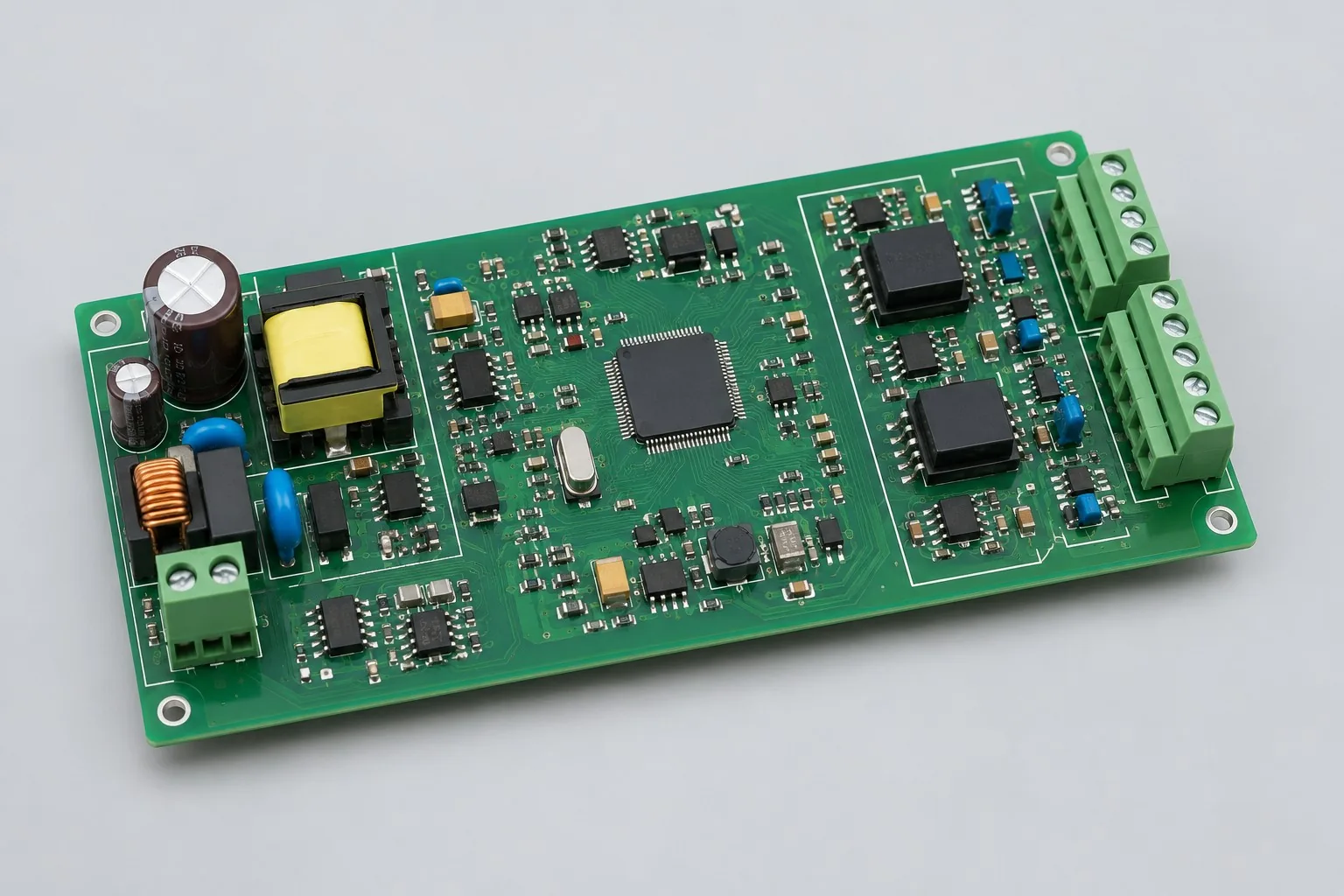
Halogen-free PCB design: separate specified grades/declarations and actual 4–6-layer stackup review as material work, and Ethernet/two UART/RS485 aggregation as circuit/firmware work. Unchanged functions prioritize material-impact regression; new projects also need protocols/upgrades. List supplier declarations separately from product testing.
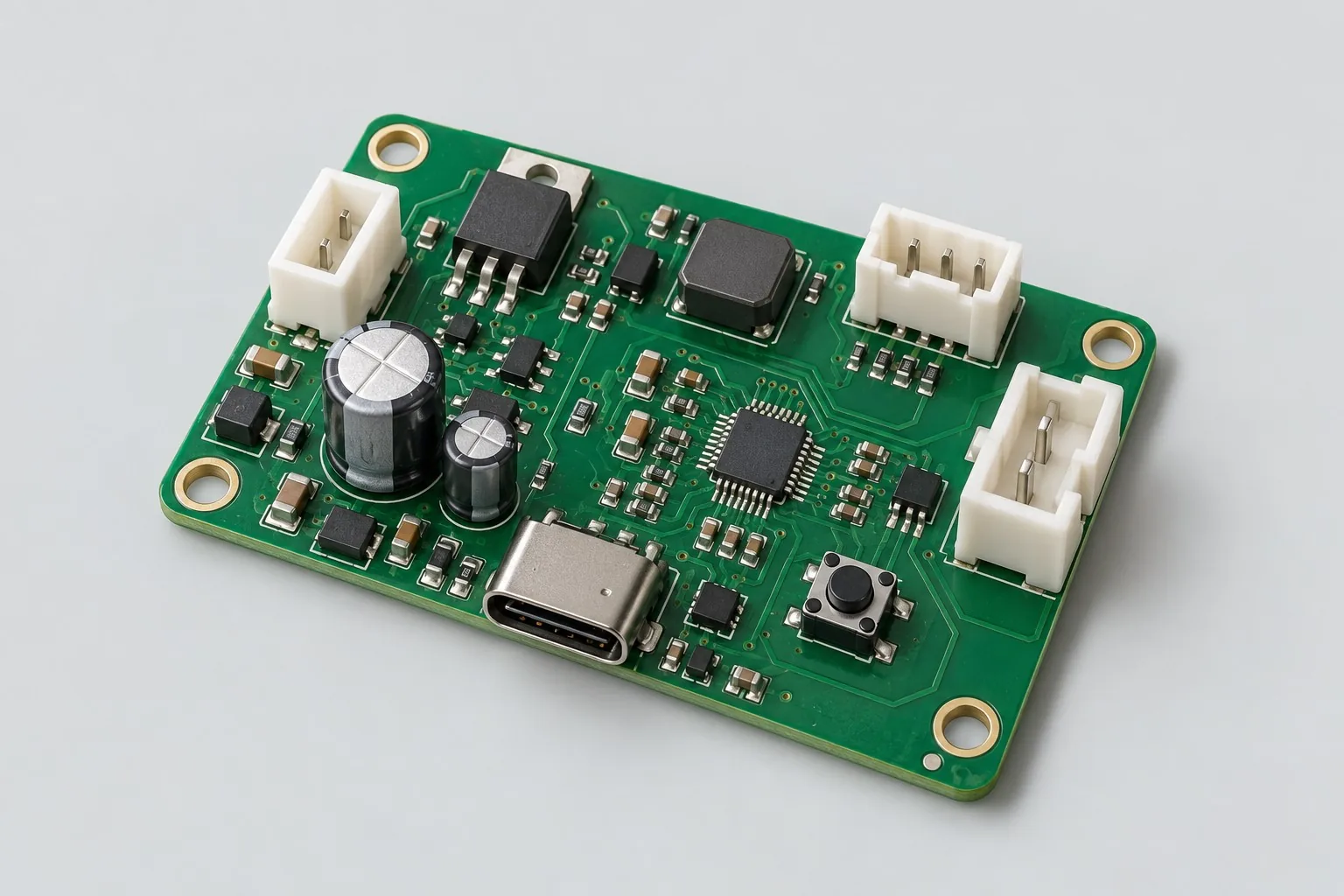
Pet fountain controller design: first list USB 5V, one pump, a level switch, dry-run stopping, and stall alarms, prototyping actual pumps/water paths. List Hall/current readback, buzzers, and networking separately, confirming wet/dry zones and coatings. This separates basic pump control from enhanced monitoring for comparable quotes.
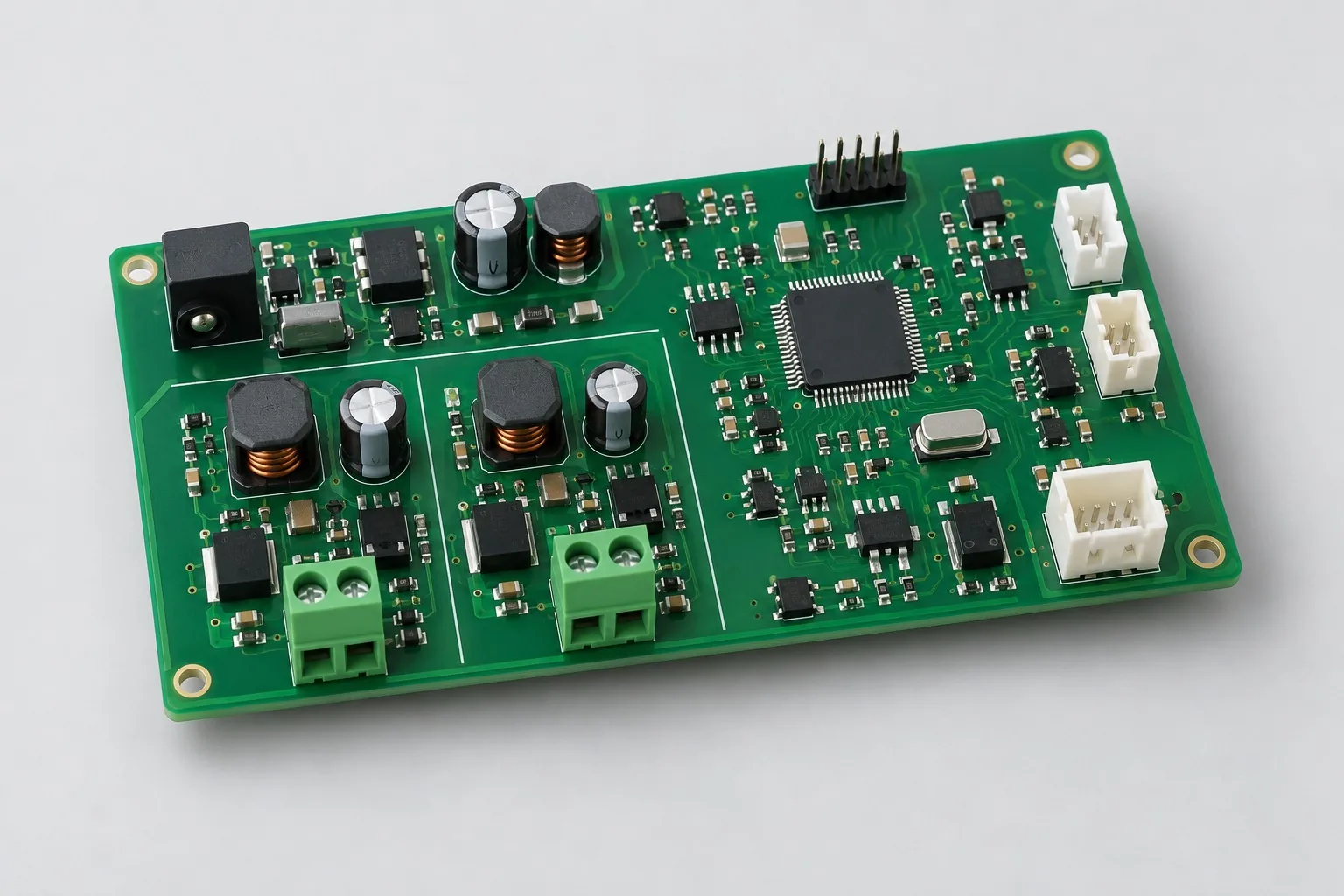
Define a low-voltage aquarium control board around the pump, lighting, temperature probe, water-level sensor, schedules, and fault states. Review concurrent loads and wet-environment boundaries; mains heater switching and water-quality analysis are separate.

Tell us the product use and which files are available. We can define the next engineering step even when the data package is not complete.