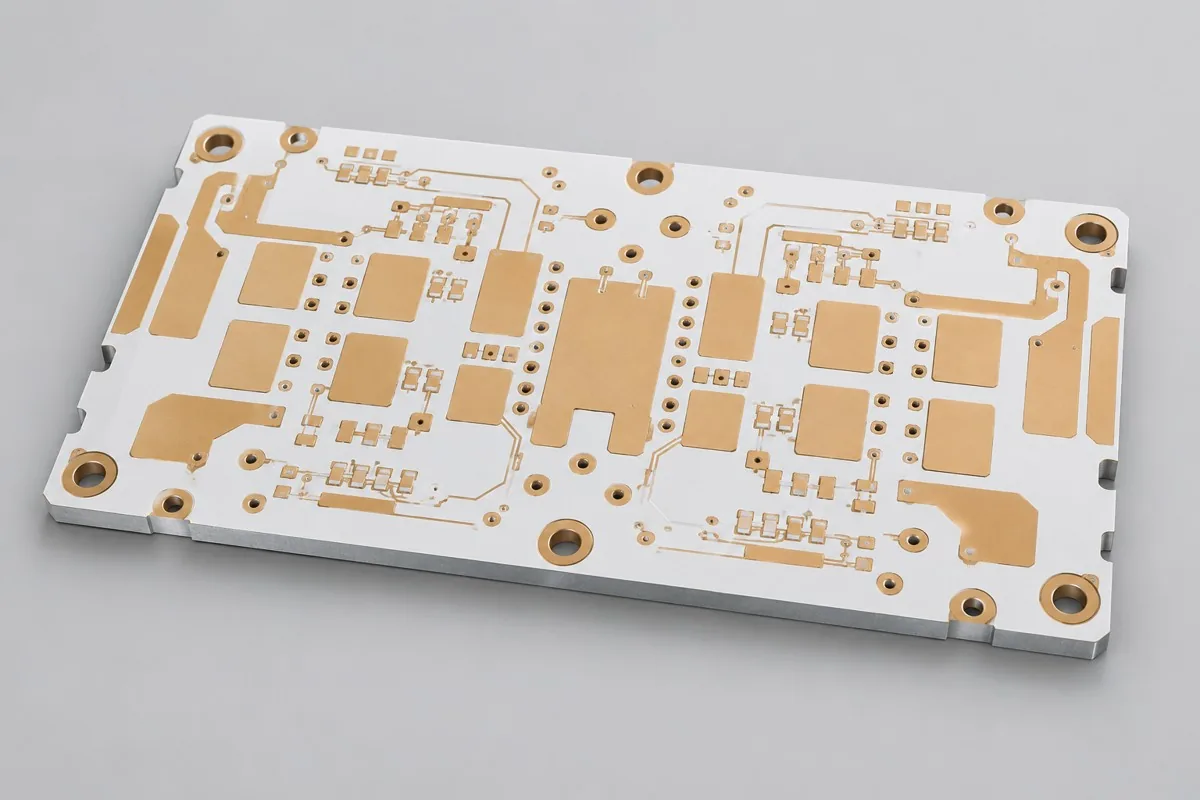
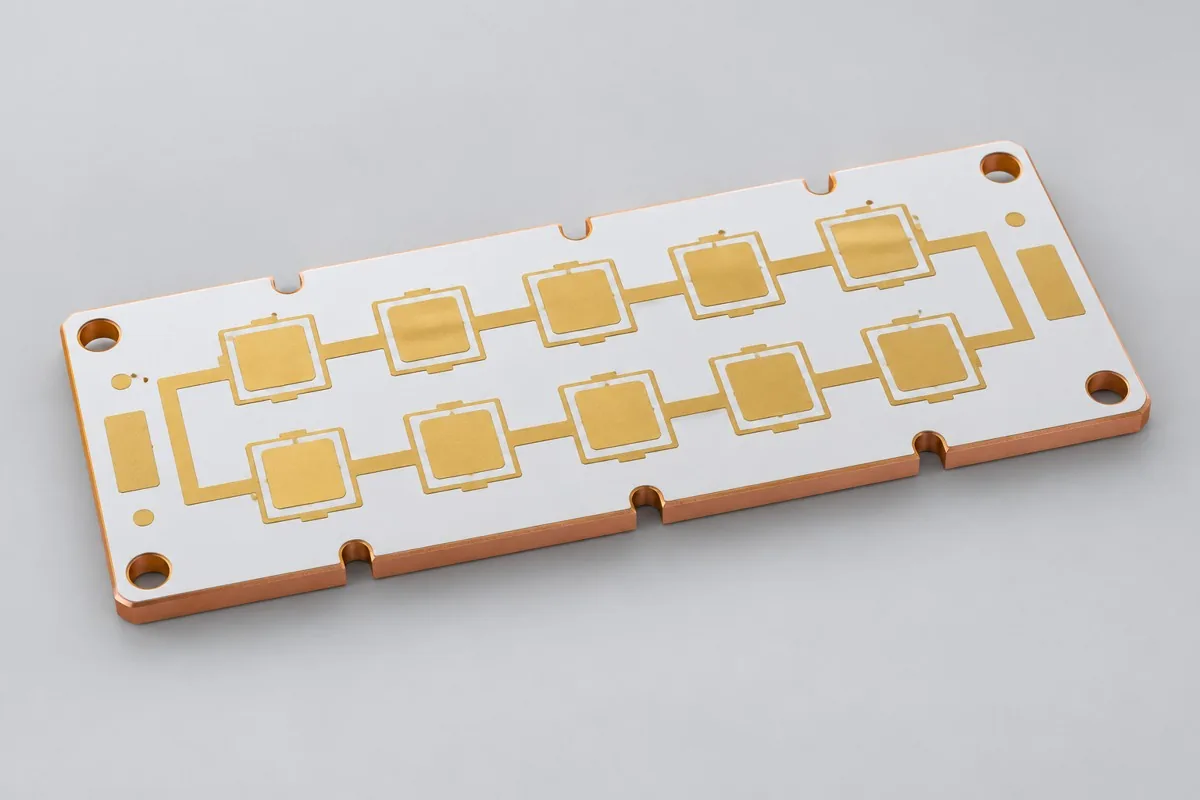
Metal-core PCBs: insulation layers and through-core hole cross sections
Before purchasing bare metal-core PCBs, approve circuit copper, insulating dielectric, metal core, and interlayer-hole cross sections. For concentrated LED heat sources, compare insulated copper-core structures; for double-sided drivers, compare IMS clearance-hole structures. Deliver material information for both sides and the microsection scope. Cooling results require actual mounting interfaces; review special combinations for feasibility first.
Copper base and double-sided IMS: examine cross-section first
Specify whether an insulation layer is present, how interlayer holes clear the metal core, and whether the copper block is electrically live. Approve structural cross sections before comparing cooling; different metal-core structures cannot share conventional FR4 hole-fabrication assumptions.
Material and Process Reference
Consult selected PCB configuration
How do copper-core metal PCBs differ from aluminum-core PCBs?
Copper-core, aluminum-core, and double-sided IMS structures have different thermal paths and fabrication methods. Copper material properties cannot replace thermal-resistance comparisons of complete structures; insulation layers and mounting interfaces may be the main bottlenecks.
How should I select through-core connections and insulation for single- and double-sided IMS?
First confirm whether the metal core is electrically live, circuit-to-core insulation, and interlayer connections, then select single- or double-sided structures. Include special holes and inspection when comparing total costs.
Metal substrate pricing and selection common questions
How is a metal-core PCB quoted? Is copper core better than aluminum core?
The complete budget is materials/base fabrication + excluded profiling + specified inspection + taxes and shipping, divided by the delivered board quantity. A project-specific quotation requires review of the available files, quantity, materials, requested tests, delivery destination, taxes, shipping, and trade terms. Any formula on this page organizes cost inputs; it is not a quoted rate.View cost items, calculation conditions, and sources.
How to compare metal substrate manufacturer quotations?
Compare complete structures by metal core, dielectric, and interlayer connections, then check insulation reports. Copper or aluminum material properties alone cannot determine whole-board temperature rise or eliminate special-hole fabrication costs.
Why does an electrically live metal core affect an RFQ?
It affects circuit-to-core insulation and mechanical-connection definitions. Provide the core, dielectric, through-core holes, and operating conditions; reference the same structure for fabrication and acceptance.
Can double-sided IMS be quoted using conventional double-sided FR4 hole pricing?
Through-core connections and isolation structures differ, requiring complete hole drawings and insulation requirements. List special holes, fabrication, and inspection separately; conventional hole counts alone are insufficient.
Can a heatsink be removed because copper core has better thermal conductivity?
The actual thermal path also includes insulating dielectric, interfaces, and installation. Compare at the same heat generation and structure; metal material values cannot establish complete-unit temperature rise or justify removing parts.
What must be revalidated if the dielectric changes after the first metal-core prototype?
Changes to dielectric thickness, thermal conditions, and insulation conditions require approval, with checks of circuits, installation, and specified tests. Prior temperature-rise and insulation conclusions do not automatically cover new materials.
Inquire metal substrate quotation: describe the application, existing configuration, and expected quantity so we can discuss bare-board fabrication requirements, inspection, and delivery conditions.
Metal base quoting: cross-section and insulating holes
After selecting a product in this category, submit circuit-to-metal-core insulation, interlayer-hole cross sections, dielectric revision, and mounting thermal interfaces. Map each change to the reference configuration, and use the same revision for fabrication drawings, inspection locations, and material approval records; define special validation and reporting scope before quotation.
Back to all PCB products · Manufacturing file knowledge
How is a metal-core PCB quoted? Is copper core better than aluminum core?
The quotation should separately account for metal core and insulating dielectric, single- or double-sided circuit structure, through-core holes and profiling, and insulation and cross-sectional inspections. Separate first-order preparation costs from costs incurred per batch and per board; at the same quantity, align revision, delivery form, and tax/shipping basis to determine whether a price difference comes from configuration or excluded work.
Quotation terms depend on the approved files, quantity, material supply, tests and delivery requirements.
Prepare a structured RFQ or use the short inquiry form.