Do consumer electronics PCB assembly quotes include firmware and enclosures?
Quotes should separately itemize critical wireless, audio, or imaging components, battery, antenna and connection assembly, firmware and device identity programming, and function, power consumption, and mechanical system testing. Separate initial order setup costs from recurring batch and per-board costs. For the same quantity, also align revisions, delivery configuration, and tax and shipping terms to determine whether price differences reflect configuration or excluded work.
Quotation terms depend on the approved files, quantity, material supply, tests and delivery requirements.
Prepare a structured RFQ or use the short inquiry form.
How does a bare consumer electronics PCB assembly differ from an assembly with battery and mechanism?
Sensor controls, audio, positioning, cameras, and pet devices rely on different external setups. PCB assemblies and assemblies with batteries, speakers, cameras, or mechanisms have different delivery scopes and must be compared in the same form.
How should power and external supporting parts be selected for audio, positioning, and camera PCB assemblies?
Select by power source, wireless connectivity, actuator load, and mechanical space. Measure sleep, transmit, playback, and recording currents separately. One standby figure cannot directly establish complete product battery life.
Consumer electronics PCB assembly: order scope and acceptance
Consumer electronics PCB assembly scope follows device functions and final delivery configuration. Sensor, audio, positioning, video, and pet devices need different antennas, loads, firmware, and mechanical setups. First define whether delivery covers a board-only assembly or a subassembly with external parts, then compare quotations. Bare PCB fabrication is a separate scope.
Battery sensors focus on sleep/wake; audio on channels/charging; positioning on GNSS/reporting; training on pairing/stopping; video on read/write/thermal behavior; aquarium devices on mechanisms/sensors.
Differences in assembly and test paths
Power consumption is more than one standby figure: measure each product in actuation, transmission, recording, or motor states. Firmware identity, parameters, and customer interfaces must match the hardware variant.
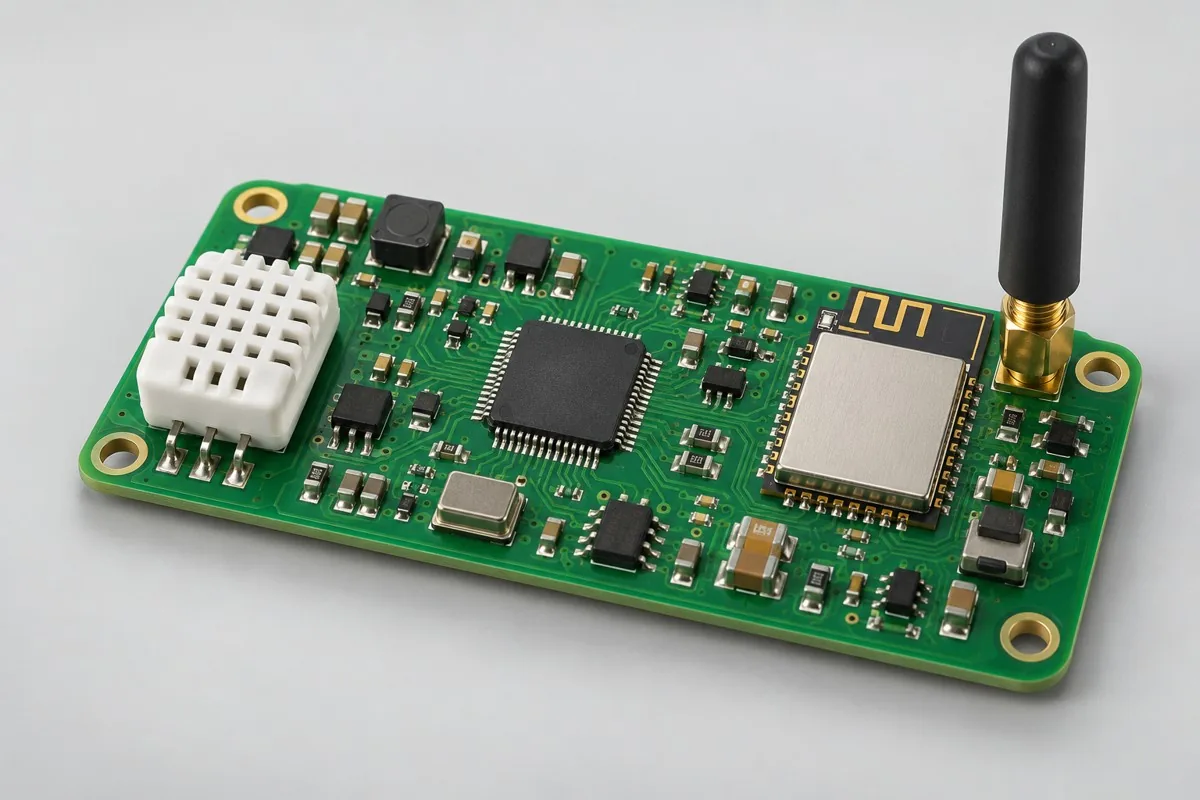
Smart home sensing control board
SMT → subsequent battery connection installation → firmware → sleep/network testing. Handle sensor offset, reversed polarity, duplicate identities, and sleep failure separately. Acceptance requires more than appearing online in an app. Board-level current records must state power supply, battery simulator, and reporting settings to avoid a universal battery life commitment.
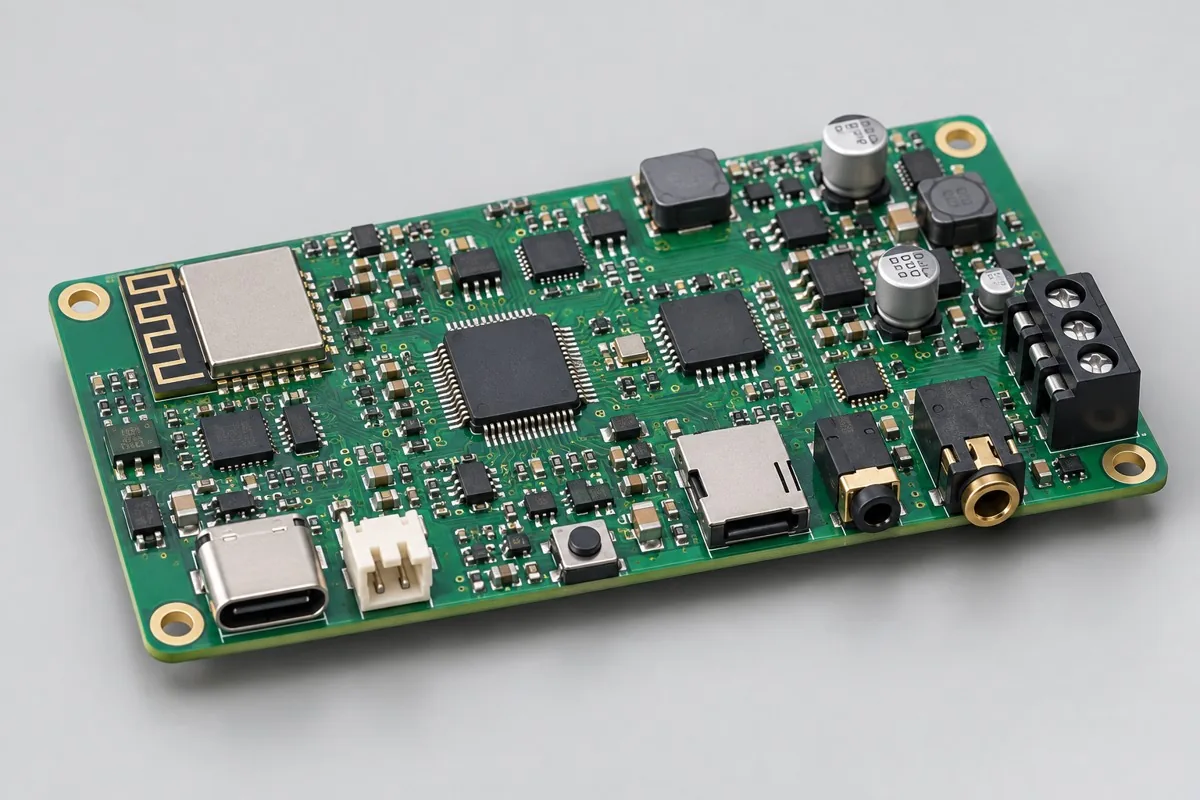
Portable Audio Control Board
Double-sided SMT → secondary socket soldering → programming → audio/charging tests. Playing one song cannot exclude swapped left/right channels, audio noise, or charging faults. Separate electrical audio and complete product acoustic metrics in acceptance. After power amplifier or output filter changes, retest both channels and concurrent charging.
4G Bluetooth GPS locator control board
SMT → antenna/battery interfaces → identity programming → positioning/networking. Screen separately for loose antennas, incorrect regional module versions, duplicate identities, and sleep failure. Distinguish positioning from server receipt in acceptance. One app coordinate does not cover every mode.
Pet Training Controller Board
SMT → output/battery interfaces → pairing firmware → actuation tests. Assess cross-paired IDs, reversed motors, drive solder bridges, and timeout failure separately. Acceptance emphasizes stopping capability and unintended trigger control. Animal behavior outcomes require system/use evaluation and are not guaranteed by PCB assembly actuation tests.
Pet video recording control board
SMT → hidden solder joints/interfaces → firmware → recording/readback. Isolate image corruption, damaged files, missed trigger recordings, and thermal restarts by segment. A normal app preview does not replace local recording acceptance. AI-related tests require customer-approved datasets and metrics; standard assembly tests do not assess algorithm effectiveness.
Smart fish tank feeding control board
SMT → subsequent terminal installation → firmware → mechanism/sensor simulation. Handle incorrect wire order, wrong sensor thresholds, lost timing, and motors failing to stop separately. Separate board-level actuation from feeding with the specified mechanism. Define waterproofing and actual feeding amounts under separate conditions.
Actual matching determines consumer electronics acceptance
Freeze wireless module, battery, speaker, camera, actuator, and enclosure revisions first. Test pet/home products in actual coordinated scenarios. Historical application names do not establish AI effectiveness, battery life, or waterproof ratings. Product scope: sensing, audio, positioning, video, or low-voltage actuator control, with historical types separated from current configurations. material supply: specify critical modules/batteries/mechanical parts, with authorized procurement following BOM, and state attrition, excess material, and substitution rules.
Component supply, quantity and delivery
Board-only, battery/harness assemblies, and complete mechanisms are different deliverables. Product type names do not establish battery life, behavioral outcomes, or waterproofing.
At ordering, align Gerber/BOM/pick-and-place files/DNP and assembly drawings, quantity, customer-supplied/procured material lists, and firmware verification. Delivery and costs include boards/assemblies, firmware identity, functional results, and packaging, with setup and batch fees listed separately. Confirm fees separately for stencil/carrier/fixture preparation, process operations, programming/calibration, and the supporting tests on this page. Agree on replenishment/attrition, excess materials, and change-related inventory first, then list delivery milestones after material readiness and scheduling are confirmed. Perform relevant regression testing for component/interface/mechanical/firmware changes, and record pilot issues separately from production release.
Material and Process Reference
- Engineering reference | SMT packages and assembly methods: pads, stencils, and thermal processes: a package/assembly method index only; not evidence that the product configurations on this page are models produced by KFPCBA
- Engineering reference | BGA assembly methods: pad definitions, warpage, and hidden solder joints: methods for BGA pads, temperature profiling, and hidden solder joint inspection. Use current manufacturer documents for each component; do not transfer example limits
- Engineering reference | Moisture-sensitive component management: MSL, floor life, and reflow conditions: a basis for moisture-sensitive component management methods only; not evidence of KFPCBA equipment, qualifications, or order scope
Consumer electronics PCB assembly pricing and selection FAQ
Do consumer electronics PCB assembly quotes include firmware and enclosures?
For standard placement, first calculate board quantity × billable points per board × price per point + setup fee. A project-specific quotation requires review of the available files, quantity, materials, requested tests, delivery destination, taxes, shipping, and trade terms. This is a placement-only reference; bare PCBs, materials, and testing are charged separately. Any formula on this page organizes cost inputs; it is not a quoted rate.View cost items, calculation conditions, and sources.
How should I compare consumer electronics PCB assembly manufacturers' quotes?
For audio boards, align speakers and batteries; for camera boards, cameras and storage; for mechanism control boards, loads. Specify firmware identity and power states before comparing prices. Otherwise, missing supporting items can exceed the SMT price difference.
If a consumer electronics customer already has an app, can the quote cover hardware only?
An existing app does not mean board-side network provisioning, data frames, or file recovery are complete. List responsibilities for programming and protocol adaptation, then agree on specified phones and disconnection integration testing.
Who verifies combined power consumption when the battery is customer-supplied and the board is contract-manufactured?
Specify the battery model, protection, and installation, and record sleep, transmission, playback, or recording states separately. Removing the battery from procurement scope does not remove the need for a responsible party to verify the actual combination.
Is device identity programming per-batch preparation or per-unit execution?
Rules, tools, and list preparation can be itemized separately. Per-unit writing, readback, and uniqueness linkage are execution. Link identities to the shipping firmware revision; copying one identity is not a substitute for identity management.
Can control-board-only delivery guarantee feeding mechanism or recording performance?
Board-level actions and interfaces cover only their own scope. Feeding needs the mechanism and food pellets; recording needs camera and storage. List supporting assemblies and actual use cases separately. Control board power-on does not establish complete product performance.
Quote for consumer electronics PCBA: describe the application, existing configuration, and expected quantity so we can discuss assembly inclusions and selection requirements.