
Authorized industrial control board recovery design
Record original-board functions and observable behavior before recovering the circuit. Similar appearance does not establish functional equivalence.
Recover circuit files or replace obsolete components within customer ownership or authorization. Identify unknown nets, firmware sources, and allowed differences, and deliver editable files and equipment regression results. Reverse engineering recovers files or creates compatible replacements only within clearly defined rights and authorization, aiming for a maintainable and verifiable new design revision.
Configurations in this category support development requirements discussions. Actual components, structures, and performance are confirmed in the project revision; historical development directions and engineering references are identified separately.
This category covers industrial original-board recovery and obsolete component replacement. Split costs by schematic, PCB layout, agreed software, and prototype verification scope. Key work differences involve net data recovery, component migration, and original equipment compatibility regression. Layer count, board area, or channel count alone cannot determine development pricing. Usability of existing files and test conditions also affect effort.
Quotation terms depend on the approved files, quantity, material supply, tests and delivery requirements.
Prepare a structured RFQ or use the short inquiry form.
| Quotation Items | What services are included | What to Check When Comparing Quotes |
|---|---|---|
| Existing circuit layout | Implement layout using approved schematics, footprints, and mechanical design | Whether schematic review, stackup/constraints, and fabrication files are included |
| Development from Functional Requirements | Net data recovery, component migration, and original equipment compatibility regression | Whether circuits, firmware, and validation targets are complete |
| Prototypes and revisions | Build prototypes to the approved design and record revision feedback | Whether prototype quantity, component procurement, and change scope use the same basis |
File recovery focuses on original nets and editable files. Proactive replacement also involves new components and software migration. First check authorization, original board information, and target equipment, then compare recovery and revision effort.
Start selection with layer count, file completeness, firmware availability, and legacy equipment interfaces, then review the parameters, cost boundaries, and verification conditions of the specific designs below.
| Review Questions | Why it impacts design | How to select and close |
|---|---|---|
| Documentation recovery and replacement | Recovering connections and replacing obsolete components are different deliverables. | Agree first on the level of recovery, then list compatibility targets and allowed differences. |
| Legacy Board and Software | Circuit appearance cannot recover firmware algorithms or licensed source code. | Confirm whether software is supplied, whether it can be migrated, and which functions require new development. |
| Equivalent and Compatible | Identical pins do not establish equivalent analog behavior, timing, or protection. | Build interface, power, performance, and fault test cases individually, retaining original-board comparisons. |
Authorization scope, original boards and samples, legacy equipment interfaces/test cases, software sources, editable files, and obsolete component list.
| Current Stage | Customer-Supplied Materials | Design deliverables |
|---|---|---|
| Functional requirements only | Authorization scope, original boards and samples, legacy equipment interfaces/test cases, software sources, editable files, and obsolete component list. | File recovery and obsolete component replacement function/state requirements, approach comparison, mechanical design, and open items |
| Existing schematics or PCB | Editable circuit/PCB files, BOM, and mechanical design for this category's products, with authorization scope, original boards and samples, legacy equipment interfaces/test cases, software sources, editable files, and obsolete component list. | Authorization and difference lists, recovered schematics/BOM, new-revision manufacturing files and compatibility regression records |
| Existing prototype pending revision | Fault reproduction conditions, raw logs/waveforms, test equipment, and original board revision | Locate faults related to file recovery and obsolete component replacement, delivering revised files, impact lists, and regression records under the same operating conditions |
Record original-board functions and observable behavior before recovering the circuit. Similar appearance does not establish functional equivalence.
Pin compatibility does not establish electrical or software compatibility. Compare thresholds, timing, protection, and startup individually.
Authorization and difference lists, recovered schematics/BOM, new manufacturing files, and compatibility regression records. Link deliverables to the same requirements revision. The PCB fabricator confirms materials, stackup, holes, and fabrication conditions; the assembly side checks packages, soldering, programming, and test points. Critical component substitutions or mechanical changes require renewed review of this category's constraints.
Verification priorities in this category: connection and interface comparisons, legacy equipment test cases, replacement differences, fault recovery, and long-duration stability.
| Acceptance Stage | Conditions to be frozen | Report Records |
|---|---|---|
| Functionality and boundaries | Component/software revisions, supply/load, and interface or mechanical operating conditions | Test procedures, raw logs/waveforms, results, and abnormal states |
| Application-Specific Performance | Connection and interface comparisons, legacy equipment test cases, replacement differences, fault recovery, and long-duration stability | Instruments and calibration, environment, samples, criteria, and exclusions |
| Version Closure | Change list, permitted limitations, passed items, and open items | Fabrication and software packages, test reports, and issue-closure records |
A project-specific quotation requires review of the available files, quantity, materials, requested tests, delivery destination, taxes, shipping, and trade terms. Complete development separately prices circuits, firmware, prototypes, and verification. Any formula on this page organizes cost inputs; it is not a quoted rate.View cost items, calculation conditions, and sources.
File recovery focuses on original nets and editable files. Proactive replacement also involves new components and software migration.
First define layer count, file completeness, firmware availability, and legacy equipment interfaces.
With usable schematics and component documentation, layout-only work can be discussed. Starting from industrial original-board recovery and obsolete component replacement requirements first needs component selection and circuit design. List software, prototypes, and testing separately. Layout fees are not a complete development budget.
First register physical boards/files/firmware for owned or authorized legacy boards. A recovery package reconstructs original nets and editable files; a replacement package migrates obsolete components and software. Budget original-board functional comparison separately from legacy equipment compatibility. Without a known-good sample, define limited verification first. Board area does not establish a commitment to complete recovery.
The result may include copper patterns or manufacturing drawings without complete schematics, component definitions, BOM, or maintainable net data. First confirm whether inner layers and packages can be identified, and define software scope separately. An outline drawing and one physical board are insufficient to assume full functional recovery.
Quote hardware tracing separately from authorized code migration or interface-based rewriting. Recovery of protected firmware is not promised. Existing behavior specifications can define new development boundaries; list unclear implicit states as open items. Successful net recovery does not mean software algorithms have been copied.
Retain net tracing, component measurements, original-board mapping, and unknown items. Number original mappings separately from replacement revisions. Link firmware authorization/availability and legacy equipment regression to revisions so maintenance can identify sources. Do not present inferred connections or replacement performance as proven facts.
Added interfaces or control behavior are new development. Separate them from the recovery baseline and list power/timing, firmware, and verification impacts. First create a board comparable to the original, then approve revisions. Unrecorded changes to original nets make recovery and compatibility tests impossible to judge.
First check original-board revisions, installed components, inner layers, harnesses, and host behavior; identical appearance may hide differences. Reuse confirmed matching portions and trace/develop/verify differences separately. Retain original safety protection and access controls. One board's results do not establish compatibility across an entire series.
Initially describe the product task, application, and current files. A formal quote should confirm authorization scope, original boards and samples, legacy equipment interfaces/test cases, software sources, editable files, and obsolete component lists. With existing source files, also provide circuit/PCB/BOM and mechanical revisions; with prototypes, include fault conditions. Identify frozen functions and mechanical features before comparing circuit, layout, software, and verification work. Undefined items should not be assumed to share the same service scope.
Verification priorities in this category: connection and interface comparisons, legacy equipment test cases, replacement differences, fault recovery, and long-duration stability. RFQs should specify actual loads/interfaces or mechanical setups, prototype quantities, measurement methods, equipment, and allowable deviations for each item. Deliver raw results, faults, and revision closure separately. Circuit/PCB review and complete product functional verification are different tasks. If a quote includes only the former, this category's specific performance measurements are still required.
Select and place components using the manufacturer information in the specific design details, and record file revisions and applicable conditions with the project; the company's historical development directions do not mean the reference designs on this page have been delivered in volume.
Return to the electronics design technical section · PCB Manufacturing · PCB assembly · Submit R&D requirements. For PCB reverse engineering inquiries, prepare functions, interfaces, board outline, and existing design files.
Send the product functions, interfaces, mechanical constraints, available files, and required development stage. Compare design capability scope and development support before defining deliverables.
Compare reference designs by function, interfaces, and mechanical constraints, including design tradeoffs and prototype-acceptance methods.
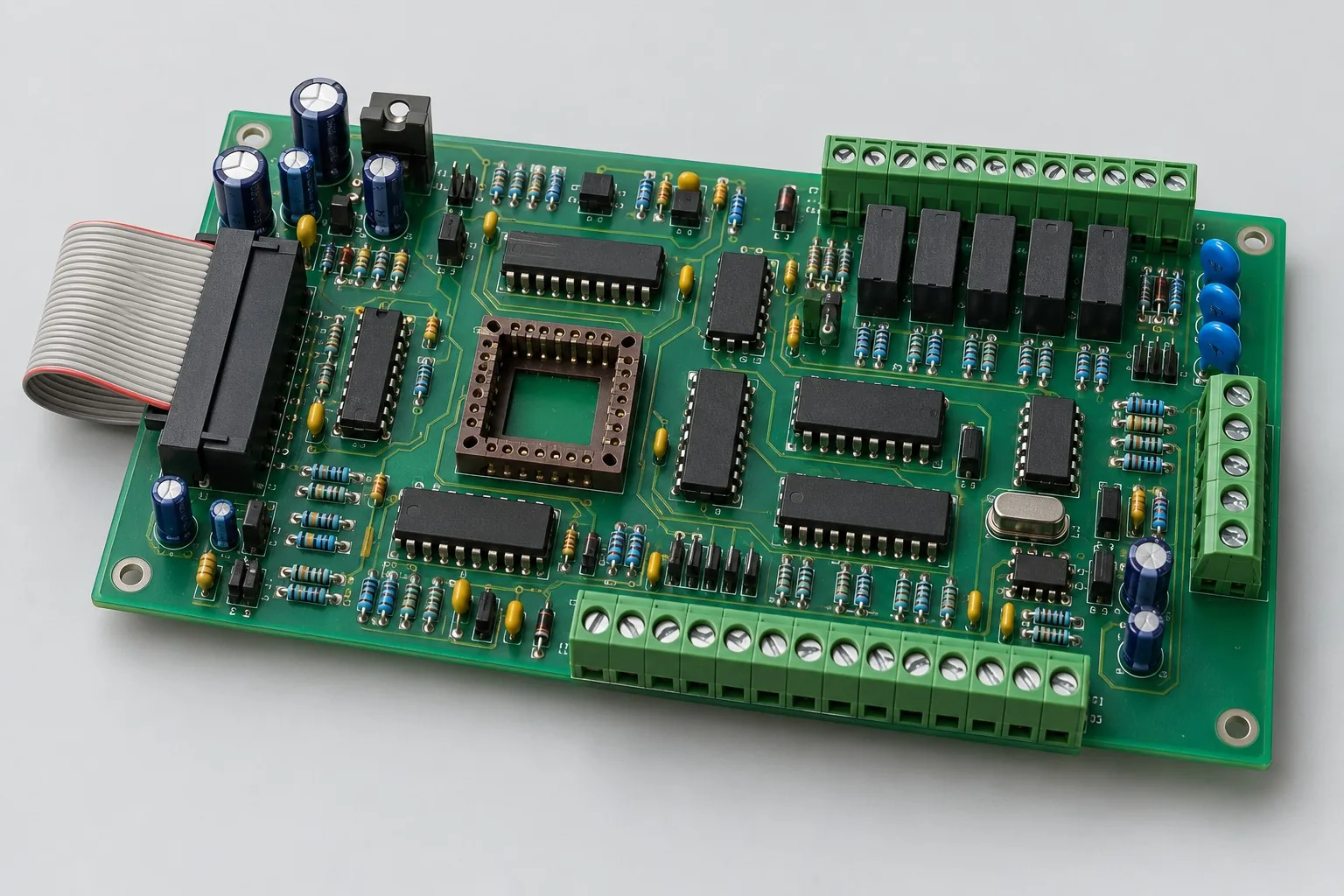
Industrial board recovery: register authorization, revisions, working samples, readable files, and firmware. Package one identifies nets/parts; two creates editable designs; three compares original/new functions. List unknown layers/code limits. Photos/tracing of one board are not complete recovery quotes.
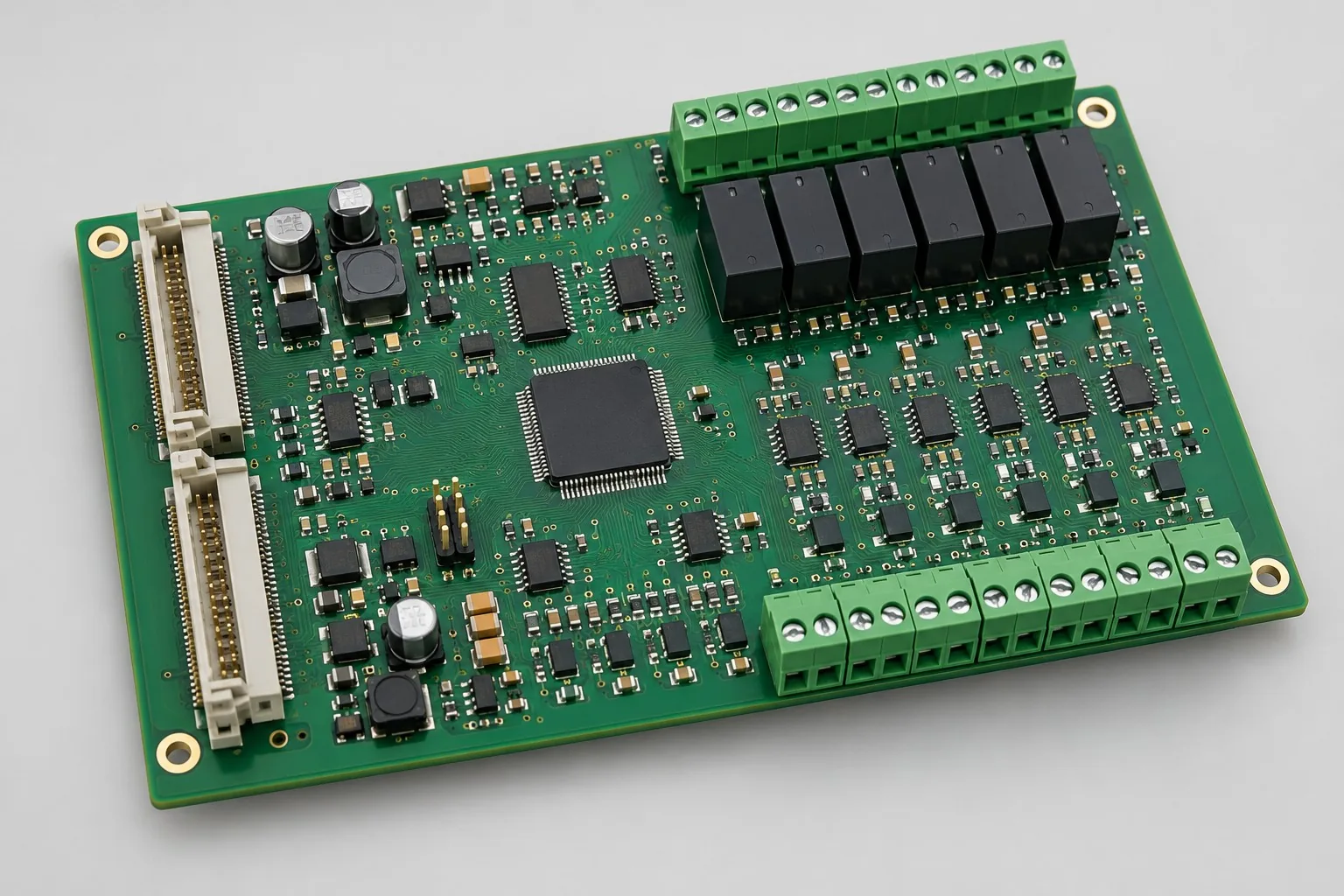
Discontinued control board replacement design: list original pinout, mechanics, power, and communication features to retain, then compare pin-compatible substitutes and redesign. Budget hardware review, software migration, legacy-equipment regression, and prototypes separately. Cheaper components do not establish lower migration costs; original behavior is the comparison baseline.

Tell us the product use and which files are available. We can define the next engineering step even when the data package is not complete.