Is single-sided PCB assembly cheaper? Calculating through-hole assembly costs
Quotes should separately account for single-sided SMT setup, through-hole and jumper assembly, support and securing of large components, and motor or panel functional checks. List initial-order setup charges separately from per-batch and per-board charges; for equal quantities, also align revisions, delivery configurations, and tax and freight terms to identify whether price differences reflect configurations or excluded work.
Quotation terms depend on the approved files, quantity, material supply, tests and delivery requirements.
Prepare a structured RFQ or use the short inquiry form.
Which has lower total cost: single-sided or double-sided PCB assembly?
One fewer assembly side can remove some operations, but through-hole components, manual jumpers, large components, and testing still cost money. Compare final functions and space requirements rather than only the number of assembly sides.
How should single-sided assembly be selected for motor control boards and appliance panels?
Motor boards require assessment of drive and protection paths; appliance panels require assessment of buttons, displays, and terminals. Choose single-sided assembly when structure and routing permit; evaluate double-sided options when greater density or continuous return paths are needed.
Single-sided PCB assembly: outsourcing and acceptance
Single-sided PCB assembly describes components concentrated on one side and suits boards such as low-voltage motor controls and indicator panels. It is not equivalent to a single-layer bare board, nor does it automatically mean the lowest cost; jumpers, subsequent soldering of large components, depanelization, and testing time all affect quotations.
Motor boards require power/suppression/thermal and load checks; panel boards require button-position/LED/buzzer/support checks. Single-sided describes only the assembly structure.
Differences in assembly and test paths
Depanelization, wire soldering, and panel installation can introduce stress. Check motor operation under load and protection, and check button release and indications after the panel is fitted into its structure.
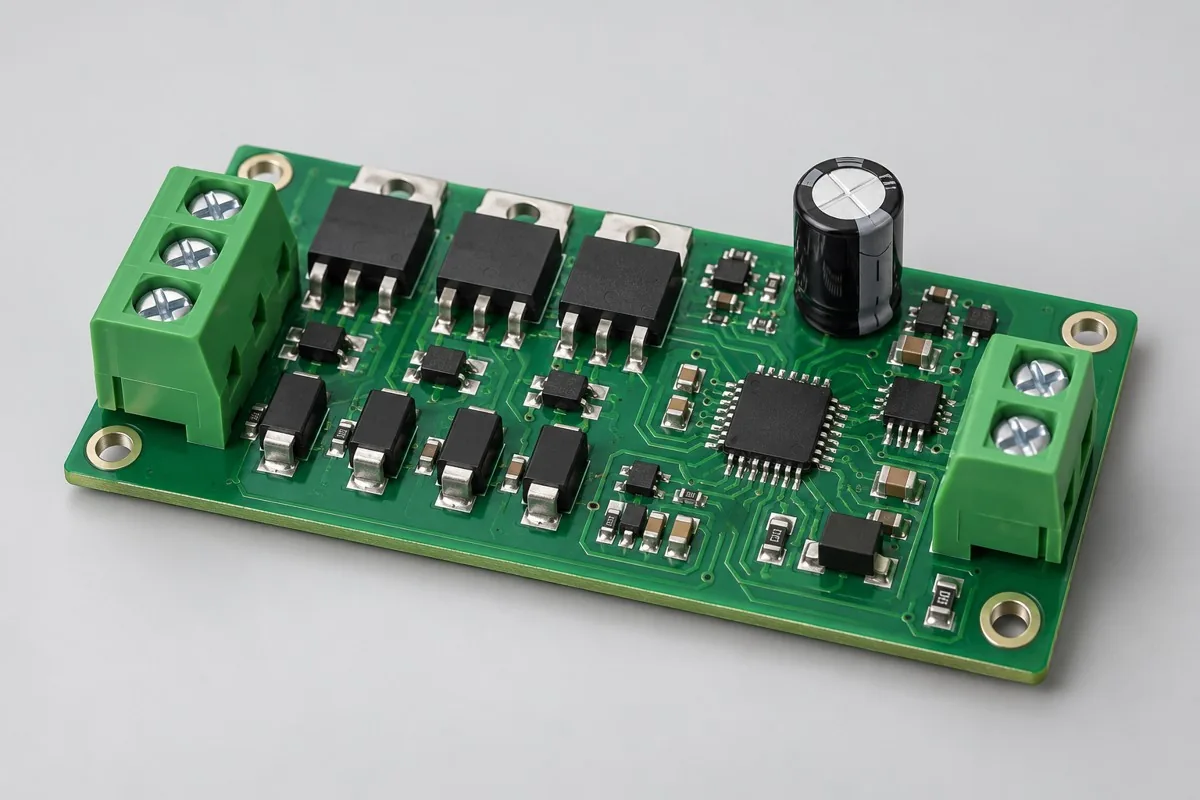
Single-sided low-voltage motor control board
Single-sided SMT → through-hole assembly/wire soldering → securing → loaded testing. Address detached wires, reversed power devices, missing suppression components, and incorrect sensing values separately. Acceptance combines load and protection checks; no-load rotation does not establish safe stall behavior or continuous operation.
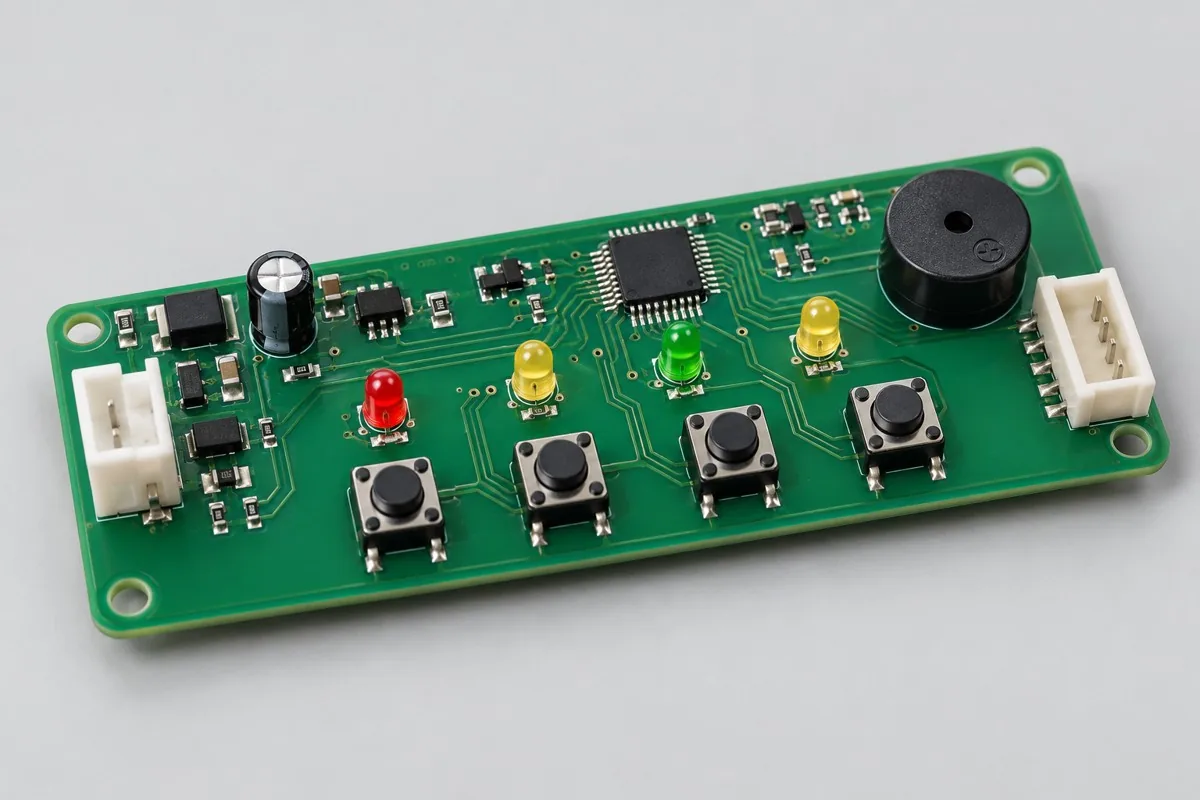
Single-sided home appliance indicator control board
Single-sided SMT → subsequent switch/buzzer installation → integrated panel inspection. Assess wrong-color/reversed LEDs, swapped button positions, incorrect buzzer models, and panel preload separately. Acceptance includes operation in the specified panel; working buttons on an unenclosed board do not rule out assembly pressure.
Check wire jumpers and structural fit even for single-sided boards
Provide load and protection requirements for motor control boards and button/panel logic for indicator boards. Perform final tests after jumpers, through-hole components, and subsequently installed parts are complete; board power-up does not establish usability after enclosure installation. Assembly definition: components on one side and required SMT/through-hole assembly/wire soldering, confirmed separately from bare-board layer count. Mechanical operations: jumpers, wires, depanelization, supports, and panel height limits; mounting must not rely on solder joints to bear weight.
Component supply, quantity and delivery
Compare cost using area, jumpers, through-hole components, and subsequent soldering time together; specify layer count and component assembly sides separately.
For the order, align Gerber /BOM/CPL/DNP and assembly drawings, quantities, consigned/procured material lists, and firmware verification; delivery acceptance includes results recorded for the actual load or panel configuration, and fixed lead times require order confirmation. Confirm stencil/carrier/fixture preparation, assembly operations, programming/calibration, and supporting tests on this page as separate charges. Agree replenishment/loss allowances, surplus materials, and inventory affected by changes in advance; list delivery milestones after material readiness and scheduling are confirmed. Regression-test component/interface/structure/firmware changes against the relevant tests, and record prototype issues separately from production release.
Material and Process Reference
Single-sided PCB assembly pricing and selection FAQ
Is single-sided PCB assembly cheaper? Calculating through-hole assembly costs
For standard placement, first calculate board quantity × billable points per board × price per point + setup fee. A project-specific quotation requires review of the available files, quantity, materials, requested tests, delivery destination, taxes, shipping, and trade terms. This is a placement-only reference; bare PCBs, materials, and testing are charged separately. Any formula on this page organizes cost inputs; it is not a quoted rate.View cost items, calculation conditions, and sources.
How should I compare quotations from single-sided PCB assembly suppliers?
Check whether jumpers, through-hole components, large-component supports, and final functional testing are included beyond single-sided SMT. Motor-drive and panel button/display tests differ; one fewer assembly side does not necessarily mean the lowest total board cost.
Do I still need a bottom-side assembly drawing for single-sided assembly?
You must still specify backside solder joints, protruding through-hole leads, supports, and keepout areas. Components mounted on only one side do not mean the other side has no assembly constraints.
Is it enough to include single-sided board jumpers in the SMT placement count?
List the actual scope of jumper forming, installation, securing, and continuity checks separately. Wire types and quantities affect labor and acceptance; one fewer assembly side does not imply lower total cost.
Should every button be tested after an appliance panel lights up?
Check every key and display state against the matrix, and record interface and firmware revisions. One working key or indicator does not replace checks of key mapping and power-loss states.
Can loaded testing be omitted if the customer supplies thermal parts for a single-sided motor board?
Thermal installation determines temperature rise and protection conditions. Apply approved loads using the actual motor/mounting arrangement; consigned parts reduce procurement only and do not eliminate assembly checks and retesting.
Consult single-sided PCB assembly quotation: describe the application, existing configuration, and expected quantity so we can discuss assembly inclusions and selection requirements.