How are DIP through-hole assembly costs calculated? Wave soldering or subsequent hand soldering
Quotes should separately account for lead forming and manual insertion, preparation for wave or localized soldering, securing and cleaning large components, inspection after subsequent soldering, and agreed electrical tests. List initial-order setup charges separately from per-batch and per-board charges; for equal quantities, also align revisions, delivery configurations, and tax and freight terms to identify whether price differences reflect configurations or excluded work.
Quotation terms depend on the approved files, quantity, material supply, tests and delivery requirements.
Prepare a structured RFQ or use the short inquiry form.
How should I choose wave soldering, selective soldering, or subsequent hand soldering?
Wave soldering suits component combinations compatible with the full-board thermal process and masking conditions; heat-sensitive, inaccessible, or large components unsuitable for a shared soldering pass require a separate subsequent soldering route. Quantity is only one selection factor.
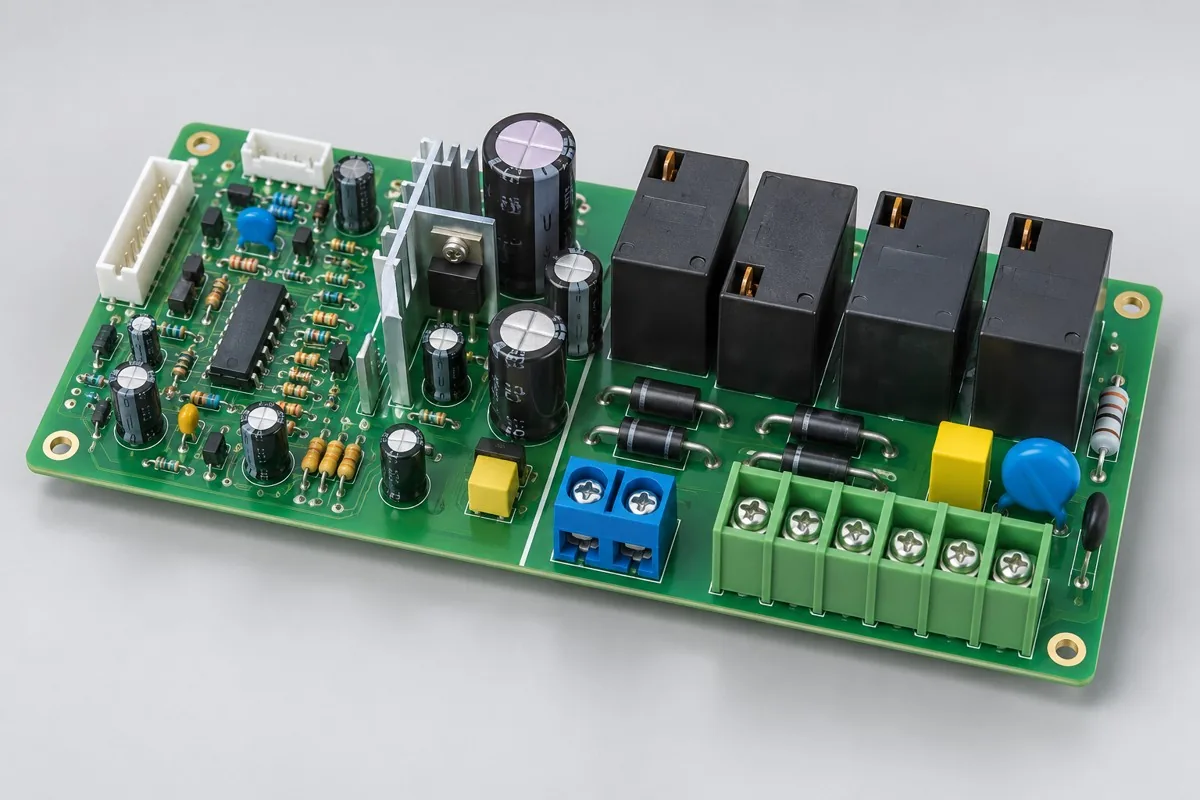
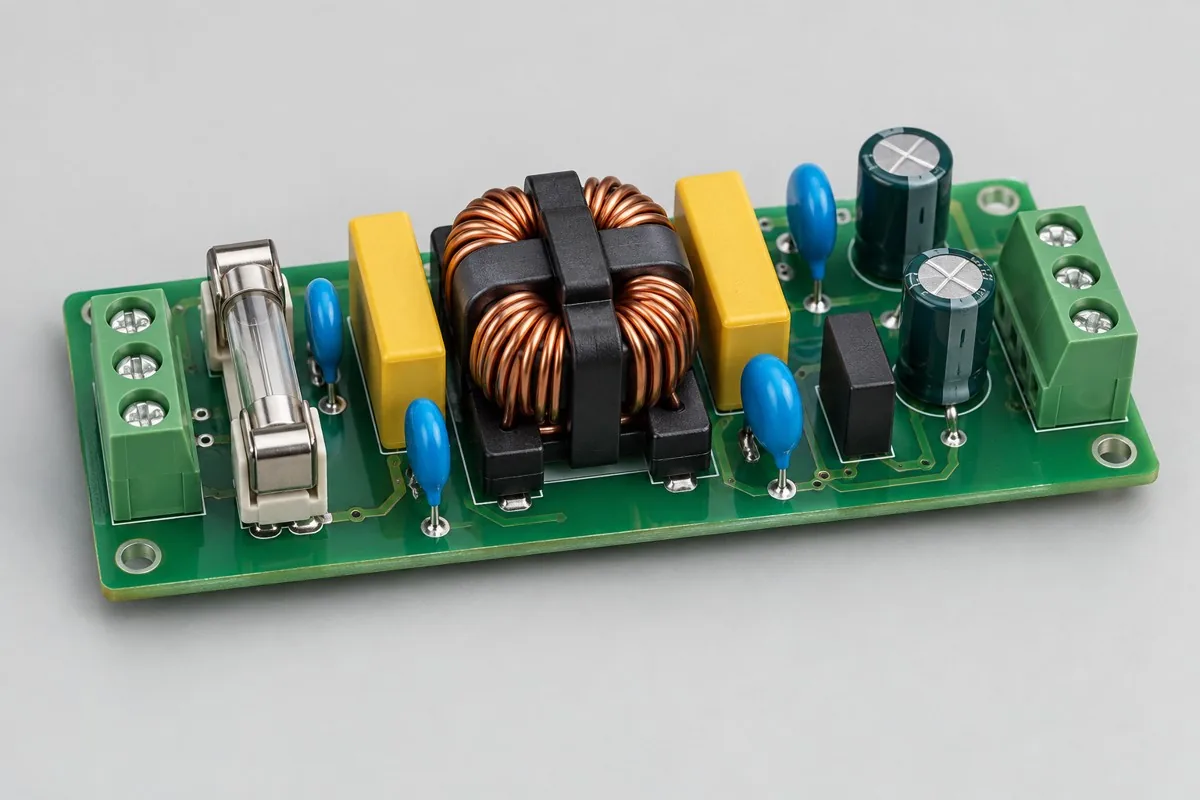
How should DIP operations be divided for air-conditioner relay boards and magnetic-component filter boards?
Select tests for air-conditioner control boards around relays and interlocks; check magnetic components, grounding, and insulation on filter boards. Separate soldering operations from complete-board functions first to avoid confusing through-hole assembly operations with complete PCB assembly delivery.
DIP through-hole assembly: outsourcing and acceptance
DIP through-hole assembly covers forming, insertion, soldering, and necessary subsequent soldering of through-hole components. Customers first provide lead and assembly requirements, component heat limits, and board-surface conditions, then determine the soldering route. Compared with complete through-hole PCB assembly delivery, this category focuses on outsourcing individual operations.
Control boards require checks of sensing, relays, and fault timing; filter boards require checks of magnetic components, X/Y capacitors, grounding, and safety-rated components. The two cannot share the same operational acceptance criteria.
Differences in assembly and test paths
Group through-hole components by thermal mass, heat tolerance, and mechanical support. Choosing wave or subsequent soldering requires verification of wetting, residue, leads, and insulation boundaries, rather than production volume alone.
Air Conditioner Relay Control Board
SMT → lead forming → soldering → cleaning inspection → functional testing. Assess incorrect relay models, incorrect NTC parameters, and reversed load wiring separately. Acceptance must check fault-related start inhibition, power-restoration states, and every load channel, not just relay actuation.
Power Filter Plug-in Board
Lead forming → soldering → residue/spacing inspection → electrical testing. Continuity alone cannot rule out incorrect safety-rated components, solder spikes on leads, missing ground connections, or cracked magnetic components. Acceptance includes material verification and structural inspection; EMC comparisons apply only to the specified equipment and arrangement.
Hybrid Thermal Process and Load Interlock
Provide the through-hole/subsequent soldering list, component heat limits, isolation boundaries, and assembly height limits. Check relay interlocks and filter grounding separately; component certification does not establish complete-system safety or EMC compliance. Through-hole assembly documentation:BOM, reference designators, hole-to-lead fit, forming and orientation drawings, and whether the work is through-hole only or follows SMT. Soldering route: group components for a shared soldering pass separately from sensitive components requiring subsequent soldering; validate the soldering window with the first article.
Component supply, quantity and delivery
Control boards include firmware; passive filter boards have no firmware. Define wiring harnesses, modules, and complete-system safety/EMC tests separately.
For DIP through-hole assembly orders, verify the BOM, through-hole reference designators/polarity, forming/lead trimming, hole-to-lead fit, securing drawings, quantity, and consigned/procured material lists. Through-hole-only operations require no pick-and-place file or stencil; mixed-technology orders that include SMT also need the corresponding CPL/DNP information and stencil review. Provide shipping firmware and verification details only for control boards with commissioned programming, and reference sources and parameter requirements only for agreed calibration; passive filter boards have no firmware. Confirm charges for forming, through-hole/subsequent soldering, necessary fixtures, and the electrical or load tests on this page. Agree replenishment/loss allowances, surplus materials, and delivery milestones in advance; regression-test affected functions after changes.
Material and Process Reference
DIP through-hole assembly pricing and selection FAQ
How are DIP through-hole assembly costs calculated? Wave soldering or subsequent hand soldering
Through-hole soldering can be estimated as board quantity × billable points per board × price per point + setup fee. A project-specific quotation requires review of the available files, quantity, materials, requested tests, delivery destination, taxes, shipping, and trade terms. This excludes materials, insertion, and functional testing. Any formula on this page organizes cost inputs; it is not a quoted rate.View cost items, calculation conditions, and sources.
How should I compare quotations from DIP through-hole assembly suppliers?
Align the scope of lead preparation, insertion, soldering, and securing before comparing through-hole assembly quotes. Heat-sensitive components, magnetic components, and relays require different routes; do not assume subsequent soldering and cleaning are included merely because DIP is included.
Can a board with heat-sensitive components on the bottom always use wave soldering?
Check allowable heat exposure, masking openings, and solder-joint accessibility before comparing subsequent soldering routes. Protective fixtures cannot guarantee removal of all thermal effects; validate the actual board.
Which counting rules should a DIP quotation specify?
State whether counts are based on leads, components, or connection points, and whether forming, insertion, soldering, and securing are counted separately. Work on relays, magnetic components, and wires cannot be represented by a single point count.
Can lead-forming and subsequent soldering tools be reused directly for repeat orders?
Check lead shape, board standoff height, hole positions, and tooling condition. Reassess part-number or structural changes first; a reusable fixture does not eliminate first-article verification and execution for the current batch.
Should a through-hole assembly quote include programming for a filter board with no firmware?
Do not include programming by default when the actual BOM has no programmable components. Grounding, continuity, and specified electrical checks still require agreement; if monitoring and control are added, list firmware and verification separately.
How can DIP prices based on leads, components, or solder joints be compared consistently?
Provide per-board lists of components, leads, and actual solder points, with counting rules for unsoldered leads, multi-lead components, and connectors, then compare at the same delivery quantity. List lead forming, lead trimming, positioning preparation, subsequent soldering, and per-board functional testing as separate scopes; a through-hole point price does not automatically include every downstream operation.
Consult DIP through-hole assembly quotation: describe the application, existing configuration, and expected quantity so we can discuss assembly inclusions and selection requirements.