How is mixed SMT and DIP assembly quoted? Why is secondary soldering charged separately?
Quotes should separately itemize SMT and through-hole operations, magnetic component, power device and heat sink assembly, localized secondary soldering and cleaning, and final calibration and loaded testing. Separate initial order setup costs from recurring batch and per-board costs. For the same quantity, also align revisions, delivery configuration, and tax and shipping terms to determine whether price differences reflect configuration or excluded work.
Quotation terms depend on the approved files, quantity, material supply, tests and delivery requirements.
Prepare a structured RFQ or use the short inquiry form.
How does mixed SMT and Through-Hole assembly differ from SMT-only assembly?
Mixed-technology boards are more than the sum of SMT and DIP points. Component thermal tolerance, accessibility, and heat sink installation change the sequence. Industrial power supplies and motor drives require different load and protection tests.
How should mixed-assembly operations be sequenced for industrial power supplies and motor drives?
Group components by thermal process first, then schedule sensitive components, insulation, and thermal structures. Test in the agreed final assembly state; otherwise, problems caused by secondary soldering or installation may be missed.
Mixed SMT DIP assembly: order scope and acceptance
Mixed SMT and Through-Hole assembly connects surface-mount controls with through-hole/secondary soldering on the same board. Priorities are component grouping, cumulative thermal processes, and final inspection. Power controls and motor drives also require load, protection, and post-heat-sink-assembly acceptance.
Power boards: magnetic components/isolation/sensing and fans; motor boards: through-hole power devices/heat dissipation/dual feedback paths. Component grouping determines the process route.
Differences in assembly and test paths
Define the sequence of SMT, DIP, wave/localized secondary soldering, and heat sink installation. Perform final calibration/loaded testing after all agreed thermal operations.
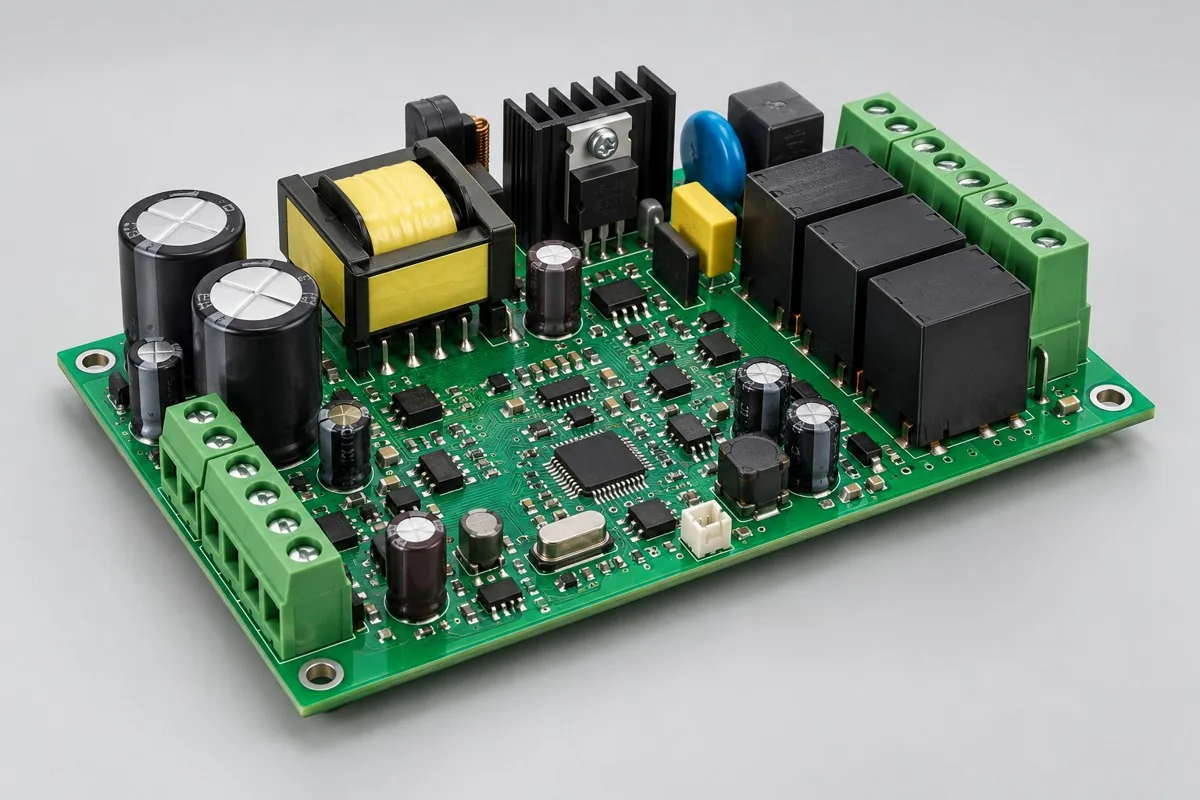
Mixed assembly industrial power control board
SMT → DIP grouping → wave/secondary soldering → cleaning → testing. Check through-hole solder bridges, misaligned magnetic components, spatter in isolation areas, and incorrect sensing coefficients separately. Acceptance data comes from the final assembly state. After secondary soldering rework, recheck nearby SMT components and control functions.
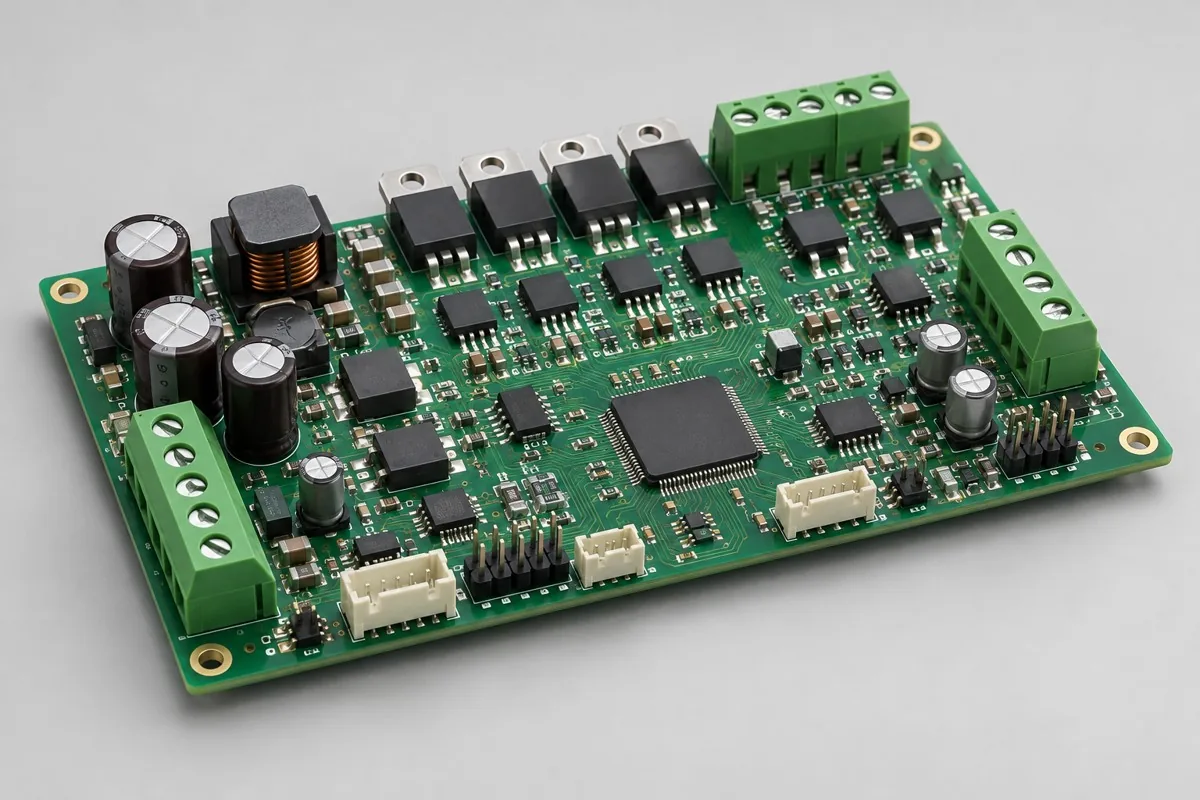
Mixed assembly motor driver board
SMT → through-hole soldering → heat sink assembly → loaded and protection testing. Assess poor power-pin soldering, missing insulation, reversed feedback, and swapped dual-path wiring separately. Acceptance includes both paths operating simultaneously. A single path at no load cannot verify shared power and thermal conditions.
Verify function after the final operation
SMT → through-hole/secondary soldering → heat sink/harness fastening →Functional Testing must be defined as a process route. Verify high-thermal-mass joints, insulating pads, and power loads separately. Continuity after reflow does not cover secondary soldering and assembly risks. Component groups: surface-mount parts, through-hole parts sharing a soldering pass, and sensitive parts for secondary soldering, with routes confirmed by reference designator. Thermal processes: cumulative reflow/wave/rework exposure, according to component limits and first article verification.
Component supply, quantity and delivery
Record large-component fastening, thermal processes, firmware/calibration, and final assembly revision together. Secondary soldering rework requires rechecking heat-exposed SMT areas.
Provide Gerber files, the BOM, pick-and-place files, do-not-populate (DNP) information, assembly drawings, quantity, customer-supplied and procured material lists, and firmware verification requirements under one order revision. Cost/delivery items separate SMT, through-hole assembly, secondary soldering, fixtures, and testing, with scheduling based on quantity and material readiness. Confirm fees separately for stencil/carrier/fixture preparation, process operations, programming/calibration, and the supporting tests on this page. Agree on replenishment/attrition, excess materials, and change-related inventory first, then list delivery milestones after material readiness and scheduling are confirmed. Perform relevant regression testing for component/interface/mechanical/firmware changes, and record pilot issues separately from production release.
Material and Process Reference
Mixed SMT and Through-Hole assembly pricing and selection FAQ
How is mixed SMT and DIP assembly quoted? Why is secondary soldering charged separately?
For standard placement, first calculate board quantity × billable points per board × price per point + setup fee. A project-specific quotation requires review of the available files, quantity, materials, requested tests, delivery destination, taxes, shipping, and trade terms. This is a placement-only reference; bare PCBs, materials, and testing are charged separately. Any formula on this page organizes cost inputs; it is not a quoted rate.View cost items, calculation conditions, and sources.
How should I compare mixed SMT and Through-Hole assembly manufacturers' quotes?
List operations for heat-sensitive components, magnetic components, and heat sink installation, and check secondary soldering, cleaning, and final loaded testing. SMT plus through-hole point counts describe only part of assembly and cannot cover assembly sequence and final functional costs.
Does a mixed-technology board need final retesting after passing tests at SMT completion?
Through-hole assembly, secondary soldering, and heat sink installation may change connections or mechanical stress. Recheck related functions in the final delivery state. Earlier-stage acceptance does not cover later operations.
How should thermal and magnetic component operations be grouped in a quote?
Provide component thermal limits, positions on both sides, and accessibility to confirm reflow, through-hole, and later installation sequence. List protection, localized soldering, and cleaning separately rather than simply adding two point counts.
What installation drawings are needed when the customer supplies heat sinks for mixed assembly?
Provide insulating pad, fastening, and contact requirements with revisions, and check wire order and installation sequence. Customer supply reduces procurement; installation and loaded thermal verification remain actual work.
Which protection functions need retesting after power-device rework on a mixed-technology board?
Assess changes to drive, sensing, temperature rise, and current limiting/shutdown, and retain rework and retest records. Rechecking solder joints alone does not cover power and feedback paths.
Request a mixed SMT and Through-Hole assembly quote: describe the application, existing configuration, and expected quantity so we can discuss assembly inclusions and selection requirements.