What verification is included in medical device PCB assembly costs?
Quotes should separately itemize the specified BOM and material lot management, low-level front-end cleaning and assembly, calibration sources and test fixtures, and board-level results and traceability records. Separate initial order setup costs from recurring batch and per-board costs. For the same quantity, also align revisions, delivery configuration, and tax and shipping terms to determine whether price differences reflect configuration or excluded work.
Quotation terms depend on the approved files, quantity, material supply, tests and delivery requirements.
Prepare a structured RFQ or use the short inquiry form.
How does blood pressure control board assembly differ from medical analog acquisition board assembly?
Blood pressure control boards include pressure and pump/valve timing, while analog acquisition boards focus on noise and channel calibration. Equal solder joint counts do not imply equal testing costs. Separate board-level assembly from complete medical device registration, clinical evaluation, or safety evaluation.
Should medical PCB assembly calibration be selected for pressure/pump/valve functions or low-level signals?
Select the configuration by acquired signals, calibration targets, and final device requirements. A medical application name cannot replace complete device safety and metrology requirements. The purchasing list should define board-level verification scope.
Medical PCB assembly: order scope and acceptance
The approved BOM, agreed assembly processes, firmware/calibration requirements and board-level tests form the delivery basis for medical PCB assembly. Blood pressure monitor controls and internal analog acquisition have separate acceptance tasks. The responsible project party defines complete medical device design, patient safety, metrology, and registration.
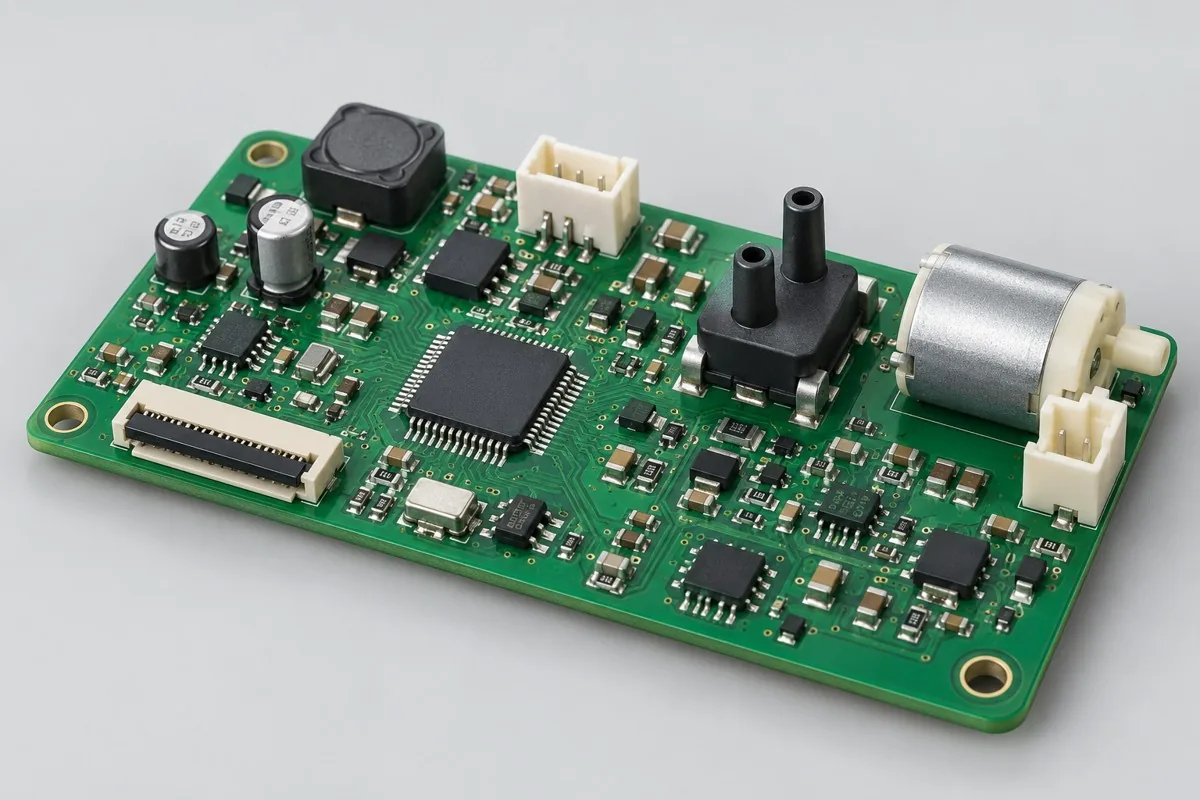
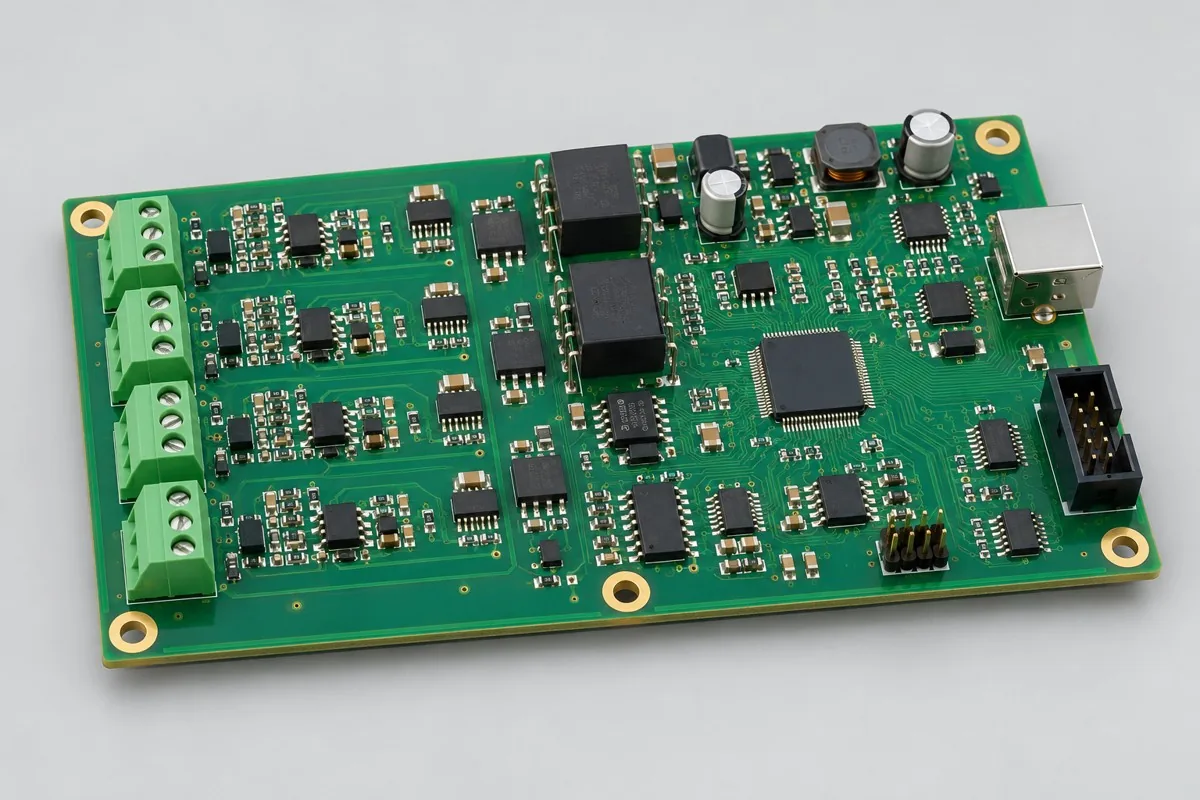
Blood pressure monitor boards include pressure, pump/valve, and display timing. Acquisition boards include low-level front ends, calibration, and isolation interfaces. Their contamination control and acceptance priorities differ.
Differences in assembly and test paths
Test air pump interference together with pressure acquisition. Check references, leakage, noise, and channel crosstalk on low-level boards. Board-level process inspection and medical metrology/safety/registration are separate scopes.
Blood Pressure Monitor Control Board
SMT → secondary socket soldering → programming → simulated pressure/pump/valve testing. Sensor socket soldering, swapped valve wires, acquisition noise, and incorrect calibration writes are different defects. Board-level acceptance covers signals and actions, and cannot replace complete blood pressure monitor metrology, leakage, clinical, or regulatory evaluation.
Medical device analog acquisition board
SMT → secondary soldering → cleaning verification → programming → channel testing. Missing components, residue contamination, incorrect isolation boundaries, and misassigned coefficients may escape a single AOI pass. Retain release records per channel and revision. Conduct safety tests within the approved scope without generic withstand-voltage figures.
Division of labor between board-level assembly and medical system validation
List sensors, calibration sources, input protection, and patient connection relationships in the RFQ. Record board-level results separately for blood pressure pump/valve control and low-level acquisition. Separately define responsibilities and evidence for clinical work, complete device safety, and market access. Files and responsibilities: approved BOM/assembly drawings, medical interface applications, and test specifications, with division of work between medical electronics application review and board-level assembly. Materials and processes: specified sensors/precision components, cleaning restrictions, batches, and rework; substitutes and process changes require approval.
Component supply, quantity and delivery
List separately in the BOM whether sensors, pumps/valves, displays, and pneumatic paths are delivered. Link calibration coefficients to board IDs.
At ordering, align Gerber/BOM/pick-and-place files/DNP and assembly drawings, quantity, customer-supplied/procured material lists, and firmware verification. Delivery records include actual firmware, calibration, board-level results, and traceability lists; verify applicable management systems independently. Confirm fees separately for stencil/carrier/fixture preparation, process operations, programming/calibration, and the supporting tests on this page. Agree on replenishment/attrition, excess materials, and change-related inventory first, then list delivery milestones after material readiness and scheduling are confirmed. Perform relevant regression testing for component/interface/mechanical/firmware changes, and record pilot issues separately from production release.
Material and Process Reference
Medical PCB assembly pricing and selection FAQ
What verification is included in medical device PCB assembly costs?
For standard placement, first calculate board quantity × billable points per board × price per point + setup fee. A project-specific quotation requires review of the available files, quantity, materials, requested tests, delivery destination, taxes, shipping, and trade terms. This is a placement-only reference; bare PCBs, materials, and testing are charged separately. Any formula on this page organizes cost inputs; it is not a quoted rate.View cost items, calculation conditions, and sources.
How should I compare medical PCB assembly manufacturers' quotes?
Include pressure or analog sources, channel calibration, material lots, and record contents in the quote. Board-level assembly and complete medical device evaluation are different scopes. Do not compare an unspecified power-on price with calibrated delivery.
Does blood pressure board assembly include clinical and complete device metrology evaluation?
Board-level pressure input, pump/valve, pressure release, and display tests follow the order. List complete device metrology, clinical, and registration responsibilities separately. A board calibration table cannot establish complete device qualification.
What calibration inputs are needed for a customer-supplied pressure sensor?
Provide the full model, measurement range, output, pneumatic path, and approved points/limits. Distinguish simulated inputs from combinations with actual pumps/valves. Quote source preparation separately from per-board calibration execution.
Is comparing material prices enough when replacing precision parts on a medical low-level board?
Part number, accuracy, noise, and temperature drift may affect the front end. After substitute approval, check channel calibration and related noise. Separate component price differences from re-verification work.
How to incorporate traceability requirements into board-level orders
Define BOM/firmware revisions, critical material lots, board IDs, calibration record fields, and retention scope. Explicitly request serial numbers or special reports; the medical category name does not mean every item is automatically included.
Quote for medical PCBA assembly: describe the application, existing configuration, and expected quantity so we can discuss assembly inclusions and selection requirements.