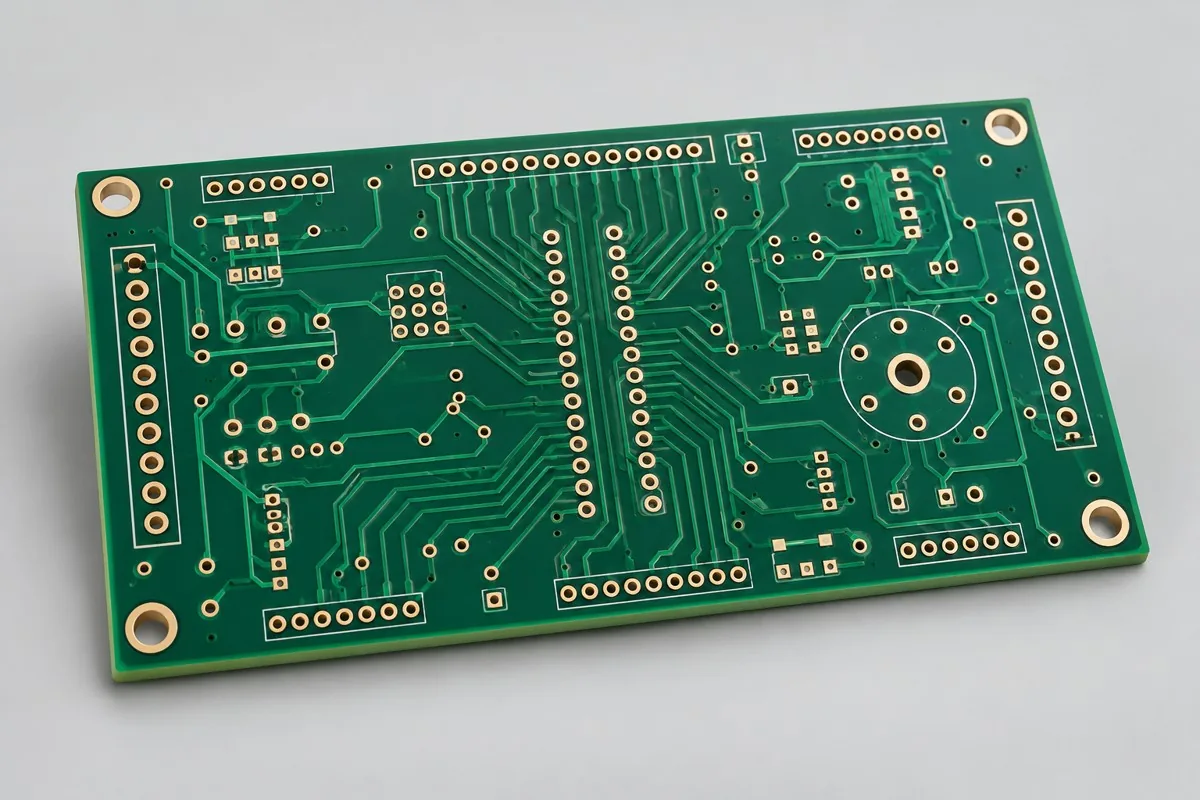
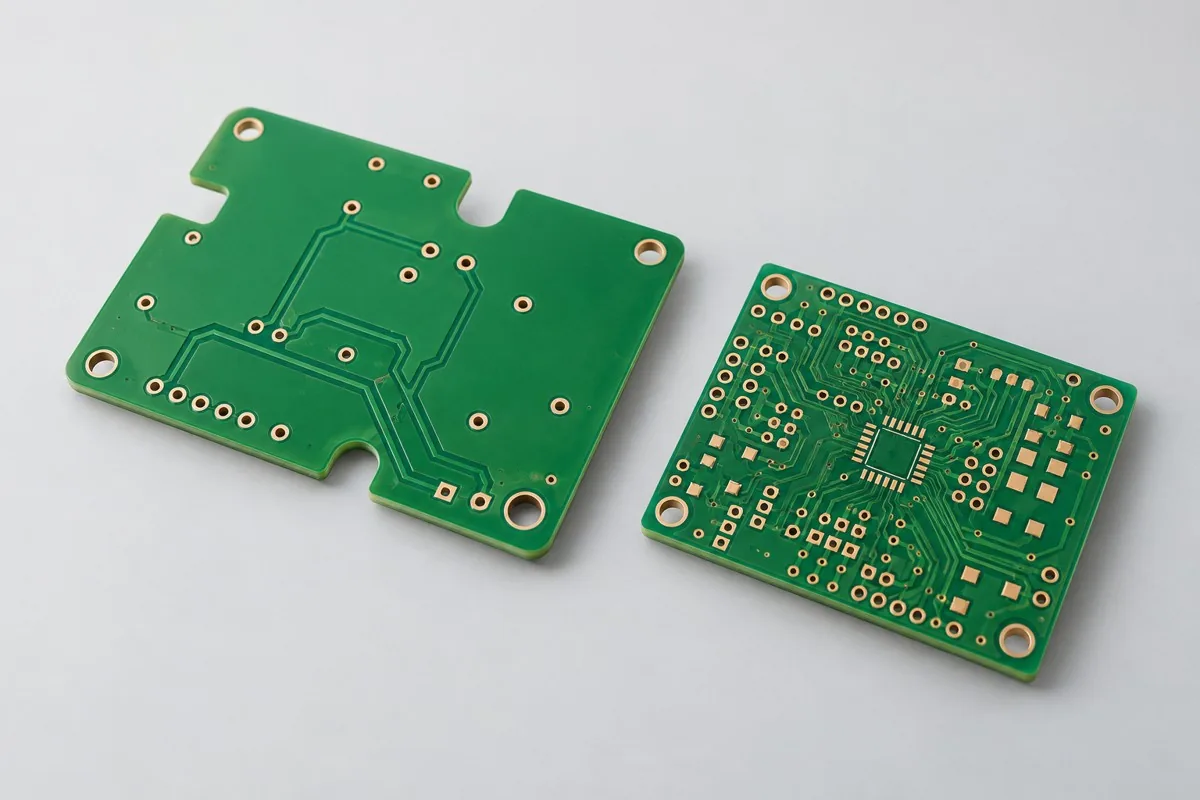
Single- and double-sided PCBs: hole interconnections and jumper responsibilities
For single- and double-sided bare PCB procurement, distinguish copper on one side or both sides and PTH/NPTH holes first. Single-sided appliance boards need jumper netlists; double-sided instrument boards need through-hole lead holes and hole-wall copper. Quotes must state who installs jumpers; deliver bare-board electrical tests and finished-hole records, with separate acceptance of assembled nets.
Distinguish Bare Board and Assembled Network
Specify single-sided board jumpers, double-sided board plated holes, and enclosure grounding in documentation. Bare-board electrical testing verifies only the board's own connections; PCB assembly testing covers circuits completed by jumpers.
Material and Process Reference
Consult selected PCB configuration
Which has lower total cost: single-sided or double-sided PCBs?
Single-sided bare boards may simplify fabrication, but circuits requiring jumpers add assembly and inspection. Double-sided boards use plated-hole interconnections to increase routing freedom; compare total fabrication-plus-assembly costs.
How should single- or double-sided boards be selected for appliance control and instrument acquisition?
Simple appliance controls and instrument acquisition have different return-path and density needs. Check routability, terminals, and mechanical layout before choosing single- or double-sided boards; do not select layer count solely by the lowest bare-board price.
Single- and double-sided PCB pricing and selection FAQ
Why do single- and double-sided PCB prices differ? Which saves more money
A project-specific quotation requires review of the available files, quantity, materials, requested tests, delivery destination, taxes, shipping, and trade terms. Add specified materials, processes, and inspections not yet included to the total cost. Standard board references do not cover every configuration of this product. Any formula on this page organizes cost inputs; it is not a quoted rate.View cost items, calculation conditions, and sources.
How should I compare quotations from single- and double-sided PCB manufacturers?
Examine jumpers, holes, and assembly work beyond the board price, aligning final functions and quantities. Establish whether single-sided routing is feasible and double-sided construction improves return paths; do not choose solely by the lowest bare-board price.
How should a single-sided board with jumpers be compared with a double-sided quote?
Add bare-board, jumper-material, assembly, and inspection costs, comparing the same functions and quantities. Less fabrication for one copper layer alone does not determine total cost.
Are a double-sided PCB and double-sided SMT the same ordering requirement?
A double-sided PCB describes copper-layer structure; double-sided SMT describes component assembly sides. Provide Gerber files and both-side assembly documentation separately, without mixing PCB fabrication and reflow operations.
Must holes on single- and double-sided boards be identified as plated or non-plated?
Specify hole uses, finished dimensions, and tolerances, linked to layer connections and mechanical requirements. Visible drilled holes do not mean every hole follows the same process.
Can electrical testing be removed after reducing layers on a simple appliance board?
Layer count does not define net-inspection scope. Check electrical tests and critical dimensions against approved drawings; separately confirm assembly and functions when layer reduction introduces jumpers or new return paths.
Request Single/Dual Side PCB Quotation: describe the application, existing configuration, and expected quantity so we can discuss bare-board fabrication requirements, inspection, and delivery conditions.
Single/double-sided quotation: hole table and jumper netlist
After selecting a product in this category, submit PTH/NPTH hole tables, through-hole component leads, jumper nets, and board-edge isolation. Match each change to the Engineering Reference Configuration, using the same revision for fabrication drawings, inspection locations, and material approvals; define specialized verification and report scope before quotation.
Back to all PCB products · Manufacturing file knowledge
Why do single- and double-sided PCB prices differ? Which saves more money
Quotes should separately account for copper layers and materials, plated or non-plated holes, jumpers and subsequent assembly, electrical testing, and surface finish. List initial-order setup charges separately from per-batch and per-board charges; for equal quantities, also align revisions, delivery configurations, and tax and freight terms to identify whether price differences reflect configurations or excluded work.
Quotation terms depend on the approved files, quantity, material supply, tests and delivery requirements.
Prepare a structured RFQ or use the short inquiry form.