How should I compare high-volume PCB assembly quotes? Why SMT unit price alone is insufficient
Quotes should separately account for the production BOM and procurement lots, stencils, carriers and production fixtures, assembly, firmware and per-board testing, packaging, split shipments, and surplus-material management. List initial-order setup charges separately from per-batch and per-board charges; for equal quantities, also align revisions, delivery configurations, and tax and freight terms to identify whether price differences reflect configurations or excluded work.
Quotation terms depend on the approved files, quantity, material supply, tests and delivery requirements.
Prepare a structured RFQ or use the short inquiry form.
How do first-order, repeat-order, and high-volume PCB assembly quotations differ?
Distinguish volume pricing from first orders, repeat orders, and trial production. Coupling and load tests for wireless charging boards and interface and identity tests for self-service equipment boards use different labor calculations; a low SMT price may exclude complete testing.
How should I select production tests for wireless charging and self-service equipment boards?
Finalize materials, firmware, tooling, and release methods through trial production before comparing volume costs for a fixed revision. Clarifying variants, split batches, and shortage handling in advance is more useful than simply pursuing the lowest placement price.
Volume PCB assembly: outsourcing and acceptance
For high-volume PCB assembly, the BOM, material-supply plan, firmware, fixtures and release rules must match the approved revisions. Schedule volume PCB assembly testing around actual ports, peripherals, and protection scenarios, linked to material lots, board identifiers, and shipping firmware; confirm setup charges, unit charges, and split-delivery schedules per order.
Charging and self-service boards are two production-test examples: check coil/ferrite/enclosure combinations for the former and all ports/identities/state machines for the latter. Other products also require a frozen BOM, material-supply plan, firmware, first article, fixtures, and batch release rules; confirm labor time and bottlenecks separately.
Differences in assembly and test paths
Include tooling positioning, receiver/peripheral simulation, and reference-board maintenance in the control plan; high production volume does not justify skipping fitted ports or protective actions.
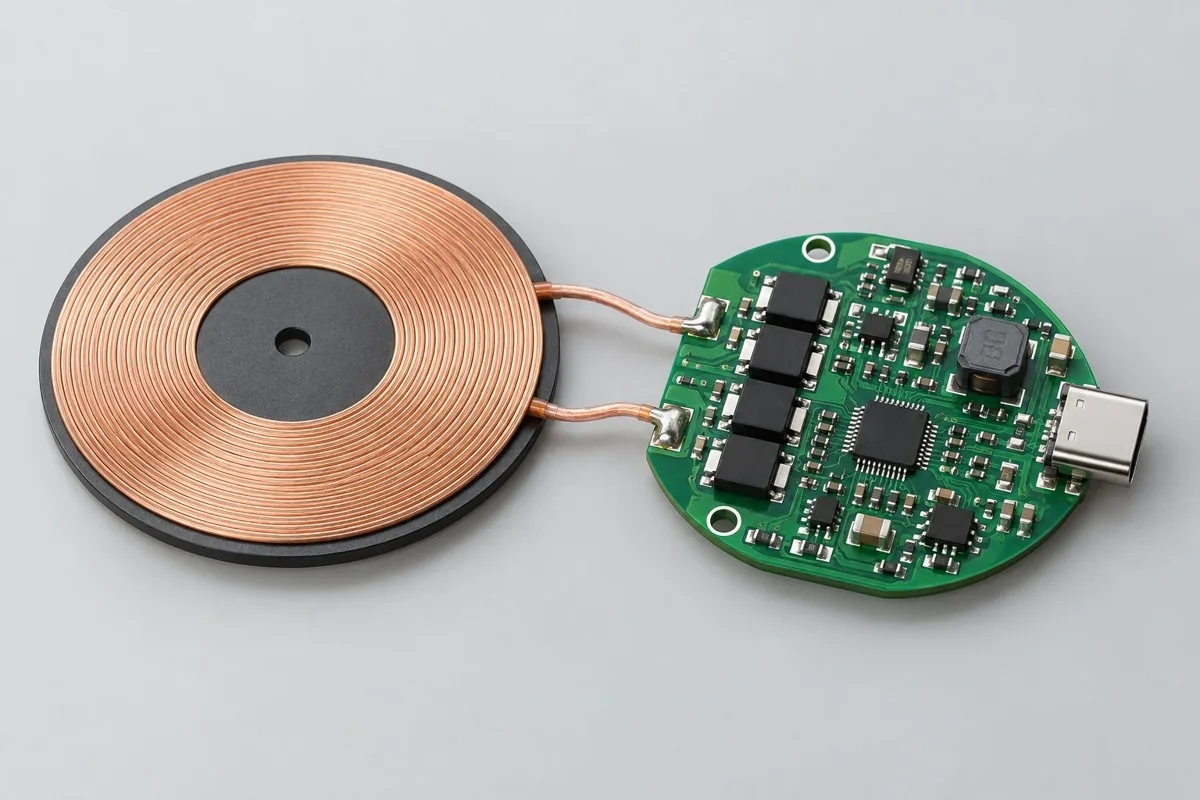
Batch wireless charging control board
SMT → coil/interface assembly → firmware → charging scenarios. Assess incorrect resonant-component values, coil misalignment, ferrite damage, and incorrectly written thresholds separately. Acceptance includes rejection/stop conditions; one normal charging session cannot replace protection checks. Record wattage only with the specified receiver and conditions.
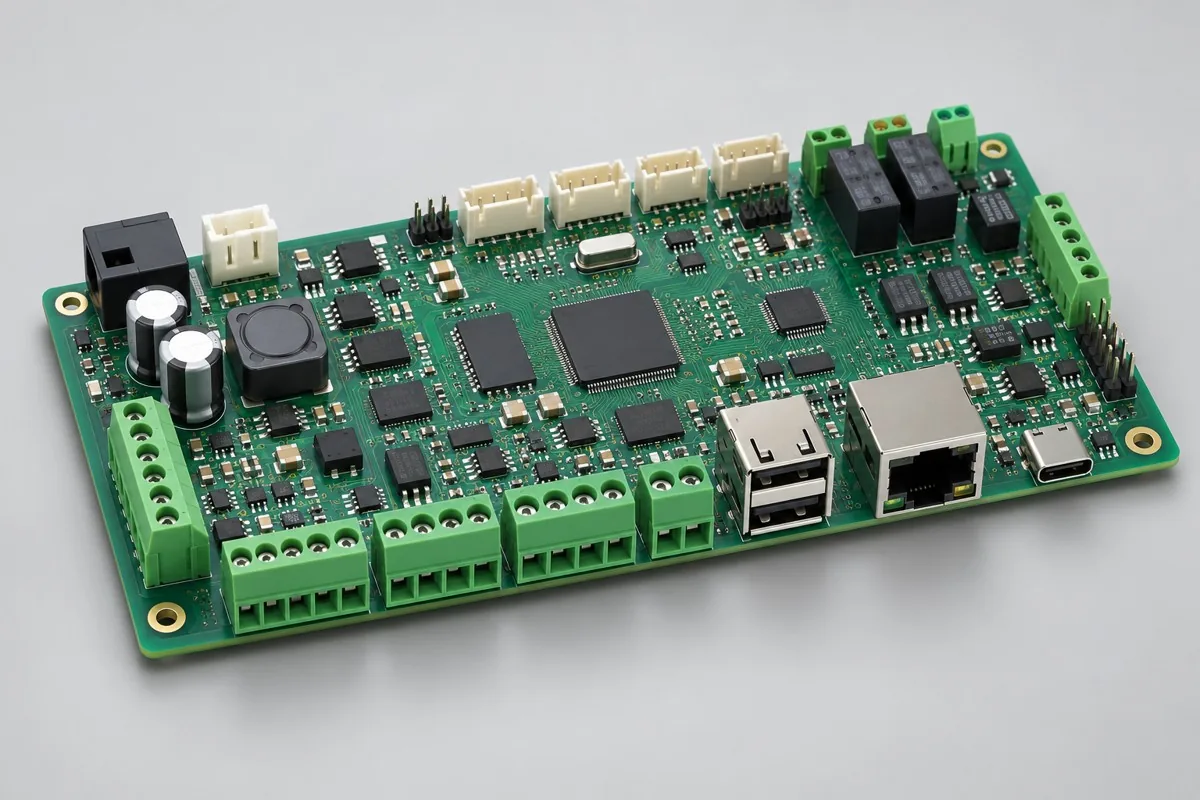
Batch self-service device control board
SMT → subsequent socket soldering → firmware/identity → peripheral simulation. Independently reject socket misalignment, mixed DNP configurations, duplicate identities, and event-logic errors. Acceptance must cover every port enabled in the order; regression-test peripheral protocol changes and do not release a board solely on a successful startup screen.
Fixtures that retain results support production release
Freeze coils/receivers for wireless charging boards and peripherals/protocols for self-service equipment boards. Confirm fixture positioning, scripts, parameter writing, and retest rules before defining batch release; each unit's results must trace back to its revision. Orders and batches: total quantity, split-batch plan, delivery configuration, and frozen revision; documentation changes and inventory disposition require approval. Material supply: consigned/procured materials, fixed key-part models, and substitution rules; procurement MOQ and safety stock are agreed per order.
Component supply, quantity and delivery
Link the BOM, firmware, key lots, serial numbers, and results; measure fixture/test labor time from actual operations, and confirm any capacity or yield expectations from current project evidence.
For orders, align Gerber/BOM/CPL/DNP and assembly drawings, quantities, consigned/procured material lists, and firmware verification. Costs and delivery include setup/maintenance charges, production operations, testing, and packaging; confirm split-delivery milestones based on actual material readiness and scheduling. Confirm stencil/carrier/fixture preparation, assembly operations, programming/calibration, and supporting tests on this page as separate charges. Agree replenishment/loss allowances, surplus materials, and inventory affected by changes in advance; list delivery milestones after material readiness and scheduling are confirmed. Regression-test component/interface/structure/firmware changes against the relevant tests, and record prototype issues separately from production release.
Material and Process Reference
High-volume PCB assembly pricing and selection FAQ
How should I compare high-volume PCB assembly quotes? Why SMT unit price alone is insufficient
For standard placement, first calculate board quantity × billable points per board × price per point + setup fee. A project-specific quotation requires review of the available files, quantity, materials, requested tests, delivery destination, taxes, shipping, and trade terms. This is a placement-only reference; bare PCBs, materials, and testing are charged separately. Any formula on this page organizes cost inputs; it is not a quoted rate.View cost items, calculation conditions, and sources.
How should I compare quotations from high-volume PCB assembly suppliers?
Check the production BOM, fixture reuse, and per-board testing rather than only asking for a volume placement price. Wireless charging requires coupling and load support; self-service equipment requires interface and identity tests. Split deliveries and surplus-material ownership also affect total costs.
If the production fixture is already complete, does the per-board testing charge disappear?
Fixture preparation differs from execution on each board. Connection, stimulus, reading, and recording follow approved release items; calibration-source or script maintenance also requires agreement. An existing fixture does not imply zero labor.
How should materials and identities be managed for split production deliveries?
Record actual lots, firmware, and unique identities against the same BOM revision, and agree quantities, surplus materials, and packaging. Confirm split shipping and scheduling separately; the original total-quantity quote does not automatically cover different arrangements.
Can production wireless charging boards be released based only on the indicator light?
The receiver, coil/ferrite, and enclosure form the verification combination. Check identification, position, temperature rise, and abnormal responses under approved conditions; a lit indicator does not establish actual charging or protection coverage.
How should an existing self-service equipment peripheral prototype become a production test setup?
Freeze ports, protocols, and state timing, and define repeatable peripheral simulation and per-board records. List payment keys and identity workflows separately; one successful online connection does not constitute complete terminal acceptance.
Consult large-batch PCBA assembly quotation: describe the application, existing configuration, and expected quantity so we can discuss assembly inclusions and selection requirements.