
TOPIC FOCUS
Compare exact grades in their stackup role
Record the supplier and grade, dielectric and thermal data used for design, finished-thickness intent, copper condition, processing role, and approved alternatives.
PCB material review should use exact laminate and prepreg grades, thicknesses, copper foils, stackup roles, applicable data-sheet conditions, availability, and documented substitution authority.
Record the supplier and grade, dielectric and thermal data used for design, finished-thickness intent, copper condition, processing role, and approved alternatives.
Material-family names and typical data-sheet values are not interchangeable with lot-specific construction or finished-board performance. Substitutions require explicit project approval.
Use this topic-specific checklist with the linked engineering reference. Record the actual project conditions and the agreed acceptance scope.
| Decision | Input to confirm | Record to retain |
|---|---|---|
| Grade identity | Exact laminate and prepreg supplier grades | Material list tied to each layer |
| Design condition | Thickness, dielectric and thermal assumptions | Data-sheet conditions and stackup role |
| Substitution | Availability and approved alternatives | Signed change decision and revalidation |
These records provide context for the topic. They do not replace review of the current files, materials, quantities, tests, or acceptance conditions.
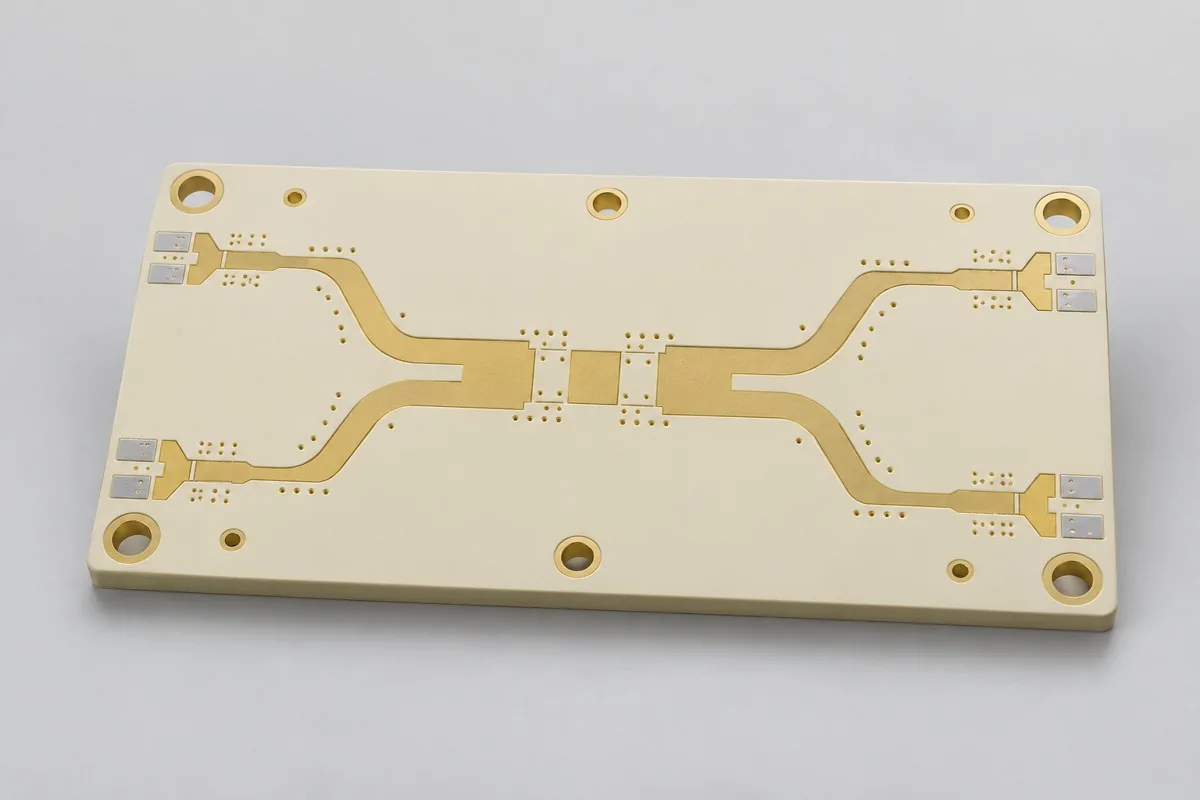
RO4350B high-frequency PCB fabrication reviews materials, structures, and delivery scope against connectors, ports, and exposed-copper RF regions. It provides cost breakdowns, one-time preparation and same-revision repeat-order boundaries, configuration-selection steps, and quotation conversion methods. Specifications follow approved fabrication drawings; component assembly and complete-unit validation are agreed separately.
A RO4350B reference for identifying the exact grade and construction context.View Configuration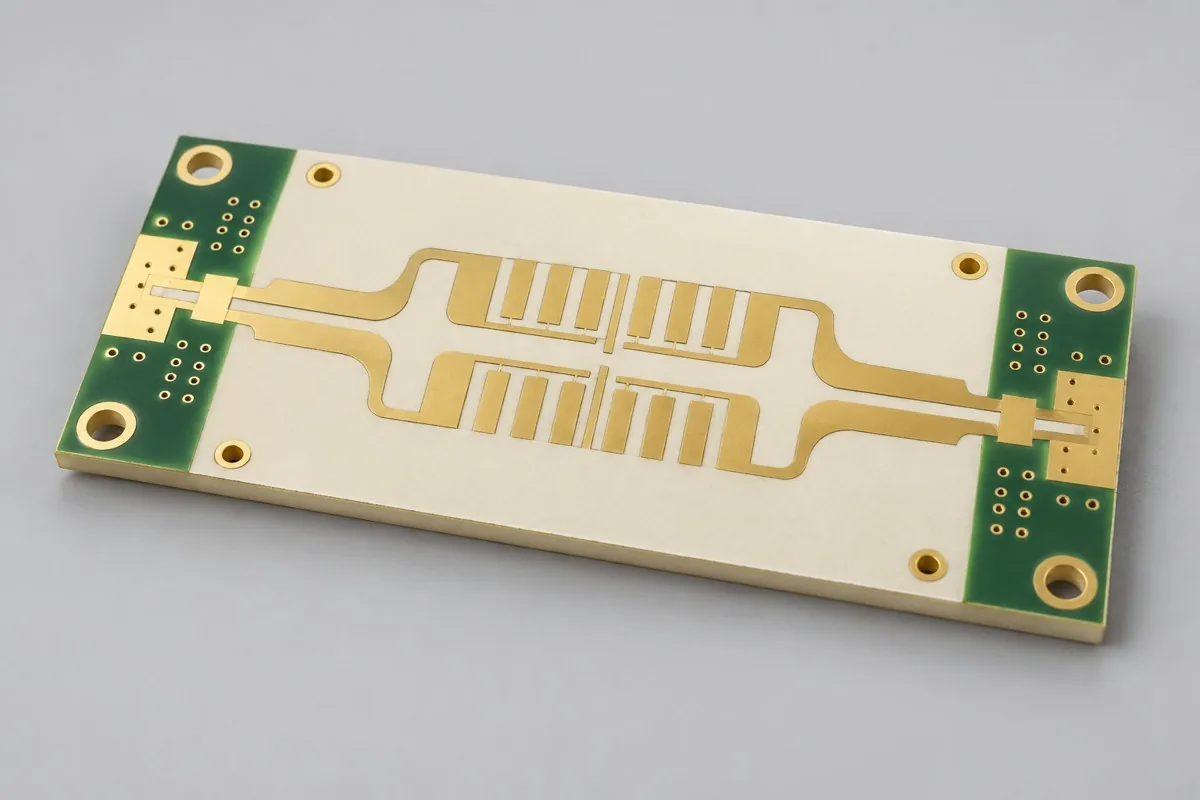
RO4003C high-frequency PCB prototyping reviews materials, structures, and deliverables against resonant/coupled artwork and material/frequency deviations, with cost breakdowns, one-time setup and same-revision reorder boundaries, configuration selection steps, and quotation conversion methods. Specifications follow approved fabrication drawings; component assembly and complete-system verification are separate.
A RO4003C prototype reference for separating material identity from finished-board requirements.View Configuration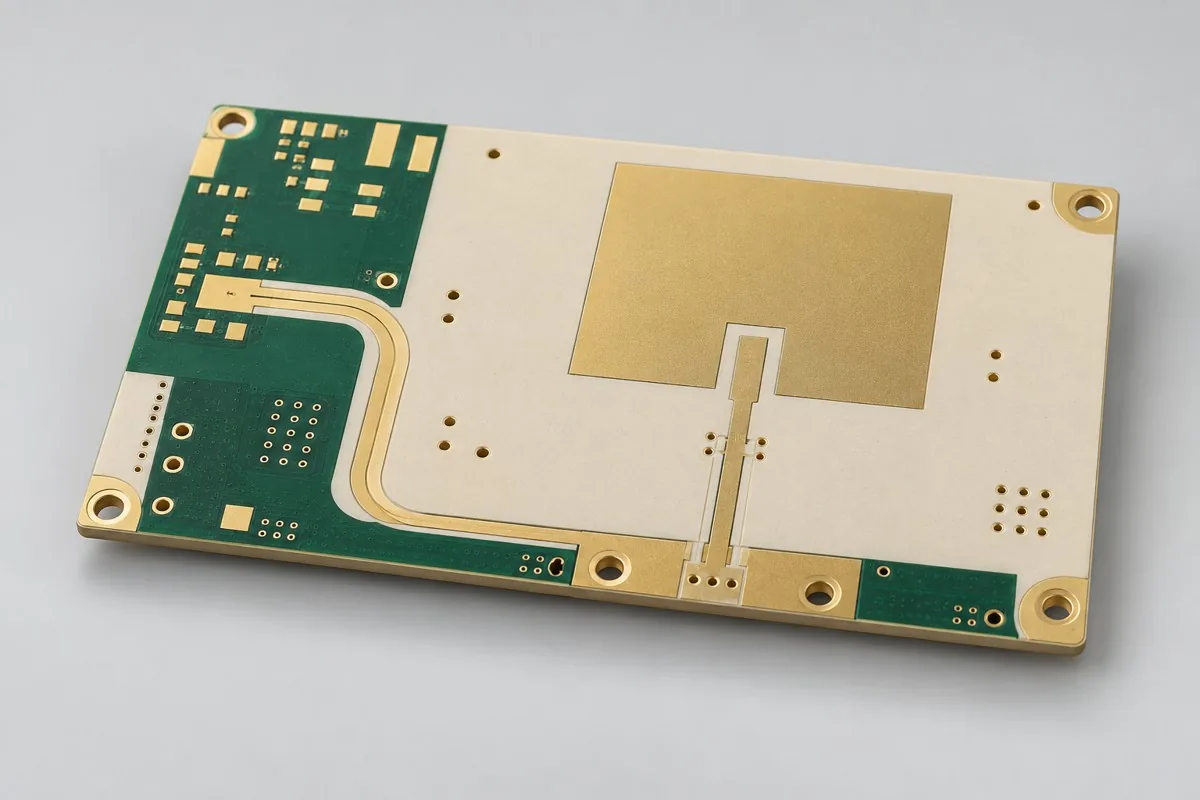
Review RT/duroid 5880 patch antenna PCB fabrication using approved radiator, feed, and ground drawings. Compare PTFE hole processing, finished copper, dimensional inspection, and optional installed antenna measurements.
A Rogers 5880 antenna reference where dielectric selection is tied to RF intent.View Configuration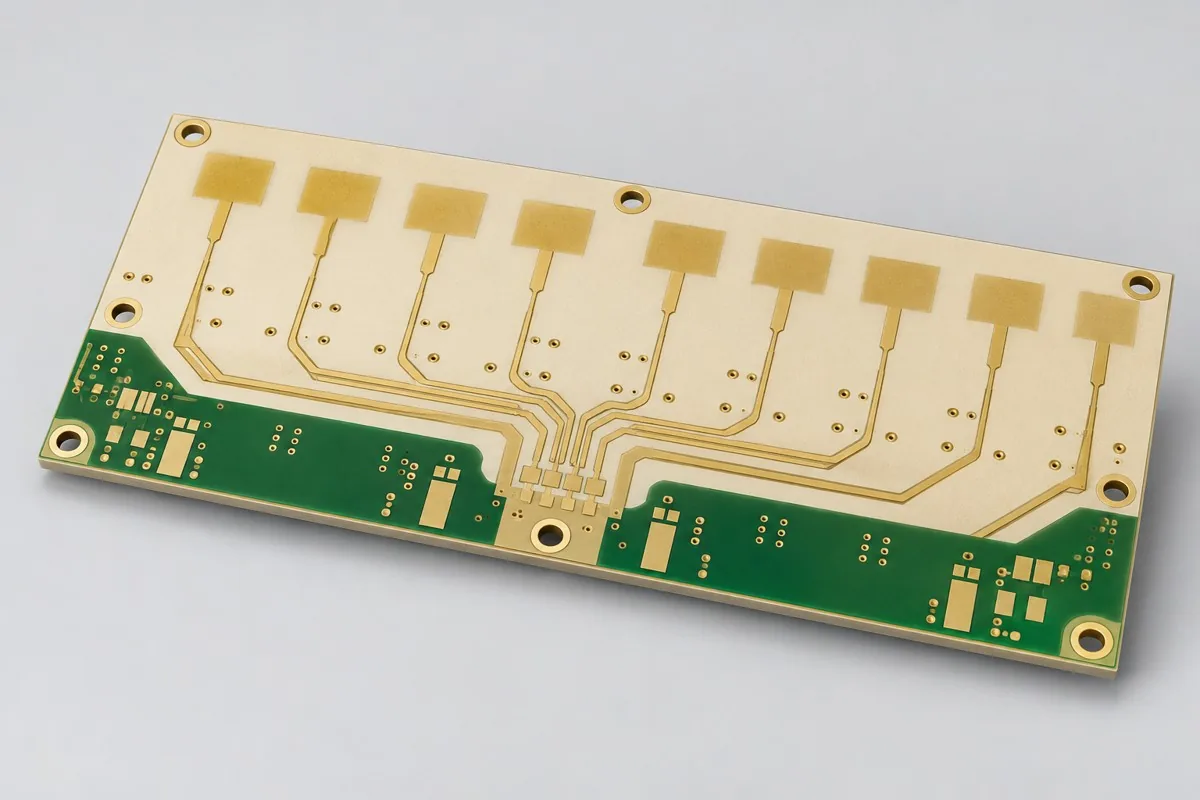
Review RO3003 antenna PCB fabrication for the illustrative 24GHz configuration. Define array coordinates, finished copper, thin-board support, dimensional tolerances, and optional de-embedded VNA or radiation measurements.
A RO3003 radar-board reference for discussing material data and stackup use.View Configuration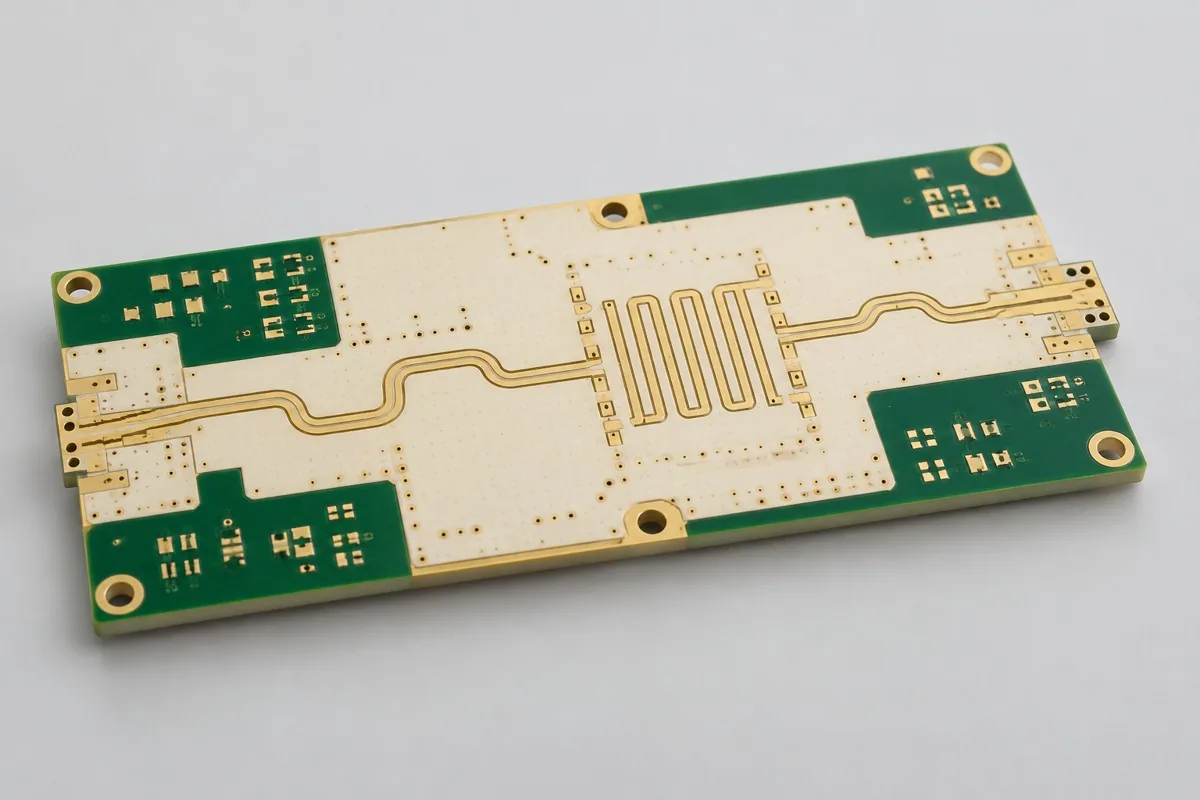
Review RO4835 PCB fabrication for long RF feedlines. Define laminate and foil revisions, finished copper, line geometry, surface finish, and long/short-line comparison structures before agreeing loss measurements.
A RO4835 reference for comparing a named grade within a specific fabrication package.View ConfigurationUse this reference to check the essential inputs, then continue to the articles for specific methods and exceptions.
High-frequency material substitution requires comparison of Dk, loss, copper foil, and dielectric thickness under identical frequencies and methods, plus manufacturing-compatibility checks. This article adds material-comparison fields, propagation/loss sensitivity examples, and a staged verification process. It explains when geometry, prototypes, or approvals must change, avoiding definitions of equivalent material based on one typical parameter.
Read Topic ReferenceFive articles are shown per page, newest first. Page 2 of 3.
Compare related decisions. Browse all engineering topics
Share the available fabrication files, BOM, drawings, quantities, target schedule, test scope, and acceptance requirements. The response will be based on the actual project conditions.

Tell us the product use and which files are available. We can define the next engineering step even when the data package is not complete.