
Historical types · configuration reference
GPS tracker PCBA: assembly configuration and test deliverables
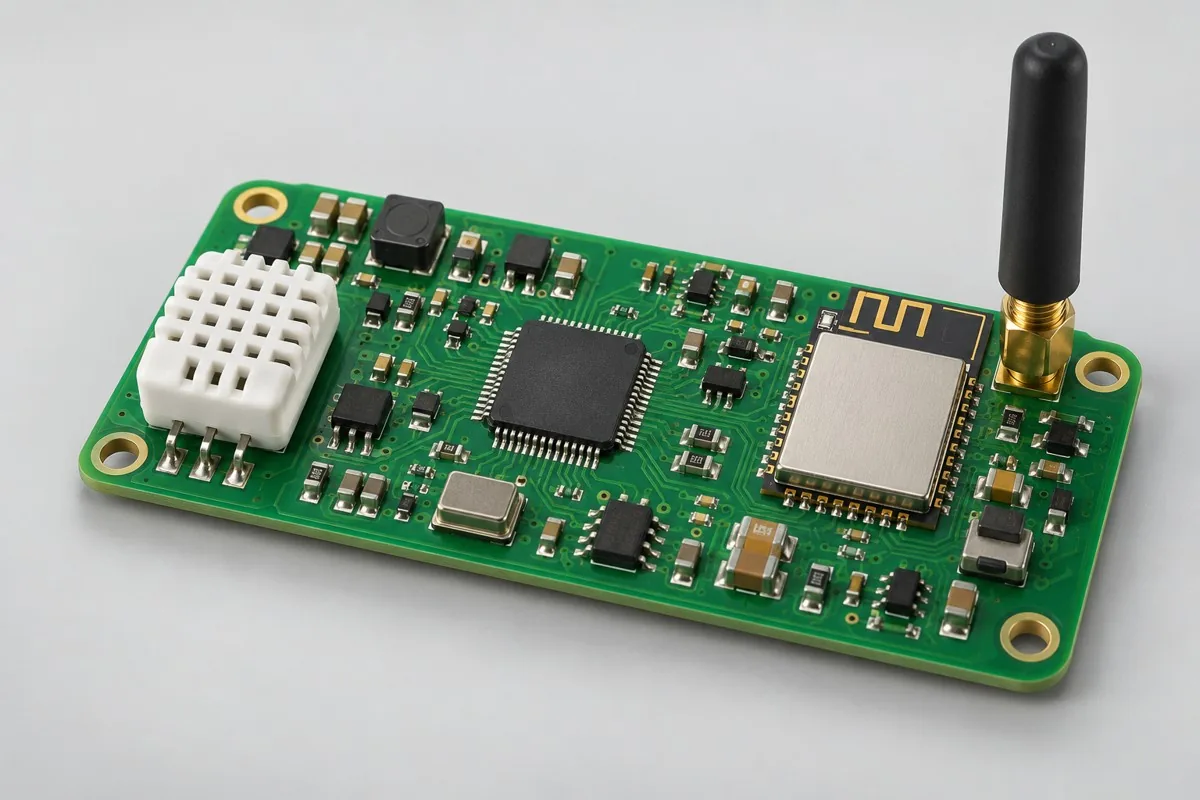
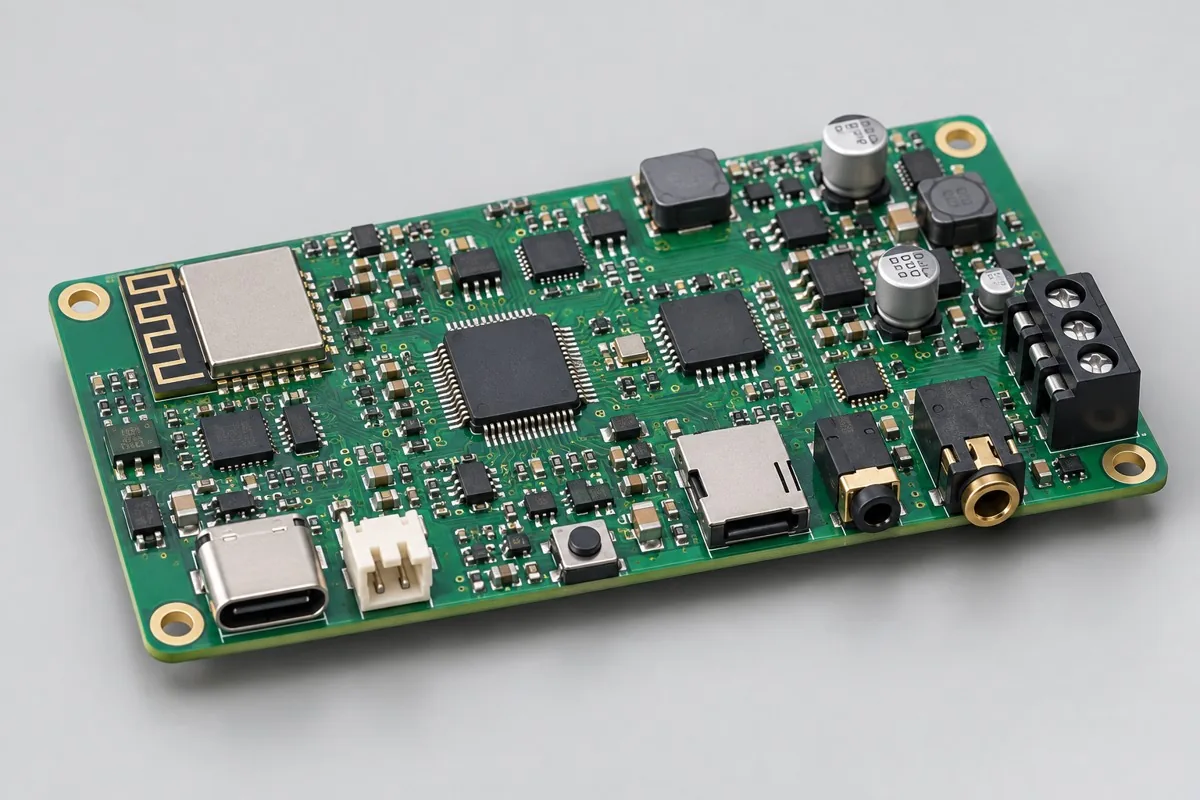
This illustrative 4G/GNSS tracker with optional Bluetooth configuration supports engineering and procurement review. Power, interfaces, materials, firmware, and test conditions must be defined for the actual design. It is not evidence of a stocked model or a product developed or manufactured by KFPCBA. Approved files and order acceptance requirements govern.
4G GPS tracker PCB assembly supports contract manufacturing and purchasing checks for 4G and GPS positioning, with optional Bluetooth. First confirm the cellular module + GNSS + MCU, BLE option, SIM/antenna, USB charging, motion/button inputs, and 4-layer FR-4 reference with antenna and battery keepout boundaries. Then compare the scope of SMT → antenna/battery interfaces → identity programming → positioning/network connection and acceptance costs for positioning, reporting, weak-network recovery, current in each operating state, and charging. This page separates positioning board + identity list + network/positioning records and product type from project validation of battery life/positioning accuracy, helping determine whether a quotation covers the actual intended use. RFQ documentation reference:BOM · bare board · material supply
Reference specification and configuration options
| Options | Reference Configuration |
|---|---|
| Reference application | 4G/ Bluetooth/GPS locator |
| Power and Logic Domains | Rechargeable single-cell battery reference; separate logic/communication power domains |
| Functional Module | 4G and GPS positioning, with optional Bluetooth |
| Core Components/Architecture | Cellular module + GNSS + MCU; BLE option |
| Interface and Channels | SIM/antenna; USB charging; motion/button inputs |
| Board Layers and Material Options | 4-layer FR-4 reference; antenna and battery keepout boundaries |
| Component types | Cellular/GNSS modules, charger, antenna connectors, and sensing |
| Assembly Route | SMT → antenna/battery interfaces → identity programming → positioning/network connection |
| Material Supply Scope | Regional communication module version; specified GNSS/antenna |
| Firmware and Parameters | Device identity, server, positioning interval, and sleep parameters |
| Test Focus | Positioning, reporting, weak-network recovery, current in each operating state, and charging |
| Deliverables | Positioning board + identity list + network/positioning records |
| Configuration Limits/Options | Product type; battery life/positioning accuracy require project validation |
How much does 4G GPS tracker PCB assembly cost, and what does the quotation include?
The regional cellular module version, GNSS, antenna, battery interface, and charging components affect positioning board costs. Itemize identity programming, positioning/network connection, weak-network recovery, and current measurement by operating state. List the battery, data service, server, and enclosure separately. Control board pricing does not equal the cost of a complete positioning terminal.
Quotation terms depend on the approved files, quantity, material supply, tests and delivery requirements.
Prepare a structured RFQ or use the short inquiry form.
| Cost Item | Scope for This Configuration | Billing frequency and work scope | Procurement Verification |
|---|---|---|---|
| Bare PCB and core components | Cellular module + GNSS + MCU; BLE option; 4-layer FR-4 reference; antenna and battery keepout boundaries | Price according to actual bare-board/component purchase quantities; authorize critical components and substitutions individually | Regional communication module version; specified GNSS/antenna |
| Placement and Post-Assembly | SMT → antenna/battery interfaces → identity programming → positioning/network connection | Feeder/program setup per lot; assembly priced per board, joint, or process as agreed, with counting rules specified | Cellular/GNSS modules, charger, antenna connectors, and sensing |
| Manufacturing Preparation | Review stencils, first articles, and support tooling against the actual assembly route | New stencils/carriers may be separate one-time charges; verify panelization, revision, and condition before reuse | Reduced quantities do not automatically eliminate first-article or feeder setup |
| Functional Support | Positioning, reporting, weak-network recovery, current in each operating state, and charging | Itemize test-method/fixture/script setup; agree execution charges per board, channel, or test duration | Separate supporting development from execution records for each board |
| Software and Parameters | Device identity, server, positioning interval, and sleep parameters | When firmware exists, distinguish file programming/verification from software development; omit programming without a firmware revision | Customer-approved files, parameters, and readback rules determine scope |
| Delivery and Change | Positioning board + identity list + network/positioning records; product type; battery life/positioning accuracy require project validation | Price accessories, retesting, and revision changes by approved work items; do not prefill fixed rates | Check BOM, tooling, programs, and acceptance revisions before reorders |
How should integrated GNSS modules and discrete tracker designs be selected?
Integration reduces interfaces and adaptation work but increases dependence on module version availability. A discrete design offers more flexibility for antenna placement and strategy changes but adds power supply and validation work. Compare total costs against regional networks, installation, and battery life targets.
| Comparison Metric | Current Conditions | Factors Influencing Procurement Decision |
|---|---|---|
| Manufacturing Delivery | SMT → antenna/battery interfaces → identity programming → positioning/network connection | Produce boards/assemblies per BOM and assembly drawings; this does not establish that every system function passes |
| Functional Acceptance | Positioning, reporting, weak-network recovery, current in each operating state, and charging | Compare unit prices after defining test stimuli, limits, accessories, and records; review missing test inputs first |
| Configuration Options | SIM/antenna; USB charging; motion/button inputs; 4-layer FR-4 reference; antenna and battery keepout boundaries | Confirm circuit/program compatibility before reviewing assembly and test costs for interface, stackup, or component changes |
| Delivery Scope | Product type; battery life/positioning accuracy require project validation | Complete-system accessories, application development, and project verification are not automatically included in board assembly |
Should a GPS tracker use continuous positioning or scheduled wake-up?
Continuous positioning and frequent reporting increase energy use. Scheduled wake-up reduces active time but changes the update experience. Evaluate actual operating-state profiles and network recovery tests; battery capacity or chip sleep current alone cannot establish promised battery life.
- First list the 4G, Bluetooth, and GPS positioning functions required for this order (historical product type). Distinguish build-to-print manufacturing, configuration changes, and new feature development.
- Then freeze complete part numbers for the cellular module + GNSS + MCU and BLE option, SIM/antenna, USB charging, motion/button inputs, and the 4-layer FR-4 reference with antenna and battery keepout boundaries. Separate consigned and sourced items according to the specified regional communication module version and GNSS/antenna.
- Use the first article to verify SMT → antenna/battery interfaces → identity programming → positioning/network connection, along with device identity, server, positioning interval, and sleep parameters. If only firmware files are supplied, agree on programming verification first; review development separately.
- Convert positioning, reporting, weak-network recovery, current in each operating state, and charging into acceptance items with stimuli, limits, and records. Define fixture ownership, testing of each board, and retesting after rework.
- Finally confirm the positioning board + identity list + network/positioning records and product type. Battery life/positioning accuracy require project validation. Compare total prices using the same quantity, accessories, and test scope, then freeze the order version.
Applicable uses and situations requiring separate review
Pet tracking terminals and mobile asset status/position tracking.
Ordinary GNSS positioning conditions do not apply underground, in shielded environments, or to continuous video reporting. Safety-critical tracking or emergency rescue commitments require independent system validation and cannot be inferred from the tracker name.
Assembly Challenges for This Product
Check cellular peak current, the GNSS low-noise supply, and antenna installation together. After snapping antenna connectors into place, inspect retention and contact, and prevent reverse connection at the battery interface. Use controlled identity/server loading procedures and explicitly switch between test and production identities.
Structural, thermal, and configuration trade-offs
An integrated communication/GNSS module reduces interface count but creates greater dependence on supply and regional versions. A discrete design facilitates antenna and positioning strategy changes but adds layout and power consumption validation. Evaluate continuous-positioning versus scheduled-wake-up battery life using actual operating-state profiles.
Product-specific test matrix
| Test stage | Inspection/Functional Methods | Acceptance Record |
|---|---|---|
| Positioning chain | Start positioning under specified open-sky/simulated conditions and verify data | Conditions, startup state, and location samples |
| Network chain | Reporting, network drop, reconnection, and offline caching | Identity, messages, and recovery logs |
| Battery Status | Charging, sleep, positioning, and current transmission | Current trace, parameters, and charging results |
Defect Handling and Acceptance
Screen separately for loose antennas, incorrect regional module versions, duplicate identities, and failed sleep operation. Distinguish positioning from server reception during acceptance; one coordinate in an app does not represent every mode.
Tracker PCBA: material supply and version control
Select cellular modules, antennas, and SIM configurations for regional/carrier requirements. The customer provides server protocols and identity management. Lock battery and protection board models, and assign transport/complete-product battery life responsibilities separately.
Prototype and production planning
After customer approval of the BOM/pick-and-place file, modules, antenna, battery, and firmware, this page's scope delivers assembled boards and programming/positioning/reporting results. The 4G positioning terminal RF motherboard design direction first requires RF circuits, antenna/power constraints, and validation documents. The compact 4G Bluetooth GPS tracker design direction first addresses HDI layout and mechanical constraints. Both directions relate to this page's functions but do not represent the same physical model. In production, verify positioning and messages under controlled signal conditions, clear test configurations, and associate production identities.
Delivery Configuration
Positioning board + identity list + network/positioning records. Product type; battery life/positioning accuracy require project validation.
Convert this configuration into a reviewable order
For 4G Bluetooth GPS tracker control board orders, verify the BOM, quantity, material supply, and conditions below. Provide the pick-and-place file/CPL, DNP list, and assembly drawing for this board's SMT process. For contracted programming, provide files, programming rules, and verification requirements for device identity, server, positioning interval, and sleep parameters. Review costs separately for materials, SMT → antenna/battery interfaces → identity programming → positioning/network connection, and required stencil/loading, support carriers, and test resources. Reapprove versions after documentation changes, and agree on delivery milestones once material readiness and scheduling are confirmed.
| Required project inputs | Engineering Decisions Affected | Records/delivery as agreed in the order |
|---|---|---|
| Locator network combination | Provide the 4G module, SIM/carrier network, GPS antenna, and Bluetooth protocol to define positioning/reporting test scenarios. | Record network conditions, positioning/reporting, and firmware. Module band support does not establish usability in every region. |
| Battery and Power Saving | Specify the battery, positioning/reporting interval, and motion wake-up rules. | Measure current by operating state. Standby current alone cannot establish promised battery life. |
4G GPS tracker PCB assembly FAQ
How much does 4G GPS tracker PCB assembly cost, and what does the quotation include?
Itemize regional modules, antennas, identities, positioning tests, and operating-state current measurements. Confirm the files, quantities, material responsibilities, test records, delivery destination, currency, taxes, shipping, and trade terms before comparing totals. Review the quotation scope.
Does 4G tracker PCB assembly include a SIM card and platform?
List the SIM, service plan, server, and identity management separately. Board-level network connection requires a specified test configuration. The BOM determines whether 4G, BLE, and GNSS are all populated; the product title does not imply every function is included.
Does a missing indoor position indicate a tracker soldering problem?
Distinguish antenna installation, signal conditions, power, and firmware issues before identifying assembly defects. Specify the positioning environment and reporting link for acceptance. A single position result cannot establish accuracy in every scenario.
Does a larger tracker battery always provide longer battery life?
Beyond capacity, consider positioning/reporting strategies, weak-network recovery, peak current, and installed thermal conditions. Base battery life on actual operating-state testing. A larger battery also changes antenna and mechanical conditions, so do not promise proportional improvement.
Which tracker identity configurations must be switched before shipment?
Associate device identity, server, positioning interval, and sleep parameters with the board number. Recheck reporting after switching from test identity to production configuration. An incorrect server can prevent a functioning board from completing its intended task.
How should positioning-link testing be included in purchasing acceptance for 4G GPS tracker PCB assembly?
The reference method for this configuration starts positioning under specified open-sky/simulated conditions and verifies data. Records should include conditions, startup state, and position samples. Provide test inputs, applicable configurations, and acceptance limits with the RFQ, then agree on the scope of first-article verification and testing of each board. Price test preparation separately from each execution. If limits are missing, the method can be reviewed first, but completing a procedure cannot be described as meeting performance requirements.
How should network-link testing be included in purchasing acceptance for 4G GPS tracker PCB assembly?
The reference method for this configuration covers reporting, network loss, reconnection, and offline buffering. Records should include identities, messages, and recovery logs. Provide test inputs, applicable configurations, and acceptance limits with the RFQ, then agree on the scope of first-article verification and testing of each board. Price test preparation separately from each execution. If limits are missing, the method can be reviewed first, but completing a procedure cannot be described as meeting performance requirements.
How should battery-state testing be included in purchasing acceptance for 4G GPS tracker PCB assembly?
The reference method for this configuration measures charging, sleep, positioning, and transmission current. Records should include current profiles, parameters, and charging results. Provide test inputs, applicable configurations, and acceptance limits with the RFQ, then agree on the scope of first-article verification and testing of each board. Price test preparation separately from each execution. If limits are missing, the method can be reviewed first, but completing a procedure cannot be described as meeting performance requirements.
How are programming and development priced separately when the customer provides firmware for 4G GPS tracker PCB assembly?
Controlled items for this configuration are device identity, server, positioning interval, and sleep parameters. Programming, parameter loading, and readback verification using customer-approved files are manufacturing operations. New logic, interface adaptation, and algorithm changes require development review. Quote preparation, programming of each board, verification, and failure handling separately. Including programming does not imply application development is included.
Must first-article, stencil, and loading charges be recalculated for repeat 4G GPS tracker PCB assembly orders?
The process for this configuration is SMT → antenna/battery interfaces → identity programming → positioning/network connection. For SMT, verify the stencil and panelization; for through-hole or later-installed parts, verify support and assembly methods. Agree on loading and first-article work for this batch. Reuse existing tooling only when its version, position, and condition match. After changing components or interfaces in cellular/GNSS modules, the charger, antenna connectors, or sensing circuitry, first review effects on tooling and positioning, reporting, weak-network recovery, current in each operating state, and charging, then confirm repeat charges.
How should total prices be compared when critical parts are consigned and the remaining materials are sourced for 4G GPS tracker PCB assembly?
Create a purchasing responsibility matrix using this page's specified regional communication module version and GNSS/antenna. Confirm complete part numbers, quantities, packaging, and excess-material rules with the materials. Consignment only changes purchasing responsibility. SMT → antenna/battery interfaces → identity programming → positioning/network connection, along with positioning, reporting, weak-network recovery, current in each operating state, and charging tests, remain actual work. Approve the effects of shortages, substitutions, or lot changes first. Do not directly compare consigned-material unit prices with complete assembly prices that include materials.
Which tests should be repeated after rework or supplemental 4G GPS tracker PCB assembly orders?
Select retests based on the effects of the change. Original acceptance items for this configuration are positioning, reporting, weak-network recovery, current in each operating state, and charging; shipment records comprise the positioning board + identity list + network/positioning records. When rework affects power, interfaces, critical analog circuitry, or software versions, check related tests rather than only the repaired solder joint. Align supplemental orders with the original BOM, parameters, and test resources. Agree on retest charges based on approved items and actual quantities tested, without assuming free service or a fixed turnaround.
Compare Other Products in This Category
- 4G positioning terminal RF mainboard design: Related design direction: circuit/RF constraints and validation documents are delivered first; these are not the same physical model.
- Compact 4G/Bluetooth/GPS tracker design: Related design direction: HDI layout and mechanical constraints are delivered first; assembly under this page's scope follows BOM approval.
- Pet Training Controller Board: type, reception/audio-visual or vibration outputs.
- Pet video recording control board: recorder/DV type, camera/storage thermal loads.
- Smart fish tank feeding control board: type, feeder motor and water-level states.
Return to consumer-electronics PCB assembly configuration comparison · Component Supply and Procurement · Testing and Delivery Scope
Material and Process Reference
- Engineering reference | SMT packages and assembly methods: pads, stencils, and thermal processes: a package/assembly method index only; not evidence that the product configurations on this page are models produced by KFPCBA