Engineering reference design · prototype validation pending
Compact tracker mainboard design: GNSS positions to 4G message upload
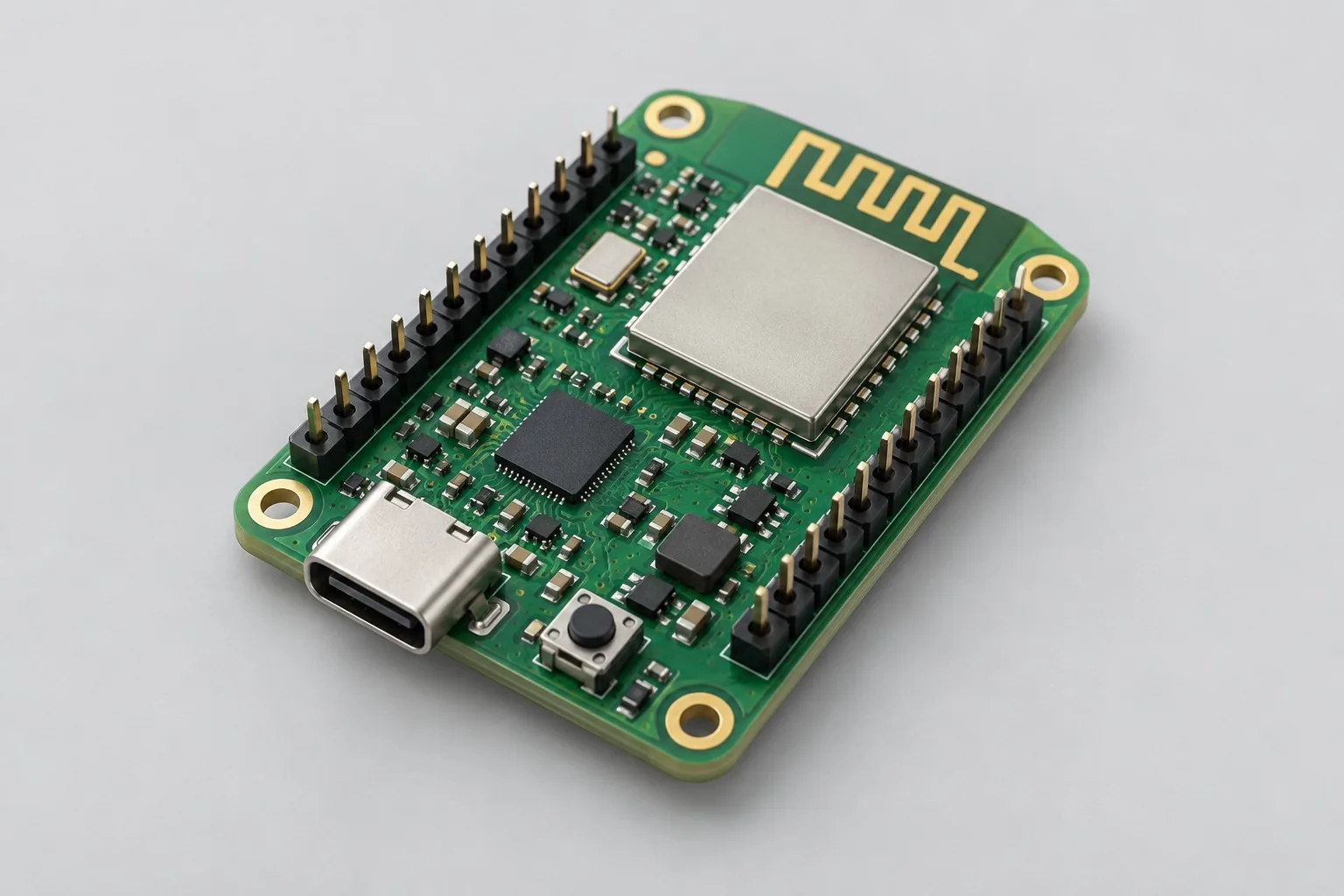
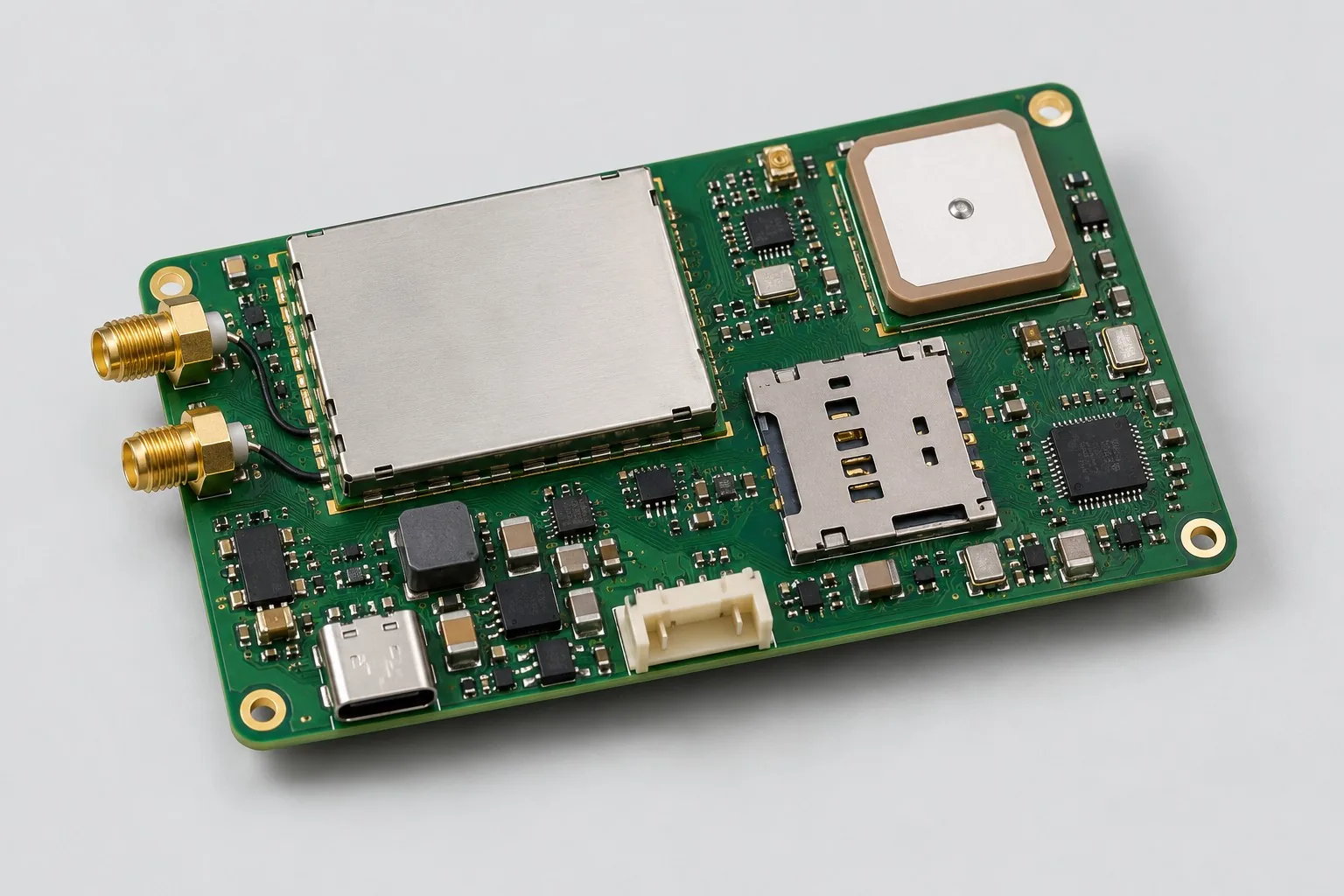
The compact 4G positioning mainboard passes GNSS positions to the controller for message generation and 4G upload; Bluetooth handles nearby parameter configuration. For battery/outline-constrained trackers, calculate peak power, antenna space, and breakout before selecting through-hole or HDI construction.
Custom development reference design. The following parameters are requirement configurations and design targets; validate functions and performance through agreed prototype tests.
| Functional Partition | Design and verification scope |
|---|---|
| GNSS / cellular antenna | Confirm GNSS/cellular antenna positions, feedlines, and matching separately; include batteries and wearable enclosures in clearance reviews. |
| 4G and Positioning Receivers | GNSS outputs position/fix status; 4G modules carry controller messages. Check ports and concurrency for separate/integrated modules. |
| Terminal Control and Bluetooth | The controller manages position reads, motion wakeup, reporting queues, and Bluetooth configuration, defining permissions and parameter retention. |
| Location data / SIM | Check GNSS protocols, upload messages, SIM status, and server acknowledgments; no fix and no network are different states. |
| Battery charging and peak power supply | Check module voltage against battery resistance, charging protection, and 4G transmit pulses; capacity labels cannot replace transient tests. |
| Power loss / low-power state | Switch wireless power domains by motion/stationary states; check undervoltage shutdown, operation during charging, and buffer/configuration recovery after power loss. |
How much does compact 4G tracker mainboard design cost, and how is it quoted?
Board area alone cannot estimate compact 4G tracker development costs. Battery transient power, compact breakout, and GNSS/cellular antenna space jointly affect layout and prototypes. Separate positioning/upload firmware, hardware/mechanical adaptation, in-enclosure testing, and PCB fabrication/assembly; check server, maps, and SIM costs separately.
Quotation terms depend on the approved files, quantity, material supply, tests and delivery requirements.
Prepare a structured RFQ or use the short inquiry form.
| Quotation Items | What services are included | What to Check When Comparing Quotes |
|---|---|---|
| Circuit and PCB Design | Compact outlines and HDI breakout, battery peak power | Reusable portions of existing designs and circuit/mechanical changes |
| Software and Validation | GNSS and 4G upload status debugging | GNSS reads, 4G messages, and device states are board-side work; list maps, servers, SIM charges, and mobile applications separately |
| Prototype Preparation | Bare PCB, BOM procurement, assembly, and agreed prototype quantity | Whether material/component revisions, prototype quantities, and test targets match |
| Subsequent Revision | Record new requirements separately from post-test corrections | How agreed changes, source files, and validation results are delivered |
How do compact 4G trackers differ from conventional positioning mainboards?
Compact versions face greater battery, antenna-clearance, and breakout constraints; conventional versions can retain debug space and through-hole processes. Both need positioning/upload validation; select by enclosure and supply conditions rather than area alone.
How should tracker board size and battery life be selected together?
Provide available battery space, reporting intervals, and antenna positions first. Smaller outlines may reduce battery/RF space; compare satellite-search, transmit, and standby task budgets before freezing enclosures and board outlines.
Does 4G tracker development include a server?
GNSS reads, 4G messages, and device states are board-side work; list maps, servers, SIM charges, and mobile applications separately. End-to-end positioning services also need clear protocol and fault-recovery responsibilities.
Reference configuration: GNSS positions to 4G message upload
| Configuration Field | Reference Configurations/Selections | Basis and Status |
|---|---|---|
| Reference application | Compact 4G/Bluetooth/GNSS tracking | Illustrative configuration; prototype validation required |
| Reference Function | Position reporting, Bluetooth configuration, motion wakeup | Design Objective |
| Power Supply Configuration | Single-cell lithium battery + charging/protection circuit | Design Objective |
| Positioning Configuration | GNSS receiver module; GPS support depends on module model | Design Objective |
| Cellular Interface | 4G module UART/USB, SIM card, main antenna | Design Objective |
| Bluetooth Interface | Low-power Bluetooth MCU or combo module | Design Objective |
| Board Frame Reference | 40×30mm target; reserve battery and antenna volumes first | Design Objective |
| Stackup Candidate | Compare 6-layer 1+4+1 HDI with 6-layer through-hole construction | Design Objective |
| Storage Function | Offline trajectory caching and retransmission queue | Design Objective |
| Power Control | Independent cellular, GNSS, and sensor enables | Design Objective |
| User Interface | Optional buttons, LEDs, charging contacts/USB | Design Objective |
| Validation outputs | Peak current, cold-start positioning, complete-unit antenna and thermal tests | Design Objective |
Compact battery vs HDI escape route trade-off
Design cellular-module power transients to the datasheet; a capacity label cannot replace calculations of battery internal resistance and routing voltage drop.
Separate GNSS receivers facilitate RF isolation; integrated modules save area but require concurrent-operation checks.
Switch positioning strategies by motion/stationary states; product owners define location-data authorization and retention.
Design budget and trade-off examples
Check design targets with engineering calculations
For a reference 1A current pulse lasting 2ms, limiting voltage drop to 0.2V using only a capacitor requires C=I×Δt/ΔV=10000μF.
Conditions and Scope of Application:This boundary calculation assumes an ideal capacitor and no transient supply contribution, illustrating why adding capacitors alone is insufficient. Review actual supplies, cables, ESR, and module pulse waveforms together.
Replace examples with selected components and record margins; calculations support design choices, while prototype records support acceptance.
Power and layout for GNSS positions to 4G message upload
- Keep cellular supply copper short/wide, reserving bulk capacitance and current test points; do not route through GNSS front ends.
- Give each antenna independent feedlines, matching positions, and ground-via regions; assess enclosure effects on efficiency first.
- Place SIM, USB, and charging contacts on accessible test edges; freeze blind-via breakout only after package placement.
Compact locator development input
- Target-region carriers, 4G bands, reporting intervals
- Battery model/internal resistance, charging, enclosure, wearing method
- Position-trigger conditions, communication-loss strategy, privacy, and data-interface needs
If circuit files exist, provide editable schematics, PCB, BOM, and current issues, and agree on review or revision scope. If only functions are defined, freeze this page's inputs before selection and circuit development. Agree separately on control-software and external-application responsibilities, interfaces, and acceptance.
Compact locator phase delivery
| Stage | Engineering Work for This Proposal | Reviewable Deliverables |
|---|---|---|
| Requirements and Design Freeze | Freeze positioning/reporting intervals, regional bands, battery, and outline; define server/Bluetooth configuration interfaces | Functional/interface requirements, mechanical revision, acceptance conditions, and open items |
| Schematic and Component Selection | Design GNSS, 4G, SIM, Bluetooth controller, independent enables, and charging protection | Editable schematics, controlled BOM, footprint checks, and design calculations for these circuits |
| Layout and Routing | Complete compact breakout and antenna partitioning; compare 6-layer through-hole and 1+4+1HDI while retaining test points | PCB source files, actual stackup/hole/net constraints, DRC, and assembly-dimension checks |
| Simulation/Calculation | Budget cellular peak voltage drops, task charge, buffering, and heat; resolve battery/antenna/via conflicts | Design calculations/models, input conditions, margins, and items awaiting measurement |
| Prototype and Software | Build positioning prototypes and integrate GNSS reads, 4G upload, Bluetooth configuration, motion wakeup, and track buffering | Fabrication package, compact positioning prototypes, agreed firmware, position/message protocols, configuration interfaces, and programming/recovery instructions |
| Testing and Version Closure | Validate tracks/server messages, low-battery retries, configuration recovery, and wireless concurrency, linked to enclosure/battery revisions | Procedures, wiring, raw results, and decisions for the prototype revision; include issue/change and limitation lists |
Compact locator prototype verification
- Battery/module voltage drops during cellular bursts and weak-signal retries
- Outdoor cold-start, motion tracks, and obstructed-signal records
- Coexistence tests for cellular transmission with GNSS reception and Bluetooth configuration
- Temperature rise and shutdown recovery at full battery, low battery, and during charging
Validate tracks/server messages, low-battery retries, configuration recovery, and wireless concurrency, linked to enclosure/battery revisions. Record equipment, conditions, revisions, and criteria in reports, identifying passed and uncovered items.
Compact locator prototype verification worksheet
The table below turns GNSS-position-to-4G upload into executable checks. Freeze samples, equipment, environment, and permitted deviations before execution; link results to this revision's raw records.
| Verification Object | Pre-Production Freeze | How to Test Prototypes in Practice | Delivery and Acceptance Records |
|---|---|---|---|
| Cellular Transient | Module bands, peak supply requirements, battery-resistance range, low-battery thresholds | Capture battery/module voltage during weak-signal retries and GNSS operation | Deliver voltage-drop traces and shutdown/reset events; battery capacity alone cannot explain transmit stability |
| Positioning Scenario | Cold/hot-start conditions, track-reporting intervals, obstructed environments, and error definitions | Record reference tracks and fixes on the same calibrated route, distinguishing absent and incorrect fixes | Retain timestamps, fix states, and error distributions; outdoor results do not establish indoor performance |
| Coexistence and Standby | Concurrent cellular/Bluetooth/GNSS modes and wakeup events | Run individual and concurrent radios separately, measuring receive and sleep/wakeup currents | Compare fix availability, Bluetooth connections, and task charge; list conflict scenarios and scheduling limits |
Manufacturing and assembly coordination for this design
- Review HDI together with accessible test pads and battery mounting.
- Fixtures provide battery emulation and RF-coupling locations; record firmware/module identifiers per unit.
Link design revisions to schematics, BOM, PCB, fabrication, and software documentation. When fabricators adjust stackup, materials, or holes, or Assembly parties propose substitutions, recheck critical electrical and test conditions together.
Assembly and testing configuration for this functional board: tracker PCB assembly and testing configuration. Design covers source files, component selection, and validation targets; PCB assembly sources/receives materials, assembles, programs agreed files, and performs production tests against approved BOMs. This link opens a production configuration for the functional area; it does not mean both pages share a physical model.
Common questions on purchasing and customization
How much does compact 4G tracker mainboard design cost, and how is it quoted?
A project-specific quotation requires review of the available files, quantity, materials, requested tests, delivery destination, taxes, shipping, and trade terms. Any formula on this page organizes cost inputs; it is not a quoted rate.View cost items, calculation conditions, and sources.
Which mechanical conditions are needed for 4G tracker prototypes?
Provide board outline, battery, antenna, and enclosure positions, installation orientation, and use cases; validate compact designs after mechanical revisions are defined.
How to accept and retransmit data after the locator goes offline?
Define buffer capacity, message timestamps, and retransmission rules, then simulate network loss/recovery and check missing or duplicate reports.
Which items should a compact tracker budget freeze first?
Freeze the 40×30mm target, single-cell lithium battery/charging, battery space, and three wireless-antenna spaces before comparing six-layer through-hole and 1+4+1 HDI. Divide work into mechanical/power, location upload, buffer recovery, and complete-unit prototypes. Extremely compact routing before space is defined causes mechanical changes to consume development budgets again.
Which work is outside a compact tracker layout-only quotation?
Customers provide selected 4G, GNSS, and Bluetooth devices, peak-power designs, and complete mechanical constraints. Satellite-search states, motion wakeup, buffer queues, and charging control are outside routing-only delivery. Include these programs and in-enclosure measurements when commissioning an operational positioning terminal.
Which board-side protocol tasks remain when a server is already defined?
Confirm position timestamps, reporting acknowledgments, timeouts, offline buffers, and deduplication of deferred uploads. Server documentation reduces protocol exploration, but validate no-fix, cellular-loss, and low-battery states. Maps and service charges are not automatically part of board-side quotations.
Which mechanical information should compact tracker source files retain?
Link PCB sources to battery, antenna, charging-contact, and enclosure revisions, retaining HDI via structures or through-hole stackups and RF clearances. Link firmware to motion-wakeup, GNSS-power, and upload-queue parameters. Production Gerber without mechanical constraints makes later size reduction difficult to control for RF/power risks.
How should adding motion wakeup to a tracker be treated as a revision?
Check existing sensor interfaces, interrupts, and independent power first. If hardware supports it, focus on wake thresholds, false wakes, and upload state machines. Added devices also require space, power, and task-charge checks; prototype measurements must cover more than another register read.
Can compact tracker designs be reused for 12V fixed equipment?
Assess reusable positioning/message logic against protocols; single-cell lithium charging cannot directly serve as a 12V input. Redesign conversion, protection, and grounding and check fixed-installation antennas. Record compact battery budgets separately from externally powered continuous-operation validation.
How should I prepare an RFQ before commissioning compact 4G tracker mainboard design?
Initially describe target functions, application, and existing files. Engineering quotations further confirm regional carriers/4G bands and reporting intervals; battery models/resistance, charging, enclosures, and wearing; positioning triggers, communication-loss strategy, privacy, and data interfaces. Provide editable schematics, PCB, and BOM for existing circuits, and revisions/reproduction records for faulty prototypes. List documentation gaps as review tasks so quotations do not use different assumptions.
How should compact 4G tracker prototype validation costs be compared by operating condition?
Freeze prototype quantity, revision, equipment, and criteria sources first. For cellular transients, freeze bands, peak supply, battery resistance, and low-battery thresholds; capture battery/module voltage during weak-signal retries and GNSS operation. For positioning, freeze cold/hot starts, reporting intervals, obstructions, and errors; record reference tracks/fixes on the same calibrated route, distinguishing absent/incorrect fixes. For coexistence/standby, freeze concurrent radio modes and wake events, running individual/concurrent radios and measuring receive/sleep/wakeup currents. State whether raw data and issue closure are delivered; one power-on pass is not complete validation.
Compare related designs and plan the next step
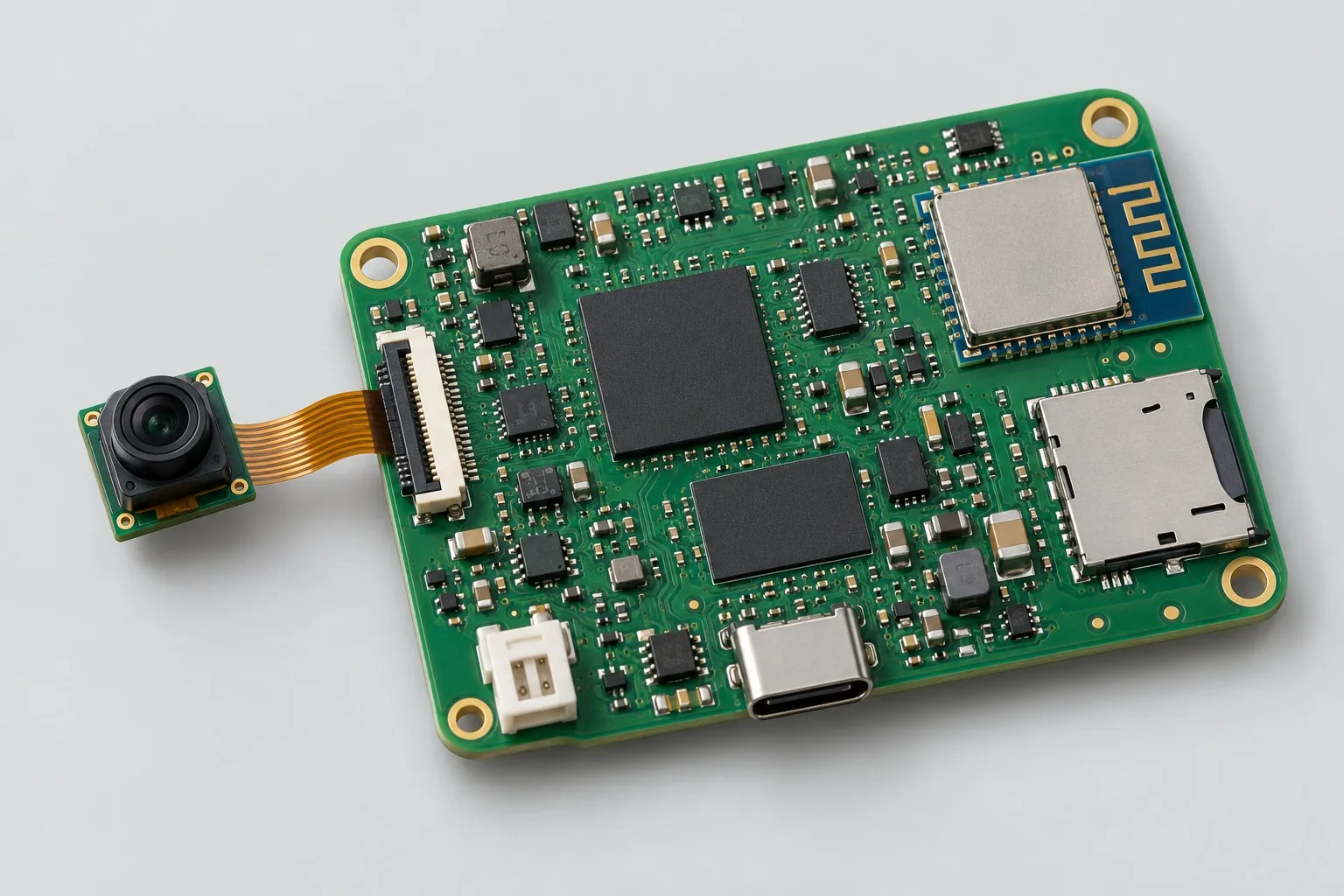
Conventional multilayer 4G positioning mainboard: compare antenna and debug space · Pet video recorder core board design
Return HDI PCB design selection · Select solution by device function · Discuss your design requirements
Documentation Basis and Boundaries
Engineering reference | ESP32-S3 PCB layout: power, RF, and antenna clearance: Espressif guidance references only the Bluetooth controller actually used and does not establish 4G/GNSS functions; follow actual cellular/positioning module hardware guides.