Engineering Selection Reference
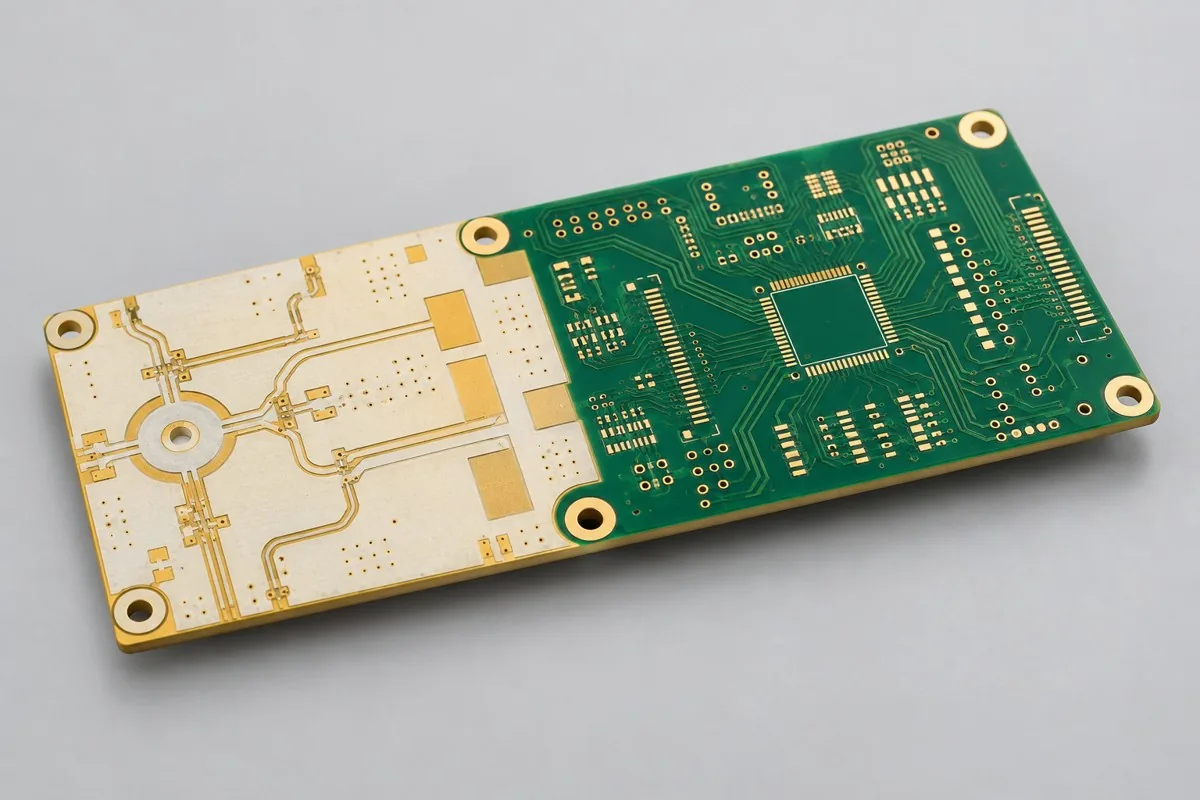
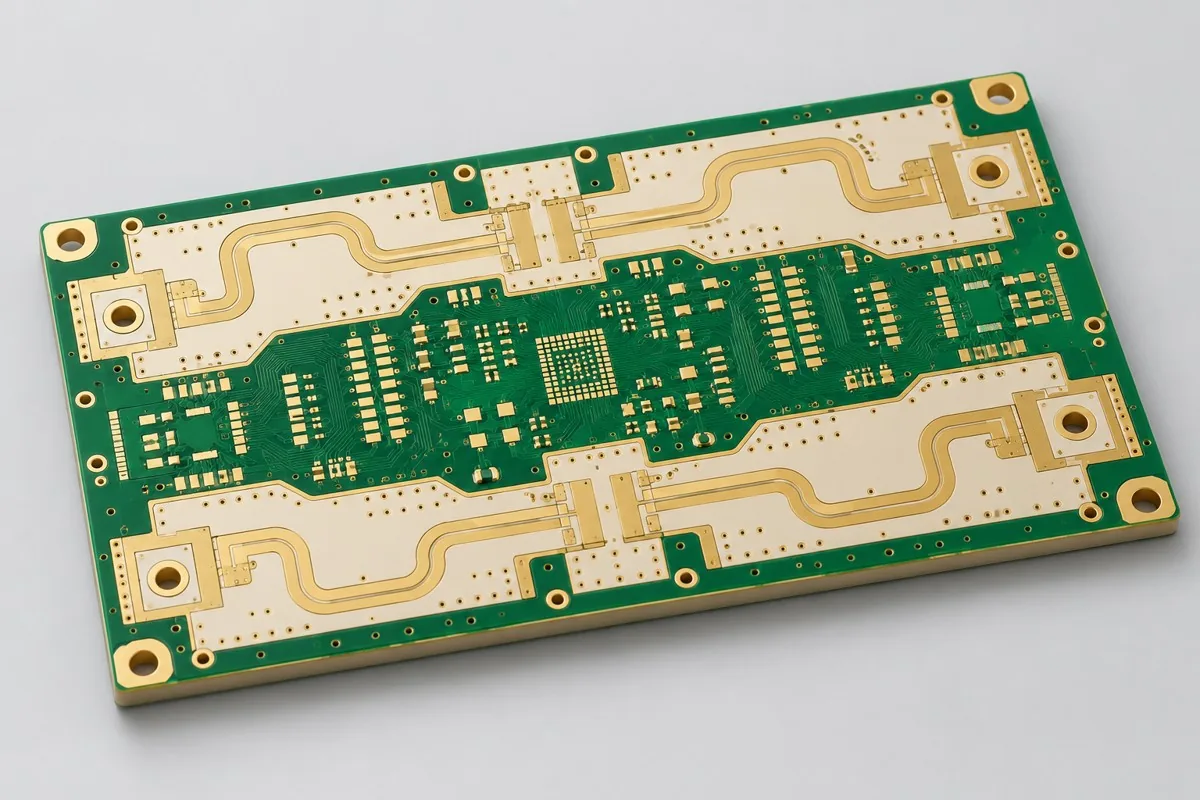
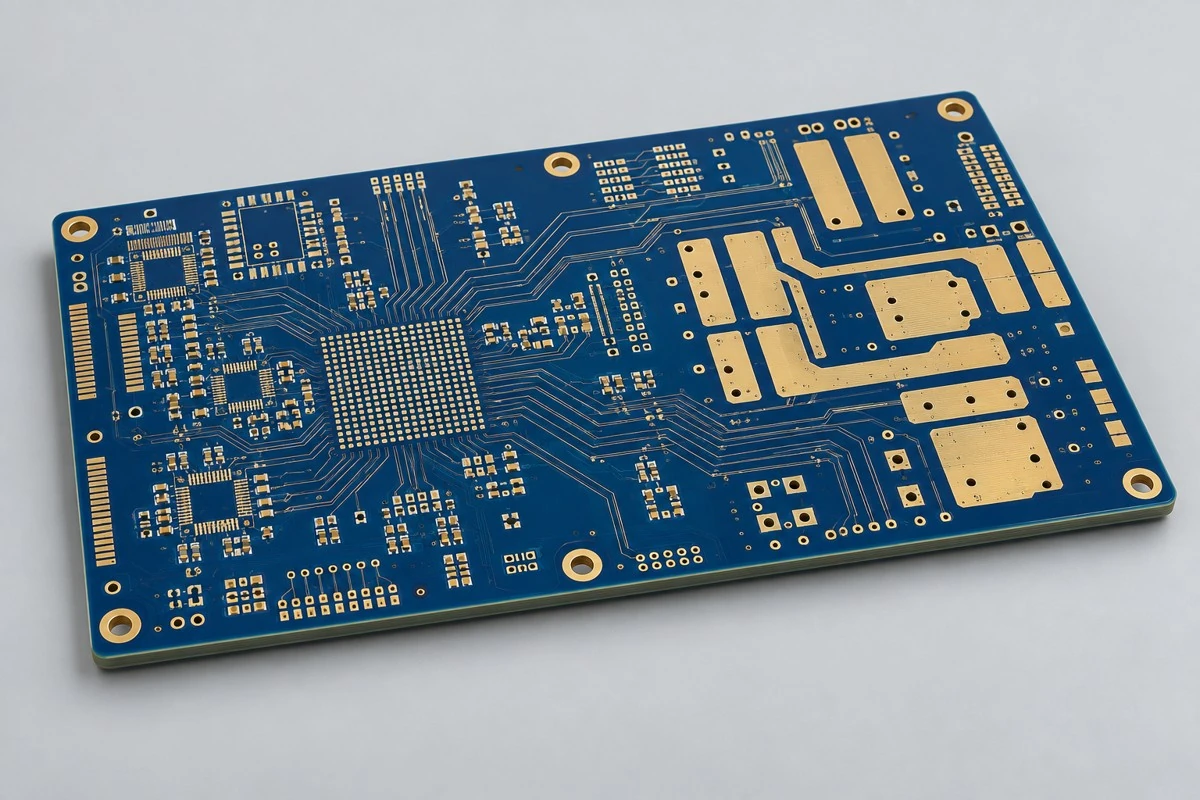
Ten-layer hybrid PCBs: signal/power fabrication review
Review current drawings for ten-layer signal/power hybrids. Procurement needs per-layer I-Tera MT40/370HR roles and heavy-copper regions. Design low-loss signals/current cross sections separately; review resin compatibility/backdrilling separately. Deliver material approval, copper weight, microsections; this is not a historical volume-production combination.
Define bare ten-layer hybrid PCB prototyping/production scope first. Please provide Gerber data, drill files, board outline, and layer stackup, material/process requirements, quantity, acceptance. Different copper weights/materials serve signal/power functions; resin fill and symmetry are priorities
Review I-Tera MT40, 370HR, dual copper weights first; add per-layer materials, power hotspots, backdrill holes. Map targets/inspection methods in specifications/input tables below.
Why choose signal/power hybrid construction?
Ten-layer signal/power hybrids suit high-speed acquisition backplanes combining links and heavier power copper. I-Tera MT40 signal cores and 370HR power regions are selection starting points; 18µm signal and 70µm power copper separate objectives.
Which quotation items matter most for ten-layer signal/power hybrids?
I-Tera/370HR cores, mixed-copper resin fill, ten-layer lamination, backdrill groups, microsections/impedance each affect cost. Validate the original reference material combination; ordinary ten-layer FR4 prices do not cover it. Separate links/power before comparing integrated hybrid versus separate power-board deliveries.
Quotation terms depend on the approved files, quantity, material supply, tests and delivery requirements.
Prepare a structured RFQ or use the short inquiry form.
Enter the following items in one itemized quotation: specify cost units and tax/shipping basis, with separate columns for first orders and same-revision repeat orders. The table is a procurement breakdown method, not a ready-made price list; reference specifications require approval against current fabrication drawings.
| Quotation items and scope | Inputs to confirm for this configuration | Same-revision reorders and changes |
|---|---|---|
| Materials/fabrication, quoted per batch or accepted board | Isola I-Tera MT40 signal cores+370HR power cores (reference selection); 10 layers; signal inner copper 18µm; power inner copper 70µm; outer base 18µm/finished target 35µm | Recurs on repeat orders; material, layer-order, or copper-weight changes require requotation |
| Holes and forming, per approved hole table | Ø0.35mm through-holes; high-speed backdrill stub 0.20mm design target | Repeat fabrication follows same revisions; review process changes to signal/heavy-copper roles |
| Surface finish/packaging, noting areas and batches | Immersion gold; test coupon includes thick copper step area | Incurred by actual batch; confirm packaging, storage conditions, and surface-finish substitutions separately |
| Engineering/tooling preparation, identifying one-time or per-batch charges | Signal/heavy-copper roles: label I-Tera MT40 signal and 370HR power cores per layer; provide lamination/heavy-copper maps. | Verify file revisions, ownership, and storage condition before reusing old tooling; do not assume reuse is free |
| Structural/special inspections, identifying coupons, hole groups, or samples | Link approved material combinations/finished copper records to the same stackup. Separate thermal-path dimensions and high-speed coupons; one passing item does not establish whole-board acceptance. | List initial prototype validation and per-batch sampling separately; quote per-board requirements separately rather than assuming everything is completed once |
| Delivery scope, reports, and accepted quantity | Bare ten-layer hybrid PCB, approved materials, copper-region maps, backdrill files; agreed microsection, impedance, current/thermal data. | Retain revision links and batch records on repeat orders; list component assembly, firmware, and complete-unit testing separately |
How do signal/power hybrids differ from all-heavy-copper or all-low-loss boards?
Thin signal copper supports density/high-speed budgets; heavier power copper supports cross section. All-heavy copper may reduce density; all-low-loss does not necessarily improve power. Select materials/copper by links/current, then balance lamination rather than using expensive materials everywhere.
| Comparison Dimension | Ten-layer hybrid-laminate PCB fabrication | Six-layer FR4 PCB fabrication |
|---|---|---|
| Material and Grade | Isola I-Tera MT40 signal cores+370HR power cores (reference selection) | Isola 370HR FR4 |
| Layer Count and Structure | 10 layer | 6 Layer |
| Hole Structure and Dimensions | Ø0.35mm through-holes; high-speed backdrill stub 0.20mm design target | Ø0.35mm through-holes; parallel power layer-transition arrays |
| Application | Acquisition power backplanes; high-speed controls with power domains | Digital DC power management; motor-control logic supplies |
How should ten-layer hybrid backdrilling and heavy copper be arranged?
Define hole start/end layers, retained connections, clearances before setting signal/reference dielectric thickness. Check heavy-copper resin fill/thickness balance separately; do not compress power dielectric arbitrarily for drill depth. First samples check stubs, copper weight, material interfaces together.
| Review step | Project inputs | Reviewable output |
|---|---|---|
| 1 Define use and scope | Label I-Tera MT40 signal and 370HR power cores per layer; provide lamination/heavy-copper maps. | Link approved materials and finished copper records to the same stackup. |
| 2 Confirm structural requirements | Provide power hotspots and high-speed returns to define continuous reference regions. | Separate thermal-path dimensions/high-speed coupons; one passing item does not establish whole-board acceptance. |
| 3 Match signal nets to fabrication targets | 100Ω differential; stackup field solving/TDR, via-transition S-parameters | Provide nets, layer pairs, validation scope; review with Ø0.35mm holes and 0.20mm high-speed backdrill-stub targets |
| 4 Confirm quotation and approved revision | Isola I-Tera MT40 signal cores+370HR power cores (reference selection); 2.00mm target; ENIG; coupons include heavy-copper steps | Request quotations using material/pattern/inspection lists at the same revision; list unapproved substitutions as separate alternatives rather than including them in the baseline quotation |
Signal/power hybrid board manufacturing specifications
| Specification | Reference configuration or target |
|---|---|
| Material and Grade | Isola I-Tera MT40 signal cores+370HR power cores (reference selection) |
| Layer Count and Structure | 10 layer |
| Total Board Thickness | 2.00mm reference target |
| Dielectric thickness and interlayer relationship | High-speed signal/reference spacing 0.12mm target; adjacent heavy-copper dielectric 0.20mm target |
| Base Copper and Finished Copper | Signal inner copper 18µm; power inner 70µm; outer base 18µm/finished target 35µm |
| Hole Structure and Dimensions | Ø0.35mm through-holes; high-speed backdrill stub 0.20mm design target |
| Trace Width and Spacing | Signal 0.125/0.125mm; heavy copper 0.30/0.30mm reference design |
| Impedance Target and Measurement Methods | 100Ω differential; stackup field solving/TDR, via-transition S-parameters |
| Surface Finish | Immersion gold; test coupon includes thick copper step area |
| Application | Acquisition power backplanes; high-speed controls with power domains |
| Deliverables | Bare ten-layer hybrid PCB, approved materials, copper-region maps, backdrill files; agreed microsection, impedance, current/thermal data. |
Signal/power hybrid board layer stackup and via structure
The following shows functional layer order/material structure for this reference configuration, not a production stackup drawing; do not infer thickness from graphic proportions. Match copper-layer numbering to via layer pairs item by item in approved fabrication files.
| Top to Bottom | Layer Responsibilities/Structure |
|---|---|
| L1 | Control/Components |
| L2 | ground |
| L3 | Low-Loss Signal |
| L4 | ground |
| L5 | 70 µm power copper |
| L6 | 70 µm power copper |
| L7 | ground |
| L8 | Low-Loss Signal |
| L9 | ground |
| L10 | Control/Components |
Holes: Ø0.35mm through-holes; high-speed backdrill stub 0.20mm design target
Trade-offs between heavy-copper resin fill and backdrill inspection
Heavy copper increases cross section but consumes routing area and changes resin fill/adjacent dielectric. Low-loss cores cannot remove stub loss; backdrilling needs explicit layer pairs/measurable targets. Materials/backdrilling are engineering references, not historical production combinations.
Mixed-resin lamination and signal dielectric thickness: fabrication inspection
Check power-copper density, steps, resin fill first; solve signals from laminated dielectric thickness. Validate prepreg compatibility/profiles on actual boards; two individually compliant materials do not establish compliant hybrid interfaces.
Interface microsections, TDR, power thermal tests: acceptance
First-article sections check heavy-copper edges, resin fill, hole-wall copper, interfaces. Layer-specific TDR/via S-parameters check links. Measure power voltage drop/temperature at specified current, environment, cooling, duration; no preset amperage applies.
Signal/power hybrid board delivery scope
Applications: acquisition power backplanes; high-speed controls with power domains.
Bare ten-layer hybrid PCB, approved materials, copper-region maps, backdrill files; agreed microsection, impedance, current/thermal data.
Per-layer materials, hotspots, backdrill holes: RFQ inputs
Submit materials/hotspots/backdrills to turn targets into inspectable drawings. Inputs define pattern/material/structural checks; freeze quotations with approved drawings.
| Required project inputs | Engineering Decisions Affected | Records/delivery as agreed in the order |
|---|---|---|
| Signal and heavy-copper layer allocation | Label I-Tera MT40 signal and 370HR power cores per layer; provide lamination/heavy-copper maps. | Link approved materials and finished copper records to the same stackup. |
| Thermal and High-Speed on Same Board | Provide power hotspots and high-speed returns to define continuous reference regions. | Separate thermal-path dimensions/high-speed coupons; one passing item does not establish whole-board acceptance. |
Ten-layer hybrid PCB pricing, selection, procurement FAQ
Which quotation items matter most for ten-layer signal/power hybrids?
A project-specific quotation requires review of the available files, quantity, materials, requested tests, delivery destination, taxes, shipping, and trade terms. Add any specified processes and tests not yet included to the batch budget; these prices do not apply to other materials or layer sequences. Any formula on this page organizes cost inputs; it is not a quoted rate.View cost items, calculation conditions, and sources.
How do signal/power hybrids differ from all-heavy-copper or all-low-loss boards?
Thin signal copper supports density/high speed; heavier power copper supports cross section. Avoid uniform treatment: heavy copper constrains signals/resin fill, while all-low-loss does not solve power. Match materials/copper to links/current. View Specific Comparison Basis
How should ten-layer hybrid backdrilling and heavy copper be arranged?
Define drill entry, retained layers, and damage keepouts before signal dielectric/resin fill review. Shared total thickness/material balance prevents arbitrary dielectric compression. Check stubs, copper, interfaces together on first samples. View Specific Comparison Basis
Is the ten-layer 0.20mm backdrill stub a current fabrication guarantee?
It is a reference target requiring hole-group/layer/metrology assessment. Orders need microsection locations/criteria; page values are not universal factory limits.
Does ten-layer hybrid pricing include load thermal tests?
Only tests defining loads, paths, wiring, cooling have comparable scope. Itemize thermal tests separately from high-speed TDR/S-parameters; impedance reports do not establish power performance.
Is one integrated high-speed/power board always better than two?
Integration reduces connections but adds lamination, interference, validation. Separate boards may simplify cooling/repair; compare system space, interconnects, total cost before integration.
How can ten-layer hybrids avoid uniformly increasing copper on every layer?
Label I-Tera MT40 signal and 370HR power cores per layer, with copper/references. Add cross section only where power needs it, preserving signal density. Align materials, resin fill, and high-speed/thermal inspection scope.
How are per-board and per-panel ten-layer hybrid quotations converted?
Include per-layer materials, backdrill groups, thermal regions together, reserving signal coupons and heavy-copper step structures separately. State accepted boards/panel, purchased panels, board/panel delivery. Divide actual panel fabrication cost by accepted boards; list preparation, special checks, packaging separately. Utilization does not promise yield.
How should first-order one-time and repeat-order ten-layer hybrid costs be separated?
Confirm signal/heavy-copper roles and combined thermal/high-speed documentation; identify one-time engineering/tools/test preparation. Link material approvals/finished copper to one stackup. Verify files/ownership before tool reuse; batch materials/fabrication/approved inspection recur. Itemize renewed preparation rather than old totals.
Can incomplete signal/heavy-copper roles still obtain a ten-layer hybrid budget?
Provide application/outline/quantity/drawings for gap-marked estimates. Formal review needs per-layer I-Tera MT40/370HR and lamination/heavy-copper maps; delivery links approvals/finished copper to one stackup. Freeze before fabrication/inspection pricing; initial inquiries need not be complete, but estimates exclude undefined structures.
What must be reconfirmed after material, holes, or mounting changes on ten-layer hybrid repeat orders?
Provide hotspots/returns to define continuous references; distinguish thermal dimensions/high-speed coupons, without whole-board claims from individual passes. Map changes to old material/hole/mechanical files for drawing/process/measurement updates; names/layers alone do not establish equal conditions.
What else should equal-material ten-layer hybrid quotations compare?
Compare I-Tera/370HR cores, mixed copper, interfaces, stubs, TDR, loaded thermal tests. High-speed reports alone do not establish power paths.
Which reports need board-ID links before ten-layer hybrid production?
Link material approvals/finished copper to one stackup. Separate thermal dimensions/coupons; individual passes do not establish whole-board acceptance. Link batches/files/results to current prototypes and use issue-closed production revisions. Old reports support comparison, not current inputs; uncovered complete-unit scope stays separate.
How can lower small-batch ten-layer hybrid prices be checked for total savings?
Itemize materials, backdrills, interboard connections, thermal/link tests for integrated versus separate boards. Omitted load tests do not establish equal-power savings. Sum preparation/fabrication/inspection/packaging/shipping and divide accepted quantity; compare equal-scope totals/per-board allocations using current rates, without fixed reductions.
Comparing signal/power hybrids with related boards
Current distinction: different copper/materials serve signal/power; resin fill/symmetry are priorities
- Four-layer RO4003C analog-control hybrid board — Four-layer single-sided RF hybrid construction reduces specialty-material layers, with limited digital density
- Eight-layer dual-RF-side RO4350B hybrid board — Dual RF sides and a symmetric center core support partitioned routing, avoiding forcing dual ports into a single-RF-layer design
Mixed PCB complete product catalog · All PCB Products
Signal/power hybrid materials and design basis
- Engineering reference | Isola 370HR material: high Tg and frequency-dependent parameters: Published manufacturer material data
- Engineering reference | General high-speed interface layout: return paths, length, and layer transitions: Design methodology
- Engineering reference | Copper-embedded PCBs: high-current cross-sections and localized heat conduction: structural reference; supplier parameters are not transferred
- Engineering reference | I-Tera MT40 fabrication: dimensional compensation, lamination, and drilling: grade reference; unverified material values are not cited
Record I-Tera MT40/370HR and dual-copper revisions/design conditions; first articles focus interfaces, TDR, power thermal tests. Update drawings/checks before release after material/copper/via changes.
Request Quote for This PCB Configuration: reference product ID 329; include key circuits/interfaces, quantity, retained/changed specifications.