
Historical types · configuration reference
Litter box control board assembly: assembly configuration and test deliverables
This illustrative litter box motor control and sensor-interlock configuration supports engineering and procurement review. Power, interfaces, materials, firmware, and test conditions must be defined for the actual design. It is not evidence of a stocked model or a product developed or manufactured by KFPCBA. Approved files and order acceptance requirements govern.
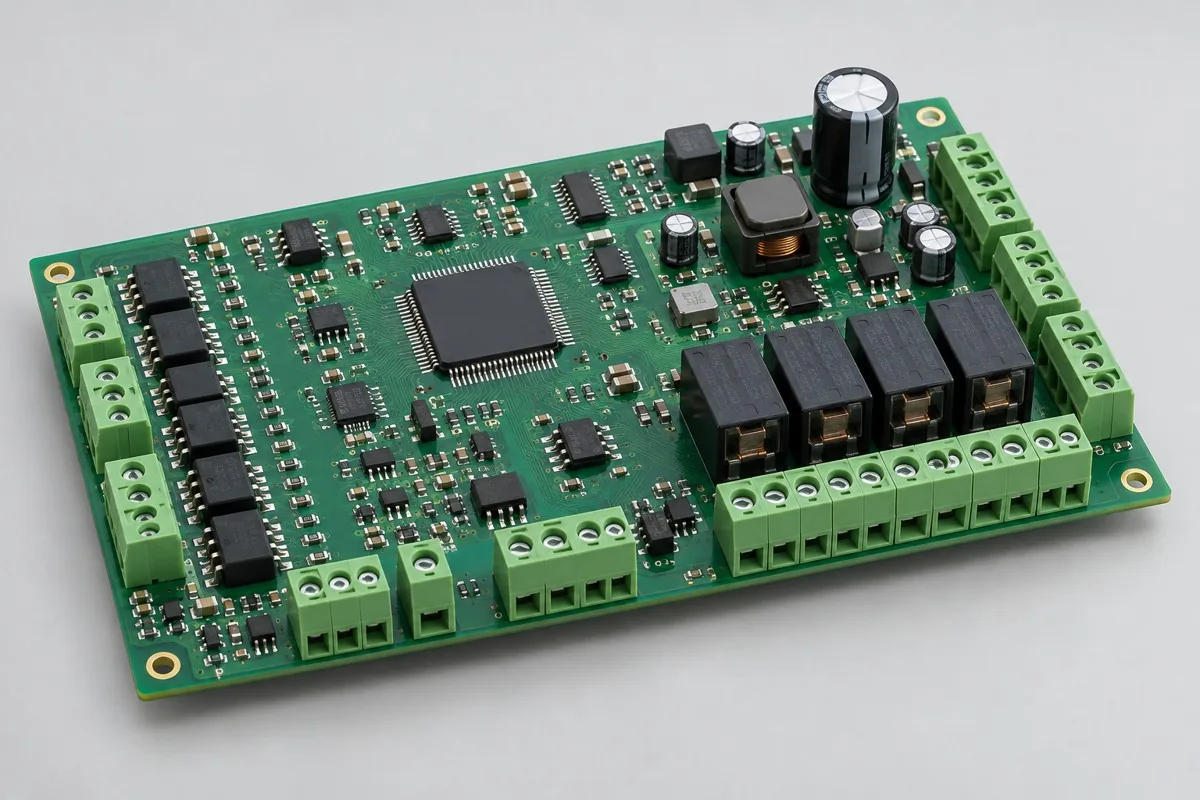
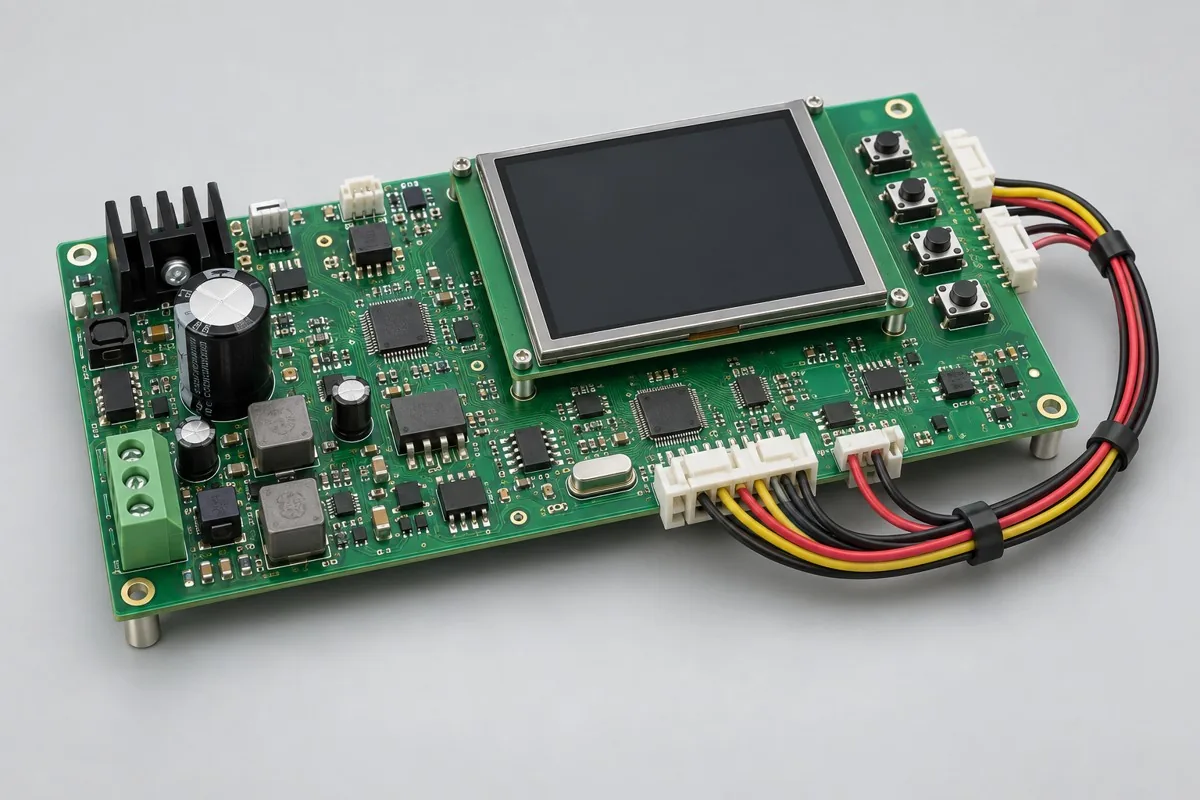
Smart litter box control board contract assembly supports contract manufacturing and purchasing checks for litter box mechanism drives and safety-state monitoring. First confirm the MCU + motor driver + multiple sensor inputs, motor/limit sensing, weight/proximity options, buttons/display, and 4-layer FR-4 reference with separate driver and sensor return-current zones. Then compare the scope of SMT → interfaces → firmware → sensor simulation → mechanism integration testing and acceptance costs for sensing, interlocks, mechanical actions, faults, and power loss. This page separates the control assembly + state table + assembly/action records from litter box/cat toilet product categories and makes no advance safety outcome commitments, helping determine whether a quotation covers the actual intended use. RFQ documentation reference:BOM · bare board · material supply
Reference specification and configuration options
| Options | Reference Configuration |
|---|---|
| Reference application | Cat litter box, cat litter tray |
| Power and Logic Domains | 12V/24V Low Voltage Input Reference |
| Functional Module | Litter box mechanism drives and safety-state monitoring |
| Core Components/Architecture | MCU + motor driver + multiple sensor inputs |
| Interface and Channels | Motor/limit sensing; weight/proximity options; buttons/display |
| Board Layers and Material Options | 4-layer FR-4 reference; separate driver and sensor return-current zones |
| Component types | SMD control/drivers, through-hole interfaces, sensing components |
| Assembly Route | SMT → interfaces → firmware → sensor simulation → mechanism integration testing |
| Material Supply Scope | Specified motor/sensors and mechanical parts; error-proof wiring harnesses |
| Firmware and Parameters | Action state machine, stop/recovery, calibration, and records |
| Test Focus | Sensing, interlocks, mechanical actions, faults, and power loss |
| Deliverables | Control assembly + state table + assembly/action records |
| Configuration Limits/Options | Litter box/cat toilet product categories; no advance safety outcome commitments |
How much does smart litter box control board contract assembly cost, and what does the quotation include?
Drivers, weight or proximity sensors, limits, connectors, and wiring harnesses contribute to litter box assembly costs. Price calibration, state-machine programming, interlocks, abnormal stops, and mechanism integration testing separately. A complete assembly differs from a control board alone. Additional sensor inputs also add calibration and validation work.
Quotation terms depend on the approved files, quantity, material supply, tests and delivery requirements.
Prepare a structured RFQ or use the short inquiry form.
| Cost Item | Scope for This Configuration | Billing frequency and work scope | Procurement Verification |
|---|---|---|---|
| Bare PCB and core components | MCU + motor driver + multiple sensor inputs; 4-layer FR-4 reference; separate driver and sensor return-current zones | Price according to actual bare-board/component purchase quantities; authorize critical components and substitutions individually | Specified motor/sensors and mechanical parts; error-proof wiring harnesses |
| Placement and Post-Assembly | SMT → interfaces → firmware → sensor simulation → mechanism integration testing | Feeder/program setup per lot; assembly priced per board, joint, or process as agreed, with counting rules specified | SMD control/drivers, through-hole interfaces, sensing components |
| Manufacturing Preparation | Review stencils, first articles, and support tooling against the actual assembly route | New stencils/carriers may be separate one-time charges; verify panelization, revision, and condition before reuse | Reduced quantities do not automatically eliminate first-article or feeder setup |
| Functional Support | Sensing, interlocks, mechanical actions, faults, and power loss | Itemize test-method/fixture/script setup; agree execution charges per board, channel, or test duration | Separate supporting development from execution records for each board |
| Software and Parameters | Action state machine, stop/recovery, calibration, and records | When firmware exists, distinguish file programming/verification from software development; omit programming without a firmware revision | Customer-approved files, parameters, and readback rules determine scope |
| Delivery and Change | Control assembly + state table + assembly/action records; litter box/cat toilet product categories; no advance safety outcome commitments | Price accessories, retesting, and revision changes by approved work items; do not prefill fixed rates | Check BOM, tooling, programs, and acceptance revisions before reorders |
How do litter box timed rotation boards differ from multisensor control boards?
Timed rotation only performs an action. A multisensor design also handles occupancy, limits, jams, and recovery. Compare costs with the same sensing and stopping logic. Rotation capability alone does not establish an equivalent automatic cleaning system.
| Comparison Metric | Current Conditions | Factors Influencing Procurement Decision |
|---|---|---|
| Manufacturing Delivery | SMT → interfaces → firmware → sensor simulation → mechanism integration testing | Produce boards/assemblies per BOM and assembly drawings; this does not establish that every system function passes |
| Functional Acceptance | Sensing, interlocks, mechanical actions, faults, and power loss | Compare unit prices after defining test stimuli, limits, accessories, and records; review missing test inputs first |
| Configuration Options | Motor/limit sensing; weight/proximity options; buttons/display; 4-layer FR-4 reference; separate driver and sensor return-current zones | Confirm circuit/program compatibility before reviewing assembly and test costs for interface, stackup, or component changes |
| Delivery Scope | Litter box/cat toilet product categories; no advance safety outcome commitments | Complete-system accessories, application development, and project verification are not automatically included in board assembly |
How should litter box weighing, proximity, and limit sensing be configured?
Determine inputs from mechanism position, occupancy detection, and stopping needs. Validate sensor installation, zero points, and thresholds with the state machine. Additional inputs do not automatically guarantee safety. Recheck stopping and recovery after mechanical changes.
- First list the required litter box mechanism drives and safety-state monitoring functions. Distinguish build-to-print manufacturing, configuration changes, and new feature development.
- Then freeze complete part numbers for the MCU + motor driver + multiple sensor inputs, motor/limit sensing, weight/proximity options, buttons/display, and the 4-layer FR-4 reference with separate driver and sensor return-current zones. Separate consigned and sourced items according to the specified motor/sensors and mechanical parts, including error-proof wiring harnesses.
- Use the first article to verify SMT → interfaces → firmware → sensor simulation → mechanism integration testing, along with the action state machine, stop/recovery, calibration, and records. If only firmware files are supplied, agree on programming verification first; review development separately.
- Convert sensing, interlocks, mechanical actions, faults, and power loss into acceptance items with stimuli, limits, and records. Define fixture ownership, testing of each board, and retesting after rework.
- Finally confirm the control assembly + state table + assembly/action records and litter box/cat toilet product categories, with no advance safety outcome commitments. Compare total prices using the same quantity, accessories, and test scope, then freeze the order version.
Applicable uses and situations requiring separate review
Automatic litter box mechanism control and pet cleaning equipment.
A configuration with only timed rotation and no approved safety strategy should not be called a validated automatic cleaning system. Behavior with an animal present, false-detection rates, and mechanical safety require complete-system evaluation and cannot be guaranteed by PCBA process verification.
Assembly Challenges for This Product
Drive current, weight/proximity inputs, and wiring harnesses may interfere during simultaneous operation. Test stages separately before running the state machine. Verify connector error-proofing and limit polarity. After mechanism assembly, check that wiring remains outside moving areas, and retest interlocks after final assembly.
Structural, thermal, and configuration trade-offs
Redundant inputs such as weight/proximity improve conditions for state assessment but add sensor calibration and mechanical installation costs. A larger motor does not automatically increase reliability; jamming and inertia change stopping requirements.
Product-specific test matrix
| Test stage | Inspection/Functional Methods | Acceptance Record |
|---|---|---|
| Sensing/Calibration | Check each input with approved simulated sources and mechanism positions | Zero point, threshold, and mapping |
| Interlock Status | Simulate entry/exit, limits, and abnormal signals | Allow/stop/restore status table |
| Mechanism Action | Use the specified mechanism under normal and restricted fault conditions, including power loss | Action, Stop, Reset, and Assembly Records |
Defect Handling and Acceptance
Assess reversed limit connections, weight zero drift, drivers failing to turn off, and pinched harnesses separately. Acceptance emphasizes stopping strategies under abnormal inputs and verification with actual mechanical guards. Completing one cleaning cycle does not establish a safety pass.
Litter box control PCBA: material supply and version control
Control sensors, mechanisms, motors, and harnesses as a complete set. The customer provides the safety state table and calibration method. Substitutions that change sensor characteristics or braking behavior require reassessment and approval.
Prototype and production planning
Validate mechanism/sensor/interlock combinations on prototypes. Perform board-level testing before production assembly, bind calibration data to complete-unit numbers, and include fault states in fixtures rather than testing only normal rotation.
Delivery Configuration
Control assembly + state table + assembly/action records. Litter box/cat toilet product categories; no advance safety outcome commitments.
Convert this configuration into a reviewable order
For smart litter box control assembly orders, verify the BOM, quantity, material supply, and conditions below. Provide the pick-and-place file/CPL, DNP list, and assembly drawing for this board's SMT process. For contracted programming, provide files, programming rules, and verification requirements for the action state machine, stop/recovery, calibration, and records. Review costs separately for materials, SMT → interfaces → firmware → sensor simulation → mechanism integration testing, and required stencil/loading, support carriers, and test resources. Reapprove versions after documentation changes, and agree on delivery milestones once material readiness and scheduling are confirmed.
| Required project inputs | Engineering Decisions Affected | Records/delivery as agreed in the order |
|---|---|---|
| Cat Litter Mechanism Interlock | Provide the motor, position/weight sensors, and occupancy detection rules, and define stopping logic for jams/animal entry. | Record stopping, recovery, and fault scenarios with the specified mechanism. Successful rotation alone is insufficient to release integrated operation. |
| Safety Parameter Version | The customer provides sensor thresholds and control rules. Revalidate after mechanical changes. | Deliver parameter verification values and test scenario records. A product name does not establish safety certification. |
Smart litter box control board contract assembly FAQ
How much does smart litter box control board contract assembly cost, and what does the quotation include?
Itemize motor/sensor interfaces, calibration, interlock programming, and mechanism integration tests. Confirm the files, quantities, material responsibilities, test records, delivery destination, currency, taxes, shipping, and trade terms before comparing totals. Review the quotation scope.
Does a litter box contract assembly quotation include complete-product integration testing?
Itemize board-level input simulation, sensor calibration, and integration testing with the specified mechanism separately. If motors, mechanical parts, and harnesses are consigned, define their versions and assembly scope. Board soldering alone does not include all mechanical validation.
Can a control board be released when its motor runs normally?
Also check occupancy, limits, jams, and power-loss recovery scenarios. Action and stopping results apply to the specified mechanism and firmware. One successful cleaning cycle cannot replace fault validation.
Does a litter box motor or mechanism change require recalibration?
Mechanism position, weight zero point, inertia, and stopping behavior may change, requiring sensor and state-machine rechecks. Separate component price differences from calibration and integration testing. Equal-voltage motors are not direct substitutes.
How are safety parameter versions managed in litter box assembly production?
Associate thresholds, firmware, state tables, and mechanism revisions with complete-unit numbers. Tests include entry, jamming, and power-loss recovery. Retain board-level simulation and final assembly results separately; normal rotation records alone are insufficient.
How should sensing/calibration testing be included in purchasing acceptance for smart litter box control board contract assembly?
The reference method for this configuration checks each input using approved simulated sources and mechanism positions. Records should include zero points, thresholds, and mappings. Provide test inputs, applicable configurations, and acceptance limits with the RFQ, then agree on the scope of first-article verification and testing of each board. Price test preparation separately from each execution. If limits are missing, the method can be reviewed first, but completing a procedure cannot be described as meeting performance requirements.
How should state interlock testing be included in purchasing acceptance for smart litter box control board contract assembly?
The reference method for this configuration simulates entry/exit, limits, and abnormal signals. Records should include the enable/stop/recovery state table. Provide test inputs, applicable configurations, and acceptance limits with the RFQ, then agree on the scope of first-article verification and testing of each board. Price test preparation separately from each execution. If limits are missing, the method can be reviewed first, but completing a procedure cannot be described as meeting performance requirements.
How should mechanical action testing be included in purchasing acceptance for smart litter box control board contract assembly?
The reference method for this configuration uses the specified mechanism under normal and restricted fault conditions, including power loss. Records should include actions, stops, resets, and assembly records. Provide test inputs, applicable configurations, and acceptance limits with the RFQ, then agree on the scope of first-article verification and testing of each board. Price test preparation separately from each execution. If limits are missing, the method can be reviewed first, but completing a procedure cannot be described as meeting performance requirements.
How are programming and development priced separately when the customer provides firmware for smart litter box control board contract assembly?
Controlled items for this configuration are the action state machine, stop/recovery, calibration, and records. Programming, parameter loading, and readback verification using customer-approved files are manufacturing operations. New logic, interface adaptation, and algorithm changes require development review. Quote preparation, programming of each board, verification, and failure handling separately. Including programming does not imply application development is included.
Must first-article, stencil, and loading charges be recalculated for repeat smart litter box control board contract assembly orders?
The process for this configuration is SMT → interfaces → firmware → sensor simulation → mechanism integration testing. For SMT, verify the stencil and panelization; for through-hole or later-installed parts, verify support and assembly methods. Agree on loading and first-article work for this batch. Reuse existing tooling only when its version, position, and condition match. After changing components or interfaces in SMD control/drivers, through-hole interfaces, or sensing components, first review effects on tooling and sensing, interlocks, mechanical actions, faults, and power loss, then confirm repeat charges.
How should total prices be compared when critical parts are consigned and the remaining materials are sourced for smart litter box control board contract assembly?
Create a purchasing responsibility matrix using this page's specified motor/sensors and mechanical parts, including error-proof wiring harnesses. Confirm complete part numbers, quantities, packaging, and excess-material rules with the materials. Consignment only changes purchasing responsibility. SMT → interfaces → firmware → sensor simulation → mechanism integration testing, along with sensing, interlocks, mechanical actions, faults, and power-loss tests, remain actual work. Approve the effects of shortages, substitutions, or lot changes first. Do not directly compare consigned-material unit prices with complete assembly prices that include materials.
Which tests should be repeated after rework or supplemental smart litter box control board contract assembly orders?
Select retests based on the effects of the change. Original acceptance items for this configuration are sensing, interlocks, mechanical actions, faults, and power loss; shipment records comprise the control assembly + state table + assembly/action records. When rework affects power, interfaces, critical analog circuitry, or software versions, check related tests rather than only the repaired solder joint. Align supplemental orders with the original BOM, parameters, and test resources. Agree on retest charges based on approved items and actual quantities tested, without assuming free service or a fixed turnaround.
Compare Other Products in This Category
- OEM Industrial Control Board: Authorized BOM and device I/O.
- OEM equipment whole-machine control components: PCB assembly/harness/enclosure/complete product tests.
- Pet Drinking and Water Purification Control Components: types, pumps/water shortage/cleaning structures.
Return OEM turnkey assembly comparison configuration · Component Supply and Procurement · Testing and Delivery Scope
Material and Process Reference
- Engineering reference | SMT packages and assembly methods: pads, stencils, and thermal processes: a package/assembly method index only; not evidence that the product configurations on this page are models produced by KFPCBA