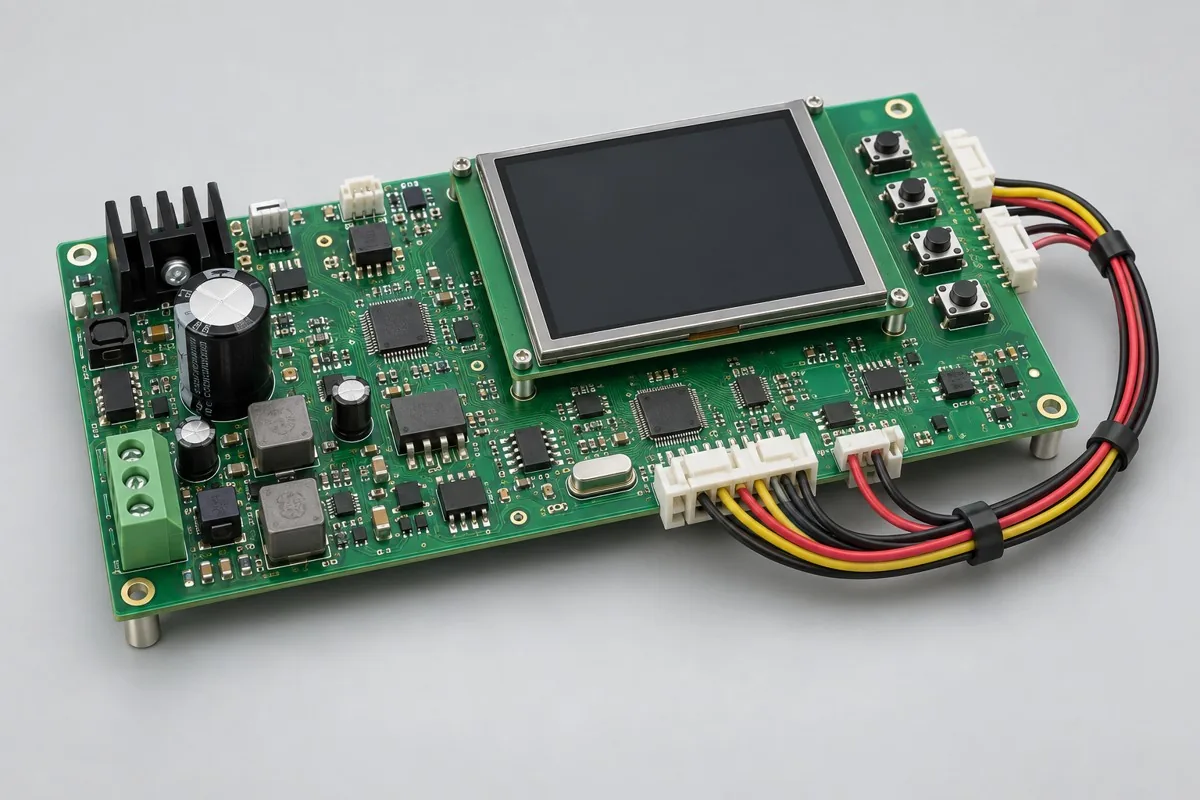
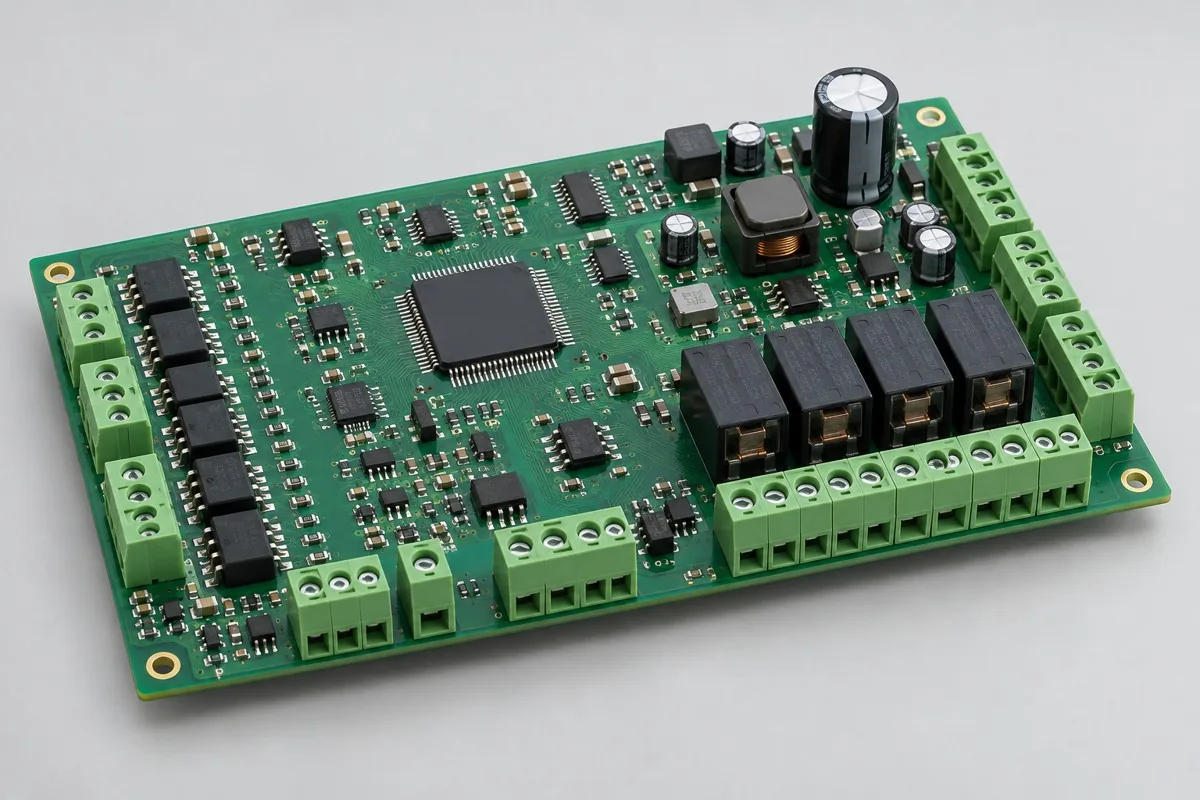
Engineering Reference Configuration
Turnkey industrial control PCB assembly: configurations and test deliverables
The following adjustable engineering configurations support material, functional, and process review; they are not stocked models or commitments to current production-line capabilities. Approved fabrication documentation and order acceptance requirements govern.
Turnkey industrial control PCB assembly supports contract manufacturing and procurement review for reference 8 discrete inputs + 4 outputs. Confirm MCU + input protection + drive/isolation options, RS-485/CAN separately or combined, service ports, and 4-layer FR-4 with I/O/communication partitioning. Compare SMT → through-hole/secondary soldering → customer firmware → I/O tests and mapping, communication, load, and recovery acceptance costs. This page separates OEM boards + traceability + revision/test records from customer-drawing fabrication and separately agreed development/revisions to clarify actual quote coverage. RFQ file reference:BOM · bare board · material supply
Reference specification and configuration options
| Options | Reference Configuration |
|---|---|
| Power and Logic Domains | 24V input; logic domains separated |
| Functional Module | Reference 8 discrete inputs + 4 control outputs |
| Core Components/Architecture | MCU + input protection + drive/isolation options |
| Interface and Channels | RS-485/CAN separately or combined; service port |
| Board Layers and Material Options | 4-layer FR-4 baseline; I/O/communication partitioning |
| Component types | QFN MCUs, drivers, isolators, and through-hole terminals |
| Assembly Route | SMT → through-hole/secondary soldering → customer firmware → I/O tests |
| Material Supply Scope | Customer-authorized BOM; separate customer-supplied/procured critical-part tables |
| Firmware and Parameters | Customer firmware and parameters; separate manufacturing test program revision |
| Test Focus | I/O mapping, communication, load states, and power-loss recovery |
| Deliverables | OEM boards + material traceability + revision/test records |
| Configuration Limits/Options | Build to customer drawings; development/revisions agreed separately |
How much does turnkey industrial control PCB assembly cost, and what is included?
List authorized BOM procurement, customer-supplied critical parts, bare boards, SMT, and through-hole assembly separately. Eight inputs, four outputs, communication, and power-loss tests match enabled configurations. Substitute verification, excess materials, and inventory rules also affect total turnkey cost; compare more than soldering prices.
Quotation terms depend on the approved files, quantity, material supply, tests and delivery requirements.
Prepare a structured RFQ or use the short inquiry form.
| Cost Item | Scope for This Configuration | Billing frequency and work scope | Procurement Verification |
|---|---|---|---|
| Bare PCB and core components | MCU + input protection + drive/isolation options; 4-layer FR-4 baseline; I/O/communication partitioning | Price according to actual bare-board/component purchase quantities; authorize critical components and substitutions individually | Customer-authorized BOM; separate customer-supplied/procured critical-part tables |
| Placement and Post-Assembly | SMT → through-hole/secondary soldering → customer firmware → I/O tests | Feeder/program setup per lot; assembly priced per board, joint, or process as agreed, with counting rules specified | QFN MCUs, drivers, isolators, and through-hole terminals |
| Manufacturing Preparation | Review stencils, first articles, and support tooling against the actual assembly route | New stencils/carriers may be separate one-time charges; verify panelization, revision, and condition before reuse | Reduced quantities do not automatically eliminate first-article or feeder setup |
| Functional Support | I/O mapping, communication, load states, and power-loss recovery | Itemize test-method/fixture/script setup; agree execution charges per board, channel, or test duration | Separate supporting development from execution records for each board |
| Software and Parameters | Customer firmware and parameters; separate manufacturing test program revision | When firmware exists, distinguish file programming/verification from software development; omit programming without a firmware revision | Customer-approved files, parameters, and readback rules determine scope |
| Delivery and Change | OEM boards + material traceability + revision/test records; customer-drawing fabrication; development/revisions separate | Price accessories, retesting, and revision changes by approved work items; do not prefill fixed rates | Check BOM, tooling, programs, and acceptance revisions before reorders |
Is turnkey or consigned industrial control PCB assembly better?
Customer supply controls critical models and sources but requires material readiness and excess coordination. Turnkey assembly reduces procurement interfaces but needs substitution authority and inventory rules. Split critical customer-supplied ICs from procured general materials rather than choosing only one model.
| Comparison Metric | Current Conditions | Factors Influencing Procurement Decision |
|---|---|---|
| Manufacturing Delivery | SMT → through-hole/secondary soldering → customer firmware → I/O tests | Produce boards/assemblies per BOM and assembly drawings; this does not establish that every system function passes |
| Functional Acceptance | I/O mapping, communication, load states, and power-loss recovery | Compare unit prices after defining test stimuli, limits, accessories, and records; review missing test inputs first |
| Configuration Options | RS-485/CAN separately or combined; service port; 4-layer FR-4 baseline; I/O/communication partitioning | Confirm circuit/program compatibility before reviewing assembly and test costs for interface, stackup, or component changes |
| Delivery Scope | Build to customer drawings; development/revisions agreed separately | Complete-system accessories, application development, and project verification are not automatically included in board assembly |
Does an eight-input, four-output industrial board need isolation?
Assess external loads, grounding, and system isolation boundaries. Added isolation changes area, power, and tests. List each input/output type and concurrent states before selecting. Interface count does not establish load capacity.
- First list reference 8 discrete inputs + 4 control outputs, distinguishing build-to-print work, configuration changes, and new function development.
- Then freeze full MCU + input protection + drive/isolation part numbers, RS-485/CAN separately or combined, service ports, and 4-layer FR-4 with I/O/communication partitioning. Split customer supply and procurement by authorized BOM and separate critical-part tables.
- Use first articles to verify SMT → through-hole/secondary soldering → customer firmware → I/O tests, customer parameters, and separate manufacturing test revisions. For supplied files, agree writing verification first; review development separately.
- Turn mapping, communication, loads, and recovery into tests with stimuli, limits, and records. Define fixture ownership, per-board execution, and post-rework retesting.
- Finally confirm OEM boards + traceability + revision/test records and customer-drawing fabrication, with development/revisions separate. Compare totals at equal quantities, accessories, and test scope, then freeze the order revision.
Applicable uses and situations requiring separate review
Industrial equipment OEM controls and cabinet I/O.
Without schematics/BOMs or where the contractor must complete control logic, define separate development scope. Ordinary I/O references cannot establish safety PLCs or safety-related interlocks.
Assembly Challenges for This Product
Similar-looking input/output terminals need mistake-proofing in placement/secondary soldering and fixture connections. Check isolators, protection, and high-thermal-mass terminals separately. I/O tests follow customer maps; manufacturing tests must not change shipping defaults.
Structural, thermal, and configuration trade-offs
Customer-supplied ICs aid model control, but define shortage, attrition, and exception responsibility first. Turnkey assembly reduces coordination but needs substitution authority and inventory rules. Added isolation changes cost, area, and tests.
Product-specific test matrix
| Test stage | Inspection/Functional Methods | Acceptance Record |
|---|---|---|
| Input Mapping | Simulate each discrete input state and its approved boundary conditions | Tag/terminal correspondence and response |
| Output Load | Per-channel load approval and fault status | Channel, output, and protection results |
| Communication Version | Protocol cases, parameter readback, and final firmware verification | Program hash, parameters, and communication logs |
Defect Handling and Acceptance
Screen incorrect substitutes, terminal pinouts, wrong firmware, and untested outputs separately. Acceptance uses signed BOM/drawing/test revisions. Verbal ECO notifications do not directly enter production.
OEM industrial control PCB assembly: material supply and revision management
Procurement tables identify customer supply, authorized procurement, and no-substitution items. Define scrap/excess and obsolete inventory ownership. Customer firmware needs checksums and authorization. Quarantine affected lots before analyzing customer-supplied chip faults.
Prototyping vs. Production Differences
Establish golden samples and I/O fixtures in the first batch, freezing material/firmware combinations for production. Reassess tests and inventory after customer revisions. Do not mix old/new revisions in one unidentified batch.
Delivery Configuration
OEM boards + traceability + revision/test records. Build to customer drawings; development/revisions separate.
Convert this configuration into a reviewable order
At ordering, check BOM, quantity, supply, and conditions below. Supply pick-and-place files, DNP, and assembly drawings for SMT. For programming, provide customer firmware/parameters and separately revisioned manufacturing test files, with writing rules and verification. Review materials, SMT → through-hole/secondary soldering → customer firmware → I/O tests, stencil/loading, carriers, and setups separately. Reapprove changed revisions and agree milestones after material readiness and scheduling.
| Required project inputs | Engineering Decisions Affected | Records/delivery as agreed in the order |
|---|---|---|
| OEM Control Interfaces | Specify actual levels, polarity, and loads for every point in the 8-input 4-output baseline to define isolation/drive assembly variants. | Record each input/output and fault state; optional configurations have separate BOMs. |
| Material Substitution Approval | Specify substitution rules for critical MCUs, isolators, and relays. | Link substitution reviews and retests to order revisions rather than recording only purchased item names. |
Turnkey industrial control board assembly FAQ
How much does turnkey industrial control PCB assembly cost, and what is included?
For standard placement, first calculate board quantity × billable points per board × price per point + setup fee. A project-specific quotation requires review of the available files, quantity, materials, requested tests, delivery destination, taxes, shipping, and trade terms. This is a placement-only reference; bare PCBs, materials, and testing are charged separately. Any formula on this page organizes cost inputs; it is not a quoted rate.View cost items, calculation conditions, and sources.
Is turnkey or consigned industrial control PCB assembly better?
Customer supply controls critical models and sources but requires material readiness and excess coordination. Turnkey assembly reduces procurement interfaces but needs substitution authority and inventory rules. Split critical customer-supplied ICs from procured general materials rather than choosing only one model.
Does an eight-input, four-output industrial board need isolation?
Assess external loads, grounding, and system isolation boundaries. Added isolation changes area, power, and tests. List each input/output type and concurrent states before selecting. Interface count does not establish load capacity.
Do OEM controller quotes include development revisions?
Manufacturing approved files differs from modifying circuits/firmware. BOM, interface, or logic changes need new revisions and verification scope. Contract assembly prices do not include free development.
Which materials should be checked when comparing turnkey PCB assembly quotes?
Check full critical IC part numbers, terminal accessories, substitution rules, and remaining material ownership. Separate material prices from assembly and I/O tests. Totals alone hide brand or test-scope differences.
How are critical substitutions controlled in industrial control contract assembly?
Authorize critical IC, isolator, and driver substitutes and reassess I/O/load conditions. Retain full part numbers, lots, and verification records by revision. Matching packages do not automatically permit cost reductions.
Why separate OEM manufacturing test firmware and customer firmware?
Manufacturing firmware provides test coverage; customer firmware defines delivery behavior. Switch and verify revisions/I/O maps before shipment. Quotes specify formal firmware writing and final boot inclusion.
How should input-mapping tests enter turnkey industrial control purchasing acceptance?
The reference method simulates each input and boundary condition, recording reference-designator/terminal mappings and responses. Provide inputs, configurations, and limits, then agree first article and per-board scope. Price setup separately from each execution. Without limits, review methods first; completed operations do not establish compliance.
How should output-load tests enter turnkey industrial control purchasing acceptance?
The reference method applies approved loads and fault states by channel, recording channels, outputs, and protection results. Provide inputs, configurations, and limits, then agree first article and per-board scope. Price setup separately from each execution. Without limits, review methods first; completed operations do not establish compliance.
How should communication/revision tests enter turnkey industrial control purchasing acceptance?
The reference method checks protocol cases, parameter readback, and final firmware, recording hashes, parameters, and communication logs. Provide inputs, configurations, and limits, then agree first article and per-board scope. Price setup separately from each execution. Without limits, review methods first; completed operations do not establish compliance.
What extra checks are needed when OEM industrial test firmware becomes customer shipping firmware?
Retain separate manufacturing/customer checksums. After formal writing, read parameters and recheck actual eight-input/four-output or approved-variant maps, communication, and power-loss states. Different drive behavior/polarity also requires matching setups and decision tables. Quote formal writing, final boot, and affected-function retests separately. Manufacturing results do not replace customer delivery states.
Do repeat turnkey industrial orders need recalculated first article, stencil, and loading fees?
The route is SMT → through-hole/secondary soldering → customer firmware → I/O tests. Check stencils/panels for SMT and supports/assembly for through-hole or later installation. Agree batch loading and first articles; reuse tooling only when revision, location, and condition match. After QFN MCU, driver, isolator, or terminal changes, assess tooling and mapping, communication, load, and recovery impacts before recurring fees.
How should excess materials, minimum packs, and supplemental orders enter turnkey industrial procurement costs?
List per-board consumption, supplied/procured critical quantities, and purchased package quantities by authorized BOM. Purchased part counts may differ from deliverable board counts. Define excess ownership, storage, replenishment, and supplemental use. Critical substitutes still need approval and I/O/load review. Compare totals at equal accepted board counts, responsibilities, and tests, not soldering prices against material-inclusive orders.
What needs retesting after turnkey industrial control rework or supplemental orders?
Select retests by impacts. Original acceptance covers mapping, communication, loads, and recovery, delivering OEM boards + traceability + revision/test records. For power, interface, critical analog, or software rework, check related tests rather than only repaired joints. Align supplemental orders with original BOMs, parameters, and setups. Agree fees by approved items and actual quantities without assuming free retests or fixed turnaround.
Compare Other Products in This Category
- OEM equipment whole-machine control components: PCB assembly/harness/enclosure/complete product tests.
- Smart litter box control component: types, mechanisms, and coordinated safety states.
- Pet Drinking and Water Purification Control Components: types, pumps/water shortage/cleaning structures.
Return OEM turnkey assembly comparison configuration · Component Supply and Procurement · Testing and Delivery Scope
Material and Process Reference
- Engineering reference | SMT packages and assembly methods: pads, stencils, and thermal processes: a package/assembly method index only; not evidence that the product configurations on this page are models produced by KFPCBA