Engineering Reference Configuration
Appliance panel PCB assembly: configurations and test deliverables
The following adjustable engineering configurations support material, functional, and process review; they are not stocked models or commitments to current production-line capabilities. Approved fabrication documentation and order acceptance requirements govern.
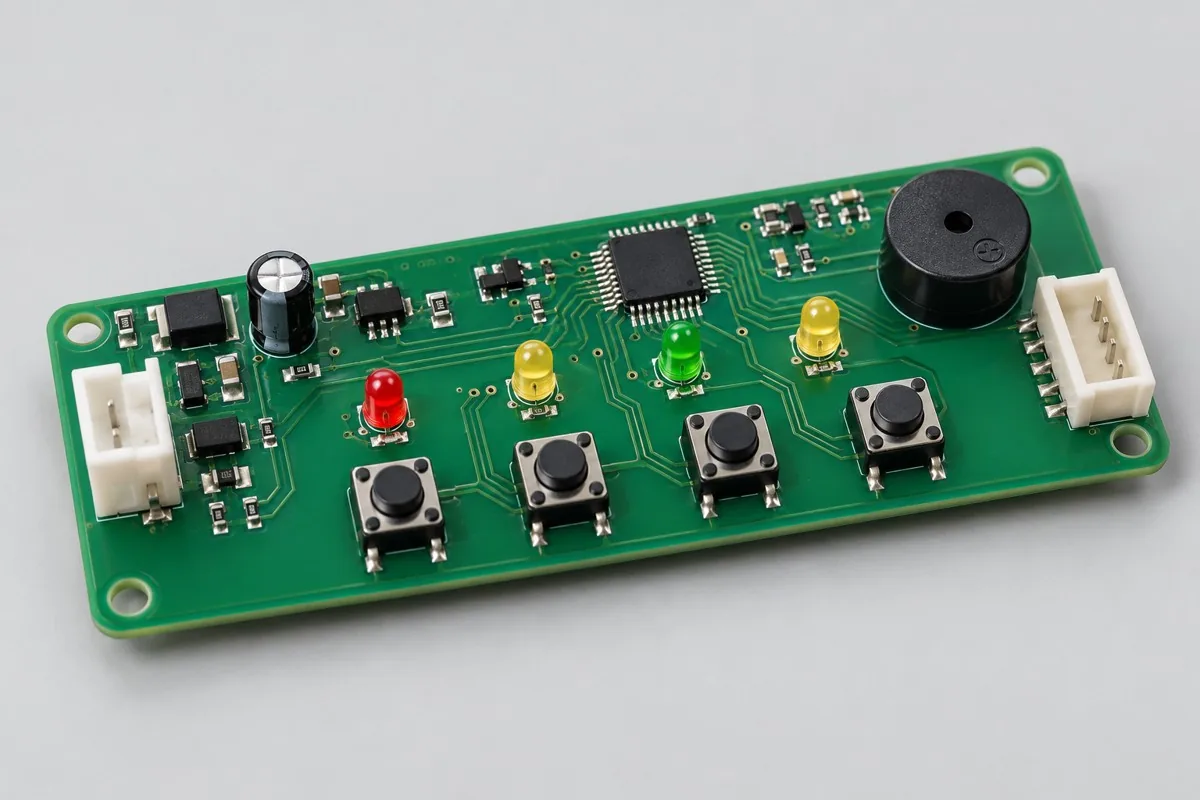
Appliance panel PCB assembly supports contract manufacturing and procurement review for 4 buttons + LEDs + buzzer prompts. Confirm MCU + key scanning + indicator drive, ribbon/wire connectors, key/indicator interfaces, and single-sided FR-4 with strip/panel outline options. Compare single-sided SMT → switch/buzzer installation → panel integration checks and button, indicator map, sound, interface, and standby acceptance costs. This page separates panel boards + key/state tables + tests from board-only or keycap/panel-support assemblies to clarify actual quote coverage. RFQ file reference:BOM · bare board · material supply
Reference specification and configuration options
| Options | Reference Configuration |
|---|---|
| Power and Logic Domains | 5V/12V low-voltage power supply |
| Functional Module | 4-button inputs + LED indicators + buzzer prompts |
| Core Components/Architecture | MCU plus button scan plus indicator drive |
| Interface and Channels | Cable/connector; button and indicator interfaces |
| Board Layers and Material Options | Single-sided FR-4 baseline; strip/panel outline options |
| Component types | Single-sided SMD, tactile switches, LEDs, and buzzers |
| Assembly Route | Single-sided SMT → switch/buzzer installation → panel integration checks |
| Material Supply Scope | Specified keys/LED colors/buzzers; other parts may be procured |
| Firmware and Parameters | Debounce, prompt sequence, status codes, and revisions |
| Test Focus | Buttons, indicator maps, sound, interfaces, and standby |
| Deliverables | Panel boards + key/state tables + test records |
| Configuration Limits/Options | Board-only or keycap/panel-support-inclusive delivery |
How much does appliance panel PCB assembly cost, and what is included?
Tactile switches, LED color bins, buzzers, and ribbon connections affect cost. Price single-sided SMT, later installation, key/state mapping, and installed-panel checks separately. Keycap/support assemblies differ from bare boards. Strip outlines may also alter panelization and handling supports.
Quotation terms depend on the approved files, quantity, material supply, tests and delivery requirements.
Prepare a structured RFQ or use the short inquiry form.
| Cost Item | Scope for This Configuration | Billing frequency and work scope | Procurement Verification |
|---|---|---|---|
| Bare PCB and core components | MCU + key scanning + indicator drive; single-sided FR-4 baseline; strip/panel outline options | Price according to actual bare-board/component purchase quantities; authorize critical components and substitutions individually | Specified keys/LED colors/buzzers; other parts may be procured |
| Placement and Post-Assembly | Single-sided SMT → switch/buzzer installation → panel integration checks | Feeder/program setup per lot; assembly priced per board, joint, or process as agreed, with counting rules specified | Single-sided SMD, tactile switches, LEDs, and buzzers |
| Manufacturing Preparation | Review stencils, first articles, and support tooling against the actual assembly route | New stencils/carriers may be separate one-time charges; verify panelization, revision, and condition before reuse | Reduced quantities do not automatically eliminate first-article or feeder setup |
| Functional Support | Buttons, indicator maps, sound, interfaces, and standby | Itemize test-method/fixture/script setup; agree execution charges per board, channel, or test duration | Separate supporting development from execution records for each board |
| Software and Parameters | Debounce, prompt sequence, status codes, and revisions | When firmware exists, distinguish file programming/verification from software development; omit programming without a firmware revision | Customer-approved files, parameters, and readback rules determine scope |
| Delivery and Change | Panel boards + key/state tables + test records; board-only or keycap/panel-support-inclusive delivery | Price accessories, retesting, and revision changes by approved work items; do not prefill fixed rates | Check BOM, tooling, programs, and acceptance revisions before reorders |
How should SMT and through-hole appliance panel switches be selected?
SMT switches reduce insertion operations but still need panel-force/support verification. Through-hole switches may aid mechanical fastening but add secondary soldering. Check travel, installation height, and user force before costs.
| Comparison Metric | Current Conditions | Factors Influencing Procurement Decision |
|---|---|---|
| Manufacturing Delivery | Single-sided SMT → switch/buzzer installation → panel integration checks | Produce boards/assemblies per BOM and assembly drawings; this does not establish that every system function passes |
| Functional Acceptance | Buttons, indicator maps, sound, interfaces, and standby | Compare unit prices after defining test stimuli, limits, accessories, and records; review missing test inputs first |
| Configuration Options | Ribbon/wire connectors; key/indicator interfaces; single-sided FR-4 baseline; strip/panel outline options | Confirm circuit/program compatibility before reviewing assembly and test costs for interface, stackup, or component changes |
| Delivery Scope | Board-only or keycap/panel-support-inclusive delivery | Complete-system accessories, application development, and project verification are not automatically included in board assembly |
How should LEDs and buzzers be selected for four-button panels?
LED colors, brightness bins, and light guides jointly affect appearance. Match buzzer drive and volume conditions. Debouncing and status codes are firmware tasks; identical component outlines do not justify substitution.
- First list required 4 buttons + LED indicators + buzzer prompts, distinguishing build-to-print work, configuration changes, and new function development.
- Then freeze full MCU + key-scanning + indicator-drive part numbers, ribbon/wire connectors, key/indicator interfaces, and single-sided FR-4 with strip/panel options. Split supply/procurement with specified keys/LED colors/buzzers and optional procurement of other parts.
- Use first articles to verify single-sided SMT → switch/buzzer installation → panel checks, plus debounce, prompt sequences, codes, and revisions. For supplied files, agree writing verification first; review development separately.
- Turn buttons, indicator maps, sound, interfaces, and standby into tests with stimuli, limits, and records. Define fixture ownership, per-board execution, and post-rework retesting.
- Finally confirm panel boards + key/state tables + records and board-only/keycap/support options. Compare totals at equal quantities, accessories, and test scope, then freeze the order revision.
Applicable uses and situations requiring separate review
Appliance panels, device status indication.
Touch displays or complex networking require different architectures. Direct mains power cannot reuse low-voltage references. Build assembly samples first if keycaps and panel mechanics remain undefined.
Assembly Challenges for This Product
Verify LED polarity, buzzer type, and switch orientation on first articles. Strip-board support and depanelization affect switch joints. Press-fitting panels must not hold keys closed or bend boards. Inspect residues after secondary soldering.
Structural, thermal, and configuration trade-offs
Putting all indicators on one side eases assembly but limits front height and support. SMD switches reduce insertion labor; through-hole switches may better support mechanical fastening. Select by panel forces.
Product-specific test matrix
| Test stage | Inspection/Functional Methods | Acceptance Record |
|---|---|---|
| Button Input | Test individual/combined keys, debounce, and long presses | Keypad and Action Table |
| Indicator Output | Individual LED and buzzer status | Color, mapping, and sound mode |
| Mainboard Connection | Simulate communication/status codes and check standby | Interface, version, and standby status |
Defect Handling and Acceptance
Assess wrong/reversed LEDs, swapped keys, wrong buzzers, and panel preload separately. Acceptance includes operation in specified panels; working bare-board keys do not exclude assembly compression.
Appliance panel PCB assembly: material supply and revision management
Lock LED color/brightness bins and buzzer drives. Customers specify switch height and life. Customer panels include drawings and assembly samples. Procurement cannot substitute switches by appearance alone.
Prototyping vs. Production Differences
Prototypes confirm feel and prompt sequences. Prevent production color/key variant mixing. Fixtures test each key and release. Check LEDs/supports after depanelization and installation.
Delivery Configuration
Panel boards + key/state tables + records. Board-only or keycap/panel-support-inclusive delivery.
Convert this configuration into a reviewable order
At ordering, check BOM, quantity, supply, and conditions below. Supply pick-and-place, DNP, and assembly files for SMT. For programming, provide debounce, prompt, code, and revision files with writing rules/verification. Review materials, single-sided SMT → switch/buzzer installation → panel checks, stencil/loading, carriers, and setups separately. Reapprove revisions and agree milestones after readiness and scheduling.
| Required project inputs | Engineering Decisions Affected | Records/delivery as agreed in the order |
|---|---|---|
| Button/Indicator Definitions | Provide actual key maps, LED colors/brightness, and buzzer logic for the 4-button baseline. | Record short/long presses and outputs per key, matching firmware identities to panel revisions. |
| Panel Assembly | Provide light guides, keycaps, and enclosure height limits. | Acceptance includes actual panel fit. Bare-board illumination does not establish user operability. |
Appliance panel PCB assembly FAQ
How much does appliance panel PCB assembly cost, and what is included?
For standard placement, first calculate board quantity × billable points per board × price per point + setup fee. A project-specific quotation requires review of the available files, quantity, materials, requested tests, delivery destination, taxes, shipping, and trade terms. This is a placement-only reference; bare PCBs, materials, and testing are charged separately. Any formula on this page organizes cost inputs; it is not a quoted rate.View cost items, calculation conditions, and sources.
How should SMT and through-hole appliance panel switches be selected?
SMT switches reduce insertion operations but still need panel-force/support verification. Through-hole switches may aid mechanical fastening but add secondary soldering. Check travel, installation height, and user force before costs.
How should LEDs and buzzers be selected for four-button panels?
LED colors, brightness bins, and light guides jointly affect appearance. Match buzzer drive and volume conditions. Debouncing and status codes are firmware tasks; identical component outlines do not justify substitution.
Do appliance panel quotes include keycaps?
Keycaps, supports, and assembly are included only if listed in mechanical BOMs. Separate board acceptance from installed feel, alignment, and light guiding. Compare quotes at the same delivery form.
Does every panel LED illuminating prove the firmware is correct?
Check each key's state mapping, sound, and standby to catch swapped LEDs/keys. Recheck travel/support after panel installation. Electrical acceptance does not establish mechanical fit.
Why cannot panel LEDs be freely substituted when changing colors?
Color, brightness bins, and light guides alter appearance. Drives and state maps must also match. Check approved part numbers and panel revisions rather than only illumination.
How should panelization costs be compared for strip-shaped appliance panel prototypes?
Calculate actual outlines, supports, and assembly conditions, considering utilization and handling beyond area. Keep switches, LEDs, and panel checks equal, then compare setup and per-board costs.
How should key-input tests enter appliance panel purchasing acceptance?
The reference method tests individual/combined keys, debounce, and long presses, recording key/action tables. Provide inputs, configurations, and limits, then agree first article and per-board scope. Price setup separately from each execution. Without limits, review methods first; completed operations do not establish compliance.
How should prompt-output tests enter appliance panel purchasing acceptance?
The reference method checks every LED and buzzer state, recording colors, maps, and sound modes. Provide inputs, configurations, and limits, then agree first article and per-board scope. Price setup separately from each execution. Without limits, review methods first; completed operations do not establish compliance.
How should mainboard connection tests enter appliance panel purchasing acceptance?
The reference method simulates communication/status codes and standby, recording interfaces, revisions, and standby states. Provide inputs, configurations, and limits, then agree first article and per-board scope. Price setup separately from each execution. Without limits, review methods first; completed operations do not establish compliance.
How are writing and development priced separately for customer-supplied panel firmware?
Controlled content includes debounce, prompt sequences, codes, and revisions. Writing approved files, loading parameters, and readback verification are manufacturing execution; new logic, interface adaptation, or algorithm changes require development review. Quote setup, per-board writing, verification, and failure handling separately. Programming included does not imply application development.
Which setup fees need reconfirmation after panel LED, switch, or panelization changes?
Match LED color/brightness bins to light guides and outputs, and tactile switches to travel, keycaps, and height limits. Panel changes require stencil, alignment, and support review. Component/mechanical changes require individual/combined key, buzzer, indicator-map, and standby checks. Separate new tooling from per-board panel checks. Price interaction inspection to approved key tables and mechanical drawings.
How should panel PCB totals be compared with customer-supplied critical parts and procured remaining materials?
Create a responsibility table with specified keys/LED colors/buzzers and other procured parts. Confirm full part numbers, quantities, packaging, and excess rules. Customer supply changes only procurement boundaries. Single-sided SMT → switch/buzzer installation → panel checks and keys, maps, sound, interfaces, and standby remain actual work. Approve shortage, substitution, or lot impacts first. Do not compare supplied component prices directly with material-inclusive totals.
What needs retesting after panel PCB rework or supplemental orders?
Select retests by impacts. Original acceptance covers keys, indicator maps, sound, interfaces, and standby, delivering panel boards + key/state tables + records. For power, interface, critical analog, or software rework, check related tests rather than only repaired joints. Align supplemental orders with original BOMs, parameters, and setups. Agree fees by approved items and actual quantities without assuming free retests or fixed turnaround.
Compare Other Products in This Category
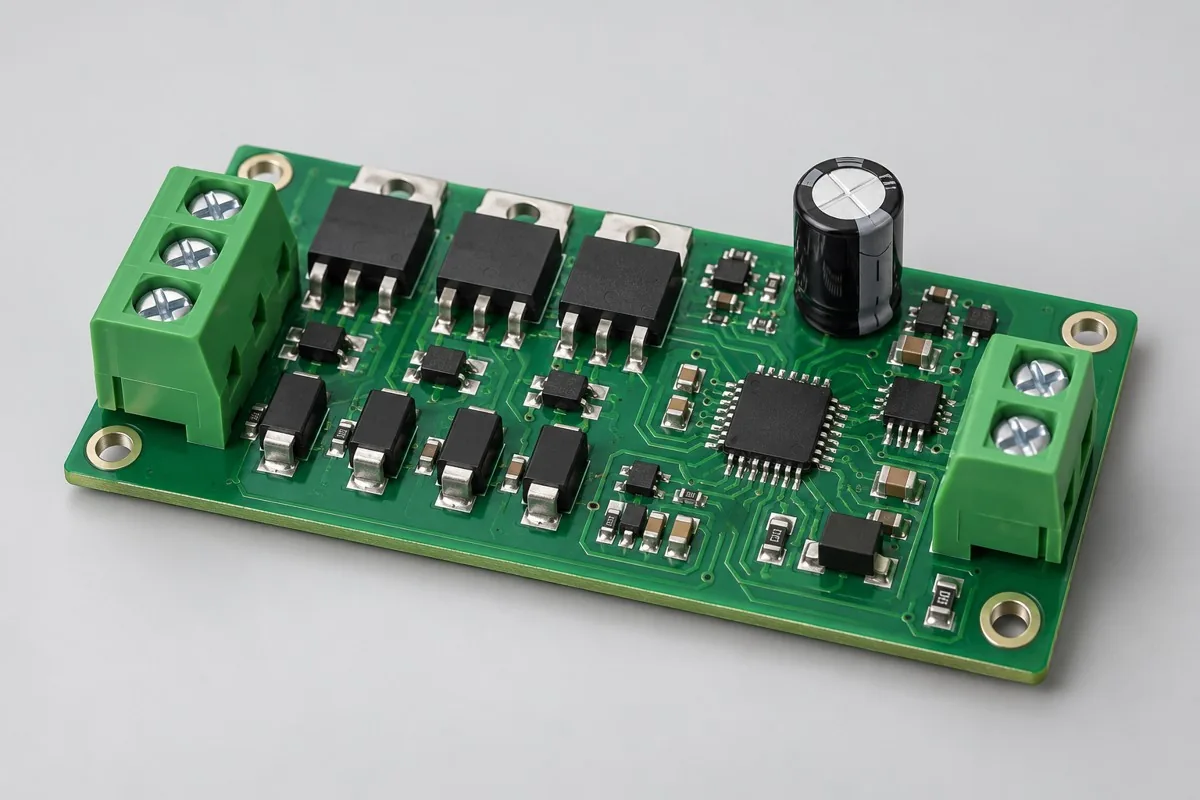
- Single-sided low-voltage motor control board: cost-focused motors and switching components.
Return single-sided PCB assembly comparison configuration · Component Supply and Procurement · Testing and Delivery Scope
Material and Process Reference
- Engineering reference | SMT packages and assembly methods: pads, stencils, and thermal processes: a package/assembly method index only; not evidence that the product configurations on this page are models produced by KFPCBA