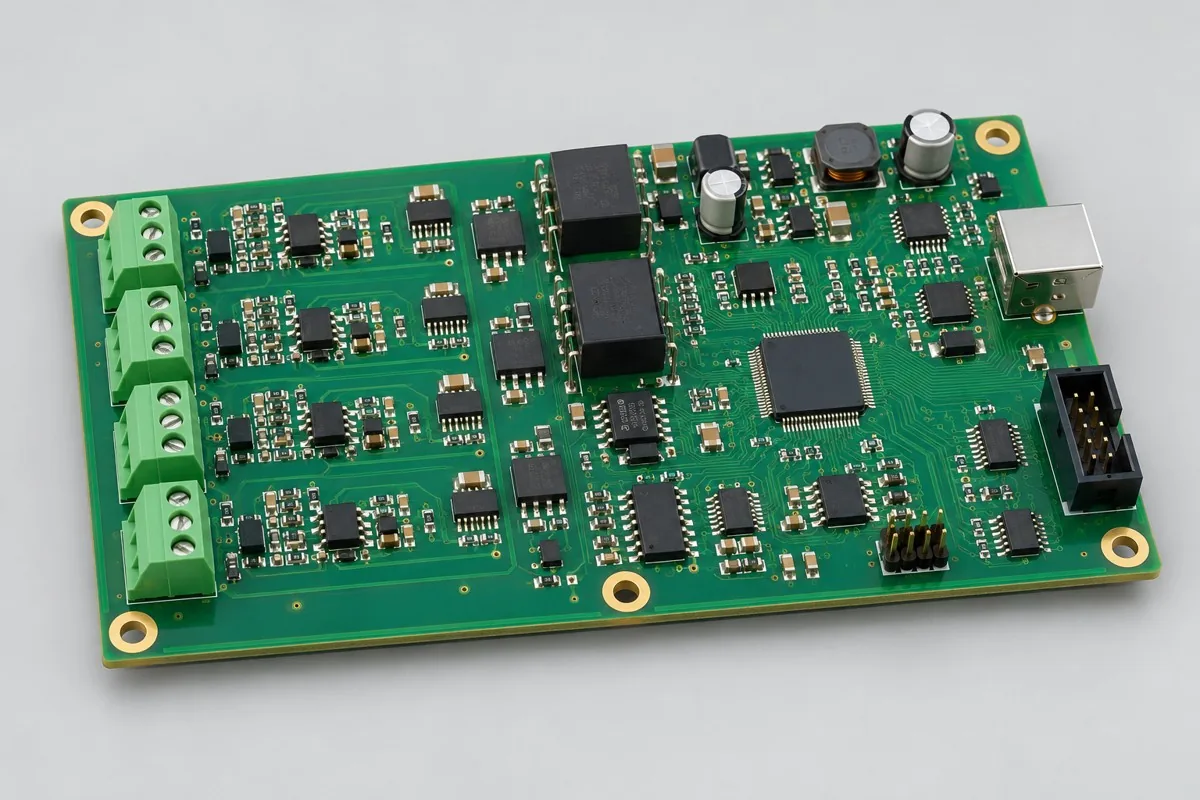
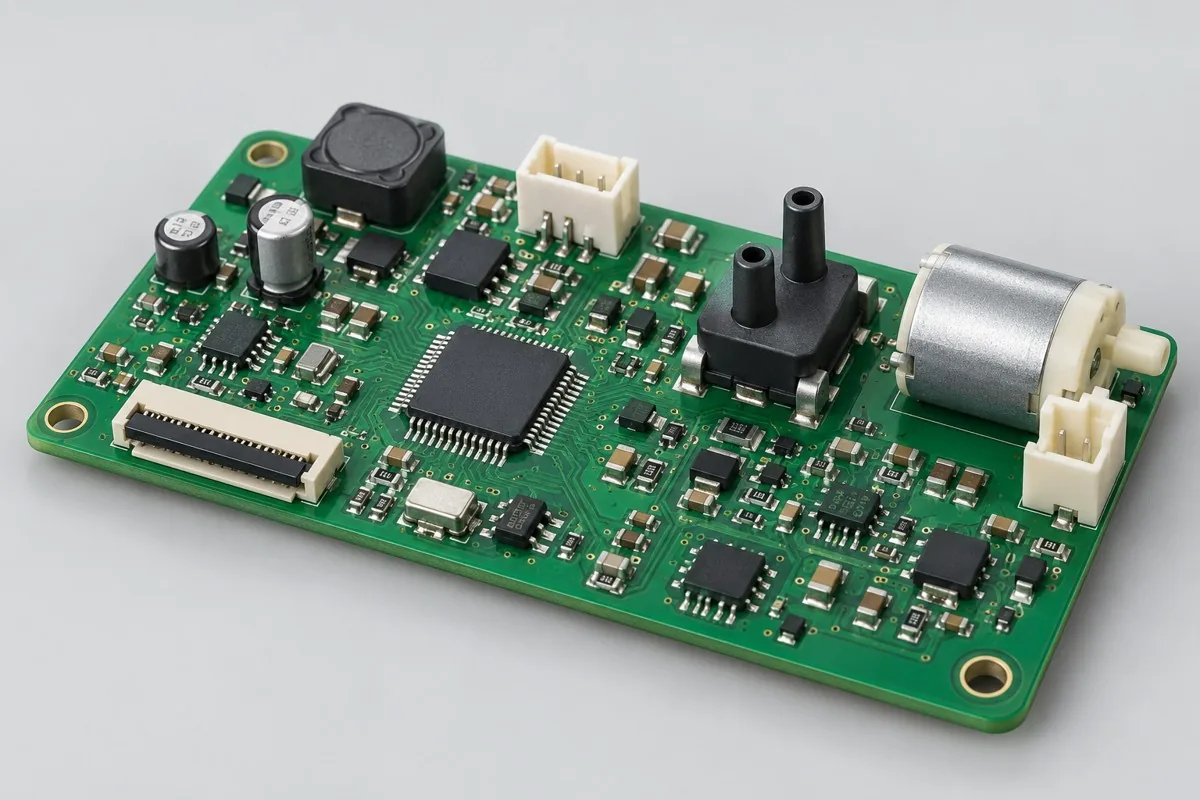
Engineering Reference Configuration
Blood pressure monitor PCB assembly: assembly configuration and test deliverables
The following adjustable engineering configurations support material, functional, and process review; they are not stocked models or commitments to current production-line capabilities. Approved fabrication documentation and order acceptance requirements govern.
Blood pressure monitor control board PCB assembly supports contract manufacturing and procurement review for pressure sampling, air-pump/valve control, and displays. First confirm MCU + pressure-sensor interface + pump/valve drivers, LCD/segment display, buttons, optional Bluetooth interface, and 2/4-layer FR-4 with separate sampling and motor-return regions. Then compare SMT → socket secondary soldering → programming → simulated-pressure/pump-valve testing scope and acceptance costs for pressure inputs, pump/valve timing, depressurization states, and display/buttons. The proposed board-level deliverables are the assembled board, calibration/revision records, and interface-test results. Define complete-device metrology and clinical or regulatory work separately; this reference is not evidence of KFPCBA medical-device certification. Quotation documentation reference:BOM · bare board · material supply
Reference specification and configuration options
| Options | Reference Configuration |
|---|---|
| Power and Logic Domains | Battery power or 5V adapter input |
| Functional Module | Pressure sampling, air-pump/valve control, and display |
| Core Components/Architecture | MCU + pressure-sensor interface + pump/valve drivers |
| Interface and Channels | LCD/segment display; buttons; optional Bluetooth interface |
| Board Layers and Material Options | 2/4-layer FR-4; separate sampling and motor-return regions |
| Component packages | SMD analog front end, through-hole pump/valve sockets, display connections |
| Assembly Route | SMT → socket secondary soldering → programming → simulated-pressure/pump-valve testing |
| Material Supply Scope | Customer-specified sensors/pumps/valves; standard components may be sourced |
| Firmware and Parameters | Separately controlled software, calibration coefficients, and display units |
| Test Focus | Pressure input, pump/valve timing, pressure release state, display, and buttons |
| Deliverables | Board + calibration/revision records + interface-test results |
| Configuration Limits/Options | Board-level assembly; complete-device metrology and clinical/registration responsibilities separately defined |
How much does blood pressure monitor control board PCB assembly cost, and what is included?
Pressure-sensor interfaces, MCUs, pump/valve drivers, and display connections determine board-level costs. Specify socket secondary soldering, programming, pressure calibration, and pump/valve timing tests separately. Assemblies including pumps/valves and pneumatic components differ from board-only quotations. Complete-device metrology and registration work are not ordinary assembly charges.
Quotation terms depend on the approved files, quantity, material supply, tests and delivery requirements.
Prepare a structured RFQ or use the short inquiry form.
| Cost Item | Scope for This Configuration | Billing frequency and work scope | Procurement Verification |
|---|---|---|---|
| Bare PCB and core components | MCU + pressure-sensor interface + pump/valve drivers; 2/4-layer FR-4; separate sampling and motor-return regions | Price according to actual bare-board/component purchase quantities; authorize critical components and substitutions individually | Customer-specified sensors/pumps/valves; standard components may be sourced |
| Placement and secondary assembly | SMT → socket secondary soldering → programming → simulated-pressure/pump-valve testing | Feeder/program setup per lot; assembly priced per board, joint, or process as agreed, with counting rules specified | SMD analog front end, through-hole pump/valve sockets, display connections |
| Manufacturing Preparation | Review stencils, first articles, and support tooling against the actual assembly route | New stencils/carriers may be separate one-time charges; verify panelization, revision, and condition before reuse | Reduced quantities do not automatically eliminate first-article or feeder setup |
| Test resources and execution | Pressure input, pump/valve timing, pressure release state, display, and buttons | Itemize test-method/fixture/script setup; agree execution charges per board, channel, or test duration | Separate supporting development from execution records for each board |
| Software and Parameters | Separately controlled software, calibration coefficients, and display units | When firmware exists, distinguish file programming/verification from software development; omit programming without a firmware revision | Customer-approved files, parameters, and readback rules determine scope |
| Delivery and Change | Board + calibration/revision records + interface-test results; board-level assembly; complete-device metrology and clinical/registration responsibilities separately defined | Price accessories, retesting, and revision changes by approved work items; do not prefill fixed rates | Check BOM, tooling, programs, and acceptance revisions before reorders |
How should integrated and external blood pressure monitor sensors be selected?
Integrated designs reduce connections but require attention to board stress and contamination. External designs separate pneumatic paths more easily but add connections and assembly. Compare pressure inputs, pump/valve noise, pneumatic space, and calibration conditions, beyond sensor prices.
| Comparison Metric | Current Conditions | Factors Influencing Procurement Decision |
|---|---|---|
| Manufacturing Delivery | SMT → socket secondary soldering → programming → simulated-pressure/pump-valve testing | Produce boards/assemblies per BOM and assembly drawings; this does not establish that every system function passes |
| Functional Acceptance | Pressure input, pump/valve timing, pressure release state, display, and buttons | Compare unit prices after defining test stimuli, limits, accessories, and records; review missing test inputs first |
| Configuration Options | LCD/segment display; buttons; optional Bluetooth interface; 2/4-layer FR-4; separate sampling and motor-return regions | Confirm circuit/program compatibility before reviewing assembly and test costs for interface, stackup, or component changes |
| Delivery Scope | Board-level assembly; complete-device metrology and clinical/registration responsibilities separately defined | Complete-system accessories, application development, and project verification are not automatically included in board assembly |
How should pump/valve and display interfaces be matched on blood pressure monitor control boards?
First fix complete pump, valve, sensor, and display models; check voltages, interfaces, and timing. Verify interference when pumps/valves operate alongside analog sampling. Display units and calibration parameters must match shipping software.
- First list required pressure sampling, air-pump/valve control, and displays, distinguishing build-to-print manufacturing, configuration adjustments, and new-function development.
- Then freeze complete part numbers for MCU + pressure-sensor interface + pump/valve drivers, LCD/segment display, buttons, optional Bluetooth interface, and 2/4-layer FR-4 with separate sampling and motor-return regions. Separate customer-supplied and sourced materials: customer-specified sensors/pumps/valves; standard components may be sourced.
- Use first articles to check SMT → socket secondary soldering → programming → simulated-pressure/pump-valve testing, plus separately controlled software, calibration coefficients, and display units. If only program files are supplied, agree programming verification first; development requires separate review.
- Convert pressure inputs, pump/valve timing, depressurization states, and display/buttons into acceptance items with stimuli, limits, and records; specify fixture ownership, per-board execution, and post-repair retesting.
- Finally confirm board + calibration/revision records + interface-test results and board-level assembly, with complete-device metrology and clinical/registration responsibilities separately defined. Compare totals using identical quantities, accessories, and test scope, then freeze the order revision.
Applicable uses and situations requiring separate review
Electronic blood pressure monitor board-level control; air-pump/valve sampling control.
Ordinary pressure-switch control cannot replace blood pressure algorithms. Without approved sensors, pressure-simulation methods, and pump/valve timing, perform engineering verification first; displaying readings alone is insufficient for release.
Assembly Challenges for This Product
Pump current and valve actuation may interfere with low-level pressure sampling. Check analog front ends, sensor sockets, and driver circuits separately. After programming, connect pressure simulators before pumps/valves. Sensor requirements for cleaning agents, flux residue, and pneumatic contamination depend on specified models.
Structural, thermal, and configuration trade-offs
Integrated pressure sensors reduce cables but face board-stress and process-contamination risks. External sensors separate pneumatic paths but add connections and assembly. Do not arbitrarily share pump/valve power traces with analog references to reduce board size.
Configuration-specific test matrix
| node | Inspection/Functional Methods | Acceptance Record |
|---|---|---|
| Pressure chain | Simulate approved pressure points and check zero/span | Pressure points, raw code, and calibration coefficients |
| Pump/valve actuation | Verify inflation, hold, depressurization, and fault-exit timing | Pump valve actuation and abnormal exit records |
| HMI/Version | Display, buttons, battery level and version verification | Interface results and program verification values |
Defect Handling and Acceptance
Sensor-socket soldering, swapped valve wiring, sampling noise, and incorrect calibration programming are distinct defects. Board-level acceptance covers signals and actuation; it cannot replace complete blood pressure monitor metrology, leakage, clinical, or regulatory evaluation.
Blood pressure monitor PCB assembly: material supply and revision management
Supply pressure sensors and pumps/valves by system-approved models; equal voltage does not establish compatibility. Customers provide calibration programs and qualified simulators. Keep test tubing and prototypes separate from shipping materials.
Prototyping vs. Production Differences
Samples allow point-by-point raw-data review. Production links calibration coefficients to serial numbers, locks programming access after calibration, prevents pump/valve connection errors, and retains reasons for failed-board retesting.
Delivery Configuration
Board + calibration/revision records + interface-test results. Board-level assembly; complete-device metrology and clinical/registration responsibilities separately defined.
Convert this configuration into a reviewable order
For blood pressure monitor control board orders, check BOM, quantity, material supply, and the conditions below. Add pick-and-place files, DNP lists, and assembly drawings for SMT. For programming, provide separately controlled software, calibration coefficients, and display-unit files with programming rules and verification requirements. Review costs separately for materials, SMT → socket secondary soldering → programming → simulated-pressure/pump-valve testing, required stencils/feeder setup, support carriers, and test resources. Documentation changes require renewed revision approval; agree delivery milestones after material readiness and scheduling confirmation.
| Project inputs required for review | Engineering decisions | Records/delivery as agreed in the order |
|---|---|---|
| Pump/valve and pressure interfaces | Provide matching pumps, valves, pressure sensors, and cuffs; identify who supplies control curves. | Record reference pressures, valve responses, and pump current; board-level function does not establish clinical measurement validation. |
| Calibration Responsibility | Specify calibration equipment, algorithm revisions, and parameter-programming methods. | Deliver calibration-parameter checksums and tooling identifiers; project specifications define complete medical-device verification. |
Blood pressure monitor control board PCB assembly FAQs
How much does blood pressure monitor control board PCB assembly cost, and what is included?
For standard placement, first calculate board quantity × billable points per board × price per point + setup fee. A project-specific quotation requires review of the available files, quantity, materials, requested tests, delivery destination, taxes, shipping, and trade terms. This is a placement-only reference; bare PCBs, materials, and testing are charged separately. No current unit prices are published here; request an itemized quotation for the approved scope.Review quotation inputs and scope.
How should integrated and external blood pressure monitor sensors be selected?
Integrated designs reduce connections but require attention to board stress and contamination. External designs separate pneumatic paths more easily but add connections and assembly. Compare pressure inputs, pump/valve noise, pneumatic space, and calibration conditions, beyond sensor prices.
How should pump/valve and display interfaces be matched on blood pressure monitor control boards?
First fix complete pump, valve, sensor, and display models; check voltages, interfaces, and timing. Verify interference when pumps/valves operate alongside analog sampling. Display units and calibration parameters must match shipping software.
Does blood pressure monitor PCB assembly include pressure calibration?
Quotations should define simulated pressure points, reference equipment, coefficient programming, and readback scope. Board-level pressure-chain verification differs from complete-device blood pressure accuracy evaluation; pump/valve and pneumatic support work should be separate.
Does completed PCB assembly testing prove blood pressure measurement accuracy?
Board-level testing verifies input, control, and display paths; complete-device accuracy also depends on pneumatics, algorithms, and verification methods. Record board and complete-device acceptance tasks separately; normal pump/valve operation cannot replace accuracy verification.
What documentation is required for customer-supplied blood pressure board sensors?
Provide complete models, pressure ranges/interfaces, cleaning restrictions, and calibration methods; lock pump/valve and display revisions too. Sensor or pneumatic changes may alter calibration; socket compatibility does not establish identical results.
How does blood pressure board production calibration differ from prototype verification?
Prototypes establish pump/valve interference and pneumatic compatibility. Production records each board against frozen pressure points, programs, and coefficient procedures. Separate complete-device metrology evaluation from board-level release, specifying each work scope in quotations.
How should pressure-chain testing be included in blood pressure monitor control board procurement acceptance?
The reference method simulates approved pressure points and checks zero/span. Records include pressure points, raw codes, and calibration coefficients. Supply test inputs, applicable configurations, and acceptance limits with the inquiry, then agree first-article verification and per-board execution scope. Price test-resource setup separately from each execution. Methods can be reviewed before limits are available, but completing an operation does not establish specification compliance.
How should actuation-chain testing be included in blood pressure monitor control board procurement acceptance?
The reference method verifies inflation, hold, depressurization, and fault-exit timing. Records include pump/valve actions and abnormal exits. Supply test inputs, applicable configurations, and acceptance limits with the inquiry, then agree first-article verification and per-board execution scope. Price test-resource setup separately from each execution. Methods can be reviewed before limits are available, but completing an operation does not establish specification compliance.
How should user-interface/revision testing be included in blood pressure monitor control board procurement acceptance?
The reference method checks displays, buttons, battery level, and revisions. Records include interface results and program checksums. Supply test inputs, applicable configurations, and acceptance limits with the inquiry, then agree first-article verification and per-board execution scope. Price test-resource setup separately from each execution. Methods can be reviewed before limits are available, but completing an operation does not establish specification compliance.
How are programming and development priced separately when customers supply blood pressure monitor control board software?
Controlled content comprises separately managed software, calibration coefficients, and display units. Programming customer-approved files, loading parameters, and verifying readback are manufacturing operations; new logic, interface adaptation, or algorithm changes require development review. Separately price resource setup, per-board programming, verification, and failure handling. Programming included does not imply application development included.
Must first-article, stencil, and feeder-setup charges be recalculated for blood pressure monitor control board reorders?
The route is SMT → socket secondary soldering → programming → simulated-pressure/pump-valve testing. Check stencils and panelization for SMT, and supports/assembly methods for through-hole or later-installed parts. Agree feeder setup and first articles for the current lot; reuse existing tooling only when revision, locations, and condition match. After changing SMD analog front ends, through-hole pump/valve sockets, display connections, or interfaces, review tooling and impacts on pressure inputs, pump/valve timing, depressurization states, and display/buttons before confirming repeat charges.
How should total blood pressure monitor control board assembly costs be compared when critical components are customer-supplied and others sourced?
Create a procurement-responsibility table using customer-specified sensors/pumps/valves and optionally sourced standard components. Confirm complete part numbers, quantities, packaging, and remaining-material rules with deliveries. Customer supply changes only procurement boundaries; SMT → socket secondary soldering → programming → simulated-pressure/pump-valve testing and pressure inputs, pump/valve timing, depressurization states, and display/buttons remain actual work. Approve shortage, substitution, or lot-change impacts first; do not directly compare consigned assembly unit prices with material-inclusive assembly totals.
What requires retesting after blood pressure monitor control board repairs or repeat orders?
Select retests by change impact. Original acceptance covers pressure inputs, pump/valve timing, depressurization states, and display/buttons; shipping records include board + calibration/revision records + interface-test results. Repairs affecting power, interfaces, critical analog circuits, or software revisions require related tests, beyond repaired joints. Repeat orders must align with original BOMs, parameters, and test resources. Agree retest charges by approved items and actual quantities; do not assume free service or fixed turnaround.
What reorder costs require recalculation when blood pressure boards change reference equipment or calibration coefficients?
First check pressure-source identifiers, measurement-range points, and reference values against the original approved calibration method, then check algorithms, coefficient programming, and verification revisions. New reference equipment or parameter procedures require resource verification first. Itemize per-board pressure-point injection, coefficient readback, and pump/valve/display retests according to impacts. Agree board-level calibration costs separately from complete-device metrology, clinical, and registration responsibilities; retaining the original board number on reorders does not establish that recalibration is unnecessary.
Compare Other Products in This Category
- Medical device analog acquisition board: Multiple low-level inputs and isolated communication.
Return to medical PCB assembly configuration comparison · Component Supply and Procurement · Testing and Delivery Scope
Material and Process Reference
- Engineering reference | SMT packages and assembly methods: pads, stencils, and thermal processes: a package/assembly method index only; not evidence that the product configurations on this page are models produced by KFPCBA
To request an assembly review, send an RFQ with the quantity, BOM revision, assembly files, material-supply responsibilities and required test records. Agree any design or test work separately.