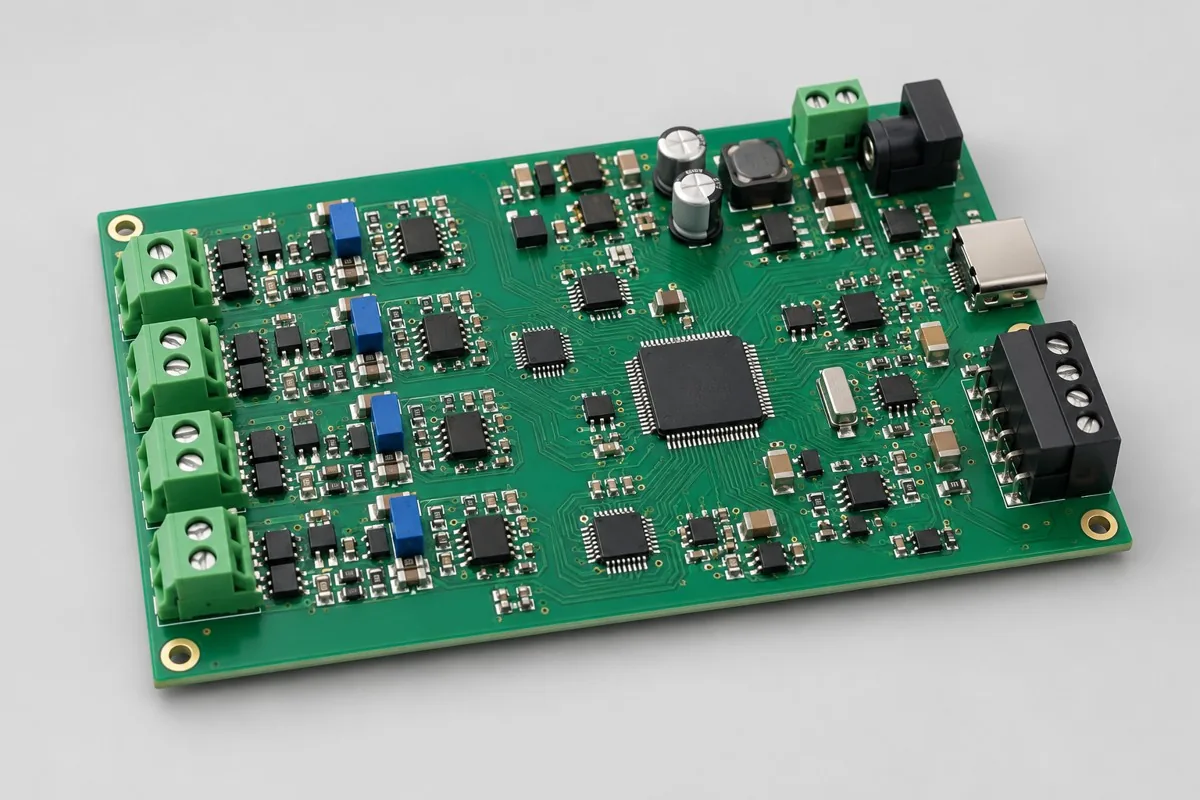
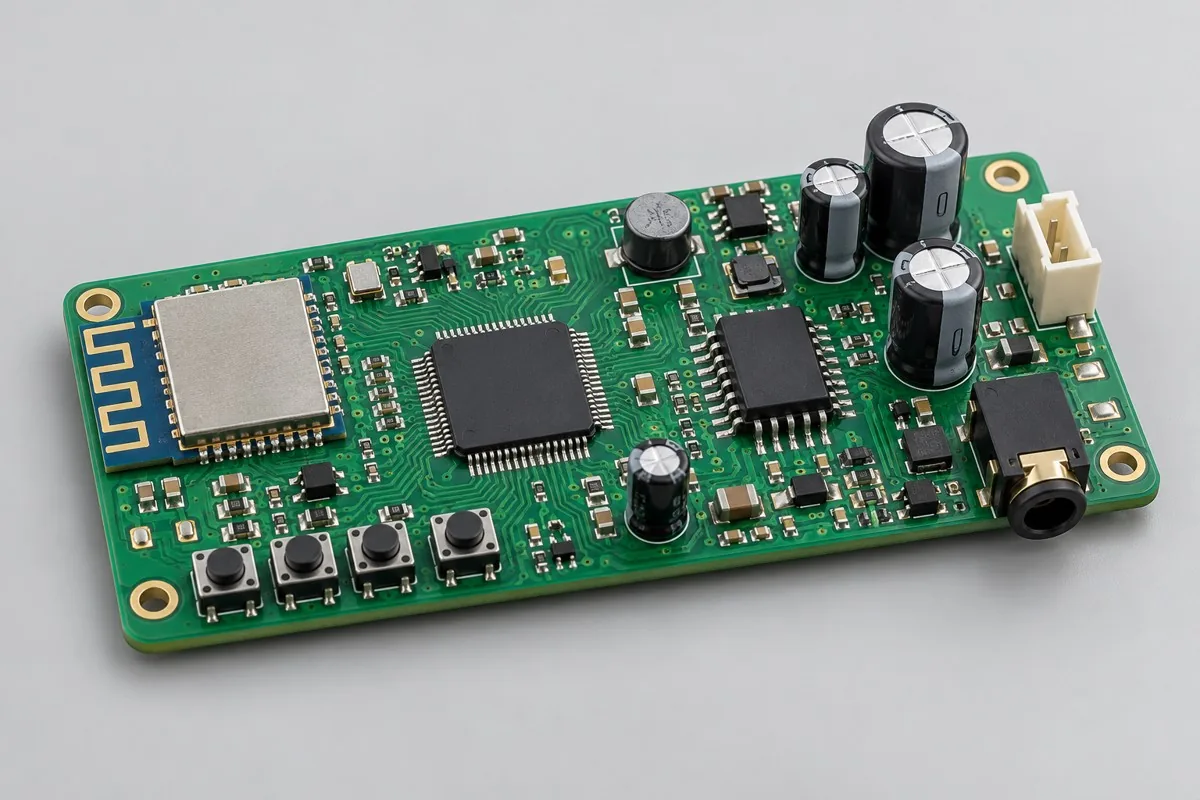
Engineering Reference Configuration
Bluetooth speaker PCB assembly: configurations and test deliverables
The following adjustable engineering configurations support material, functional, and process review; they are not stocked models or commitments to current production-line capabilities. Approved fabrication documentation and order acceptance requirements govern.
Low-volume Bluetooth speaker PCB assembly supports contract manufacturing and procurement review for wireless audio + amplification + button control. Confirm Bluetooth audio modules + amplifiers + charge management, mono/stereo channels, USB charging, battery/speaker sockets, and 2/4-layer FR-4 with audio/RF/power partitioning. Compare SMT → socket installation → firmware → load/pairing test scope and channel, pairing/reconnection, concurrent charging, and button acceptance costs. This page separates low-volume boards + issue lists + revision/test records from controlled DNP variants, with no preset MOQ or lead time, to clarify actual quote coverage. RFQ file reference:BOM · bare board · material supply
Reference specification and configuration options
| Options | Reference Configuration |
|---|---|
| Power and Logic Domains | Single cell battery or 5V input |
| Functional Module | Wireless audio plus amplifier plus button control |
| Core Components/Architecture | Bluetooth audio module + amplifier + charge management |
| Interface and Channels | Mono/stereo; USB charging; battery/speaker sockets |
| Board Layers and Material Options | 2/4-layer FR-4; audio/RF/power partitioning |
| Component types | Wireless modules, QFN amplifiers, USB connectors, and wire connectors |
| Assembly Route | SMT → socket installation → firmware → load/pairing tests |
| Material Supply Scope | Long-lead modules may be customer-supplied; amplifiers/passives may be procured |
| Firmware and Parameters | Pairing identities, EQ, volume, and development/shipping firmware |
| Test Focus | Channels, pairing/reconnection, concurrent charging, and buttons |
| Deliverables | Low-volume boards + issue lists + revision/test records |
| Configuration Limits/Options | Controlled DNP variants allowed; no preset MOQ or lead time |
How much does low-volume Bluetooth speaker PCB assembly cost, and what is included?
Bluetooth modules, amplifiers, charge management, and connectors determine costs. Stencils, loading, firmware, and identity preparation are batch work. Test pairing, channels, concurrent charging, and DNP variants separately. List battery, speaker, and enclosure listening tests separately. Setup costs have greater per-board impact at low quantities.
Quotation terms depend on the approved files, quantity, material supply, tests and delivery requirements.
Prepare a structured RFQ or use the short inquiry form.
| Cost Item | Scope for This Configuration | Billing frequency and work scope | Procurement Verification |
|---|---|---|---|
| Bare PCB and core components | Bluetooth audio module + amplifier + charge management; 2/4-layer FR-4; audio/RF/power partitioning | Price according to actual bare-board/component purchase quantities; authorize critical components and substitutions individually | Long-lead modules may be customer-supplied; amplifiers/passives may be procured |
| Placement and Post-Assembly | SMT → socket installation → firmware → load/pairing tests | Feeder/program setup per lot; assembly priced per board, joint, or process as agreed, with counting rules specified | Wireless modules, QFN amplifiers, USB connectors, and wire connectors |
| Manufacturing Preparation | Review stencils, first articles, and support tooling against the actual assembly route | New stencils/carriers may be separate one-time charges; verify panelization, revision, and condition before reuse | Reduced quantities do not automatically eliminate first-article or feeder setup |
| Functional Support | Channels, pairing/reconnection, concurrent charging, and buttons | Itemize test-method/fixture/script setup; agree execution charges per board, channel, or test duration | Separate supporting development from execution records for each board |
| Software and Parameters | Pairing identities, EQ, volume, and development/shipping firmware | When firmware exists, distinguish file programming/verification from software development; omit programming without a firmware revision | Customer-approved files, parameters, and readback rules determine scope |
| Delivery and Change | Low-volume boards + issue lists + revision/test records; controlled DNP variants allowed; no preset MOQ or lead time | Price accessories, retesting, and revision changes by approved work items; do not prefill fixed rates | Check BOM, tooling, programs, and acceptance revisions before reorders |
Should a Bluetooth speaker use a module or onboard audio SoC?
Modules ease initial integration but have supply and function limitations. Onboard designs allow integration changes but add RF, firmware, and noise verification. For low volumes, compare reliable prototype creation and maintenance rather than pursuing only the lowest first-batch material cost.
| Comparison Metric | Current Conditions | Factors Influencing Procurement Decision |
|---|---|---|
| Manufacturing Delivery | SMT → socket installation → firmware → load/pairing tests | Produce boards/assemblies per BOM and assembly drawings; this does not establish that every system function passes |
| Functional Acceptance | Channels, pairing/reconnection, concurrent charging, and buttons | Compare unit prices after defining test stimuli, limits, accessories, and records; review missing test inputs first |
| Configuration Options | Mono/stereo; USB charging; battery/speaker sockets; 2/4-layer FR-4; audio/RF/power partitioning | Confirm circuit/program compatibility before reviewing assembly and test costs for interface, stackup, or component changes |
| Delivery Scope | Controlled DNP variants allowed; no preset MOQ or lead time | Complete-system accessories, application development, and project verification are not automatically included in board assembly |
How should mono and stereo speaker PCB assemblies be selected?
Select by speaker count, load, enclosure, and battery targets, also checking left/right channels and EQ. Stereo adds amplification and tests. Recheck heat and output after speaker changes rather than merely adding a socket.
- First list required wireless audio + amplification + button control, distinguishing build-to-print work, configuration changes, and new function development.
- Then freeze full part numbers for Bluetooth modules + amplifiers + charge management, mono/stereo, USB charging, battery/speaker sockets, and 2/4-layer FR-4 with audio/RF/power partitioning. Split customer supply and procurement: long-lead modules may be customer-supplied, amplifiers/passives procured.
- Use first articles to verify SMT → socket installation → firmware → load/pairing tests, plus pairing identities, EQ, volume, and development/shipping firmware. For supplied files, agree on writing verification first; review development separately.
- Turn channels, pairing/reconnection, concurrent charging, and buttons into acceptance tests with stimuli, limits, and records. Define fixture ownership, per-board execution, and post-rework retesting.
- Finally confirm low-volume boards + issue lists + revision/test records and controlled DNP variants, without preset MOQ or lead times. Compare totals at equal quantities, accessories, and test scope, then freeze the order revision.
Applicable uses and situations requiring separate review
Wireless speaker prototypes and audio/enclosure integration.
Frozen high-volume onboard SoC designs should not repeatedly use prototype adapters. Without selected speakers and batteries, audio IC specifications alone cannot guarantee complete product power.
Assembly Challenges for This Product
Small material lots may mix trays, cut tape, and module revisions. Verify materials and create placement/secondary soldering lists first. Check USB sockets, module antennas, and amplifier thermal areas separately. First articles use controlled loads and battery simulators before specified enclosure acoustic integration.
Structural, thermal, and configuration trade-offs
Mature modules reduce initial firmware work but impose model lifecycle and purchasing constraints. Replaceable speaker interfaces ease listening trials but may add noise and looseness. Do not skip hardware variant tests to save prototype setup costs.
Product-specific test matrix
| Test stage | Inspection/Functional Methods | Acceptance Record |
|---|---|---|
| Board-Level Audio | Test channels, mute, and abnormal noise with controlled loads | Variant Numbers and Results |
| Wireless/Interaction | Pairing, reconnection, button, and upgrade | Identity, firmware, and action records |
| Power Interlock | Charge while playing and simulate low battery | Power status, reset, and temperature rise conditions |
Defect Handling and Acceptance
Check configuration tables first for mixed module revisions, incorrect DNP populations, and reversed speaker connections. Record each variant separately. Keep acoustic listening feedback separate from board electrical results, and identify temporary jumper wires in issue lists.
Low-volume speaker PCB assembly: material supply and revision management
Count customer-supplied modules and batteries by lot/revision. Agree cut-tape allowances for first articles and reasonable attrition. Confirm stock and obsolescence risks before procuring critical modules, and define excess material ownership.
Prototyping vs. Production Differences
This low-volume task compares module, speaker, battery, and enclosure variants. List setup, remnant-material replenishment, and acoustic integration separately, delivering issue/tuning records for each variant. Unlike assembly of defined portable audio architectures, production requires a converged BOM, EQ, and shipping firmware, with temporary jumpers and unapproved substitutes removed to match acoustic prototypes to production boards.
Delivery Configuration
Low-volume boards + issue lists + revision/test records. Controlled DNP variants allowed; no preset MOQ or lead time.
Convert this configuration into a reviewable order
At ordering, check BOM, quantity, material supply, and conditions below. Supply pick-and-place files, DNP, and assembly drawings for SMT. For programming, provide pairing identity, EQ, volume, and development/shipping files with writing rules and verification. Review costs separately for materials, SMT → socket installation → firmware → load/pairing tests, plus required stencil/loading, support carriers, and test setups. Reapprove file revisions after changes and agree delivery milestones after material readiness and scheduling.
| Required project inputs | Engineering Decisions Affected | Records/delivery as agreed in the order |
|---|---|---|
| Small-Batch Speaker Versions | List battery, speaker, wireless module/antenna, and enclosure revisions to determine first article combination coverage. | Retain audio/wireless/charging results by combination. Only reviewed and approved tuning parameters may enter the frozen shipping firmware. |
| Fragmented Material Supply | Define remnant-material replenishment, substitution authority, and obsolete module handling. | Order records identify deliverable quantities, remaining materials, and each firmware revision. |
Low-volume Bluetooth speaker PCB assembly FAQ
How much does low-volume Bluetooth speaker PCB assembly cost, and what is included?
For standard placement, first calculate board quantity × billable points per board × price per point + setup fee. A project-specific quotation requires review of the available files, quantity, materials, requested tests, delivery destination, taxes, shipping, and trade terms. This is a placement-only reference; bare PCBs, materials, and testing are charged separately. Any formula on this page organizes cost inputs; it is not a quoted rate.View cost items, calculation conditions, and sources.
Should a Bluetooth speaker use a module or onboard audio SoC?
Modules ease initial integration but have supply and function limitations. Onboard designs allow integration changes but add RF, firmware, and noise verification. For low volumes, compare reliable prototype creation and maintenance rather than pursuing only the lowest first-batch material cost.
How should mono and stereo speaker PCB assemblies be selected?
Select by speaker count, load, enclosure, and battery targets, also checking left/right channels and EQ. Stereo adds amplification and tests. Recheck heat and output after speaker changes rather than merely adding a socket.
Why are low-volume Bluetooth speaker boards more expensive per board?
Stencil, loading, identity, and test setup costs do not fall proportionally with quantity. Separate setup from per-board assembly and state quantities by variant to show which costs more boards of one revision can spread.
Can prototype speaker boards mix EQ settings or speakers?
Controlled variants are possible, but label BOMs, firmware, and loads separately without mixing records. Each variant still needs channel, charging, and pairing results. Retain listening conclusions with enclosure revisions.
Which revisions should Bluetooth speaker prototyping retain?
Retain modules, amplifiers, speaker loads, EQ, and development or shipping firmware. Record pairing and channel results for each DNP revision. Link issues to board IDs so different listening conditions do not become one conclusion.
Can Bluetooth modules be customer-supplied for low-volume speaker boards?
Split supply by full model and packaging lot, with standard amplifiers/passives procured to authorized BOMs. Customer-supplied modules do not reduce pairing identity, firmware, or amplifier load testing. Complete materials alone do not permit immediate release.
How should board-level audio tests enter low-volume Bluetooth speaker purchasing acceptance?
The reference method checks channels, mute, and abnormal noise with controlled loads, recording variant IDs and results. Provide inputs, configurations, and limits, then agree first article and per-board scope. Price setup separately from each execution. Without limits, review methods first; completed operations do not establish compliance.
How should wireless/interaction tests enter low-volume Bluetooth speaker purchasing acceptance?
The reference method checks pairing, reconnection, buttons, and updates, recording identities, firmware, and actions. Provide inputs, configurations, and limits, then agree first article and per-board scope. Price setup separately from each execution. Without limits, review methods first; completed operations do not establish compliance.
How should power interaction tests enter low-volume Bluetooth speaker purchasing acceptance?
The reference method charges during playback and simulates low battery, recording power states, resets, and temperature-rise conditions. Provide inputs, configurations, and limits, then agree first article and per-board scope. Price setup separately from each execution. Without limits, review methods first; completed operations do not establish compliance.
How are writing and development priced separately when customers supply speaker firmware?
Controlled content includes pairing identities, EQ, volume, and development/shipping firmware. Writing approved files, loading parameters, and readback verification are manufacturing execution; new logic, interface adaptation, or algorithm changes require development review. Quote setup, per-board writing, verification, and failure handling separately. Programming included does not imply application development.
Do repeat low-volume Bluetooth speaker orders need recalculated first article, stencil, and loading fees?
The route is SMT → socket installation → firmware → load/pairing tests. Check stencils and panels for SMT and supports/assembly for through-hole or later installation. Agree batch loading and first articles; reuse old tooling only when revision, location, and condition match. After wireless module, QFN amplifier, USB socket, or wire-connector changes, assess tooling and channel, pairing/reconnection, concurrent charging, and button impacts before confirming recurring fees.
How should replenishment costs be agreed for obsolete modules or insufficient remnant materials?
Check full module models, packaging lots, and DNP variant quantities, listing actual readiness and shortages. Obsolete-module substitutions also require firmware, pairing identity, and load-test setup review. Quote procurement differences, revisions/setups, and staged loading separately. Document remnant storage, replenishment responsibility, and deliverable quantities by revision. Small shortages do not automatically authorize mixed modules.
What needs retesting after low-volume Bluetooth speaker rework or supplemental orders?
Select retests by change impacts. Original acceptance covers channels, pairing/reconnection, concurrent charging, and buttons, with low-volume boards + issue lists + revision/test records. If rework affects power, interfaces, critical analog circuitry, or software, check related tests rather than only repaired joints. Align supplemental orders with original BOMs, parameters, and setups. Agree fees by approved items and actual quantities, without assuming free retests or fixed turnaround.
Compare Other Products in This Category
- Portable Audio Control Board: assembly acceptance with defined Codec/amplifier, loads, and shipping parameters.
Return to low-volume PCB assembly configuration comparison · Component Supply and Procurement · Testing and Delivery Scope · Class-D Amplifier Board Design
Material and Process Reference
- Engineering reference | SMT packages and assembly methods: pads, stencils, and thermal processes: a package/assembly method index only; not evidence that the product configurations on this page are models produced by KFPCBA