Engineering reference design · prototype validation pending
PCB reverse engineering: authorized boards to editable files
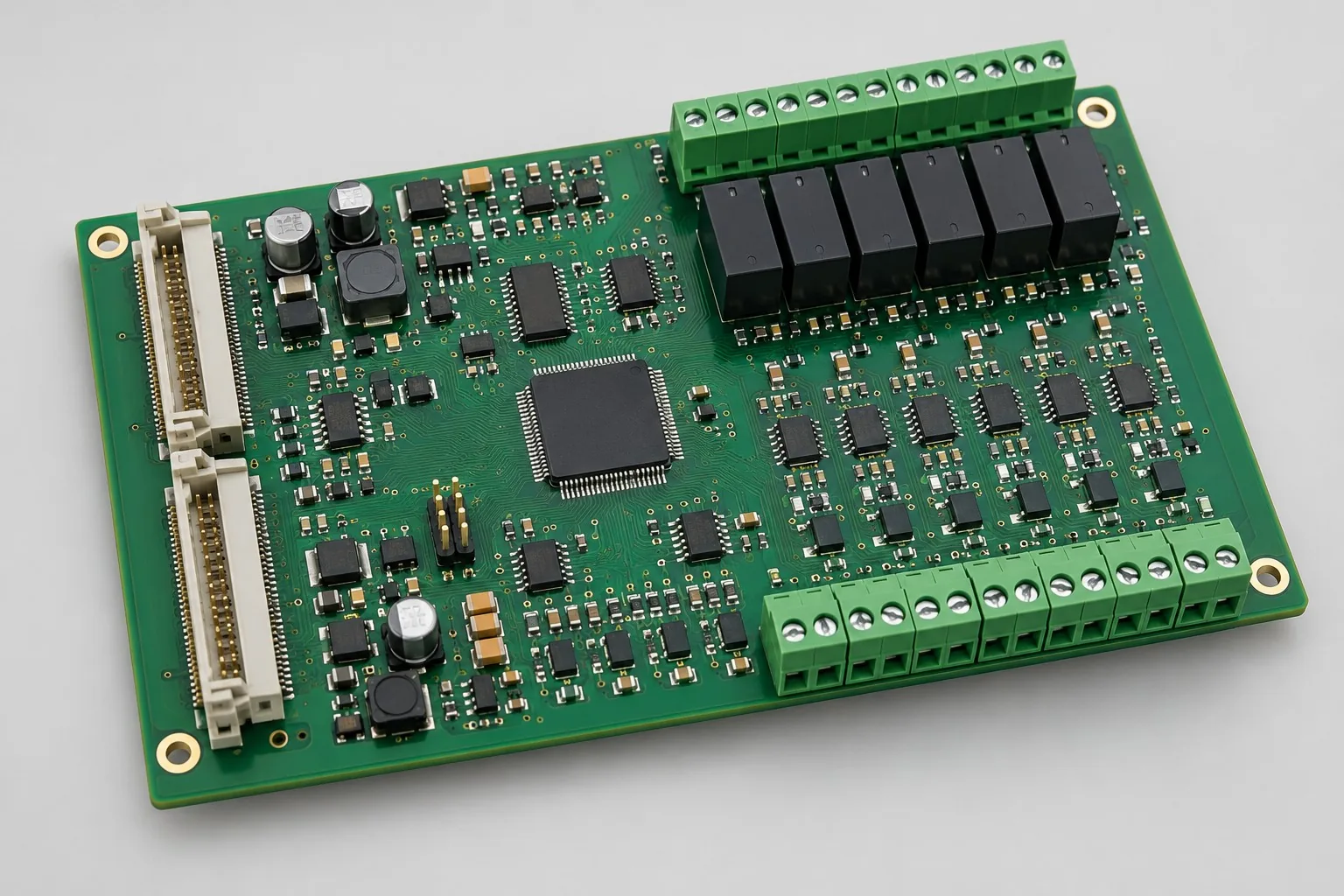
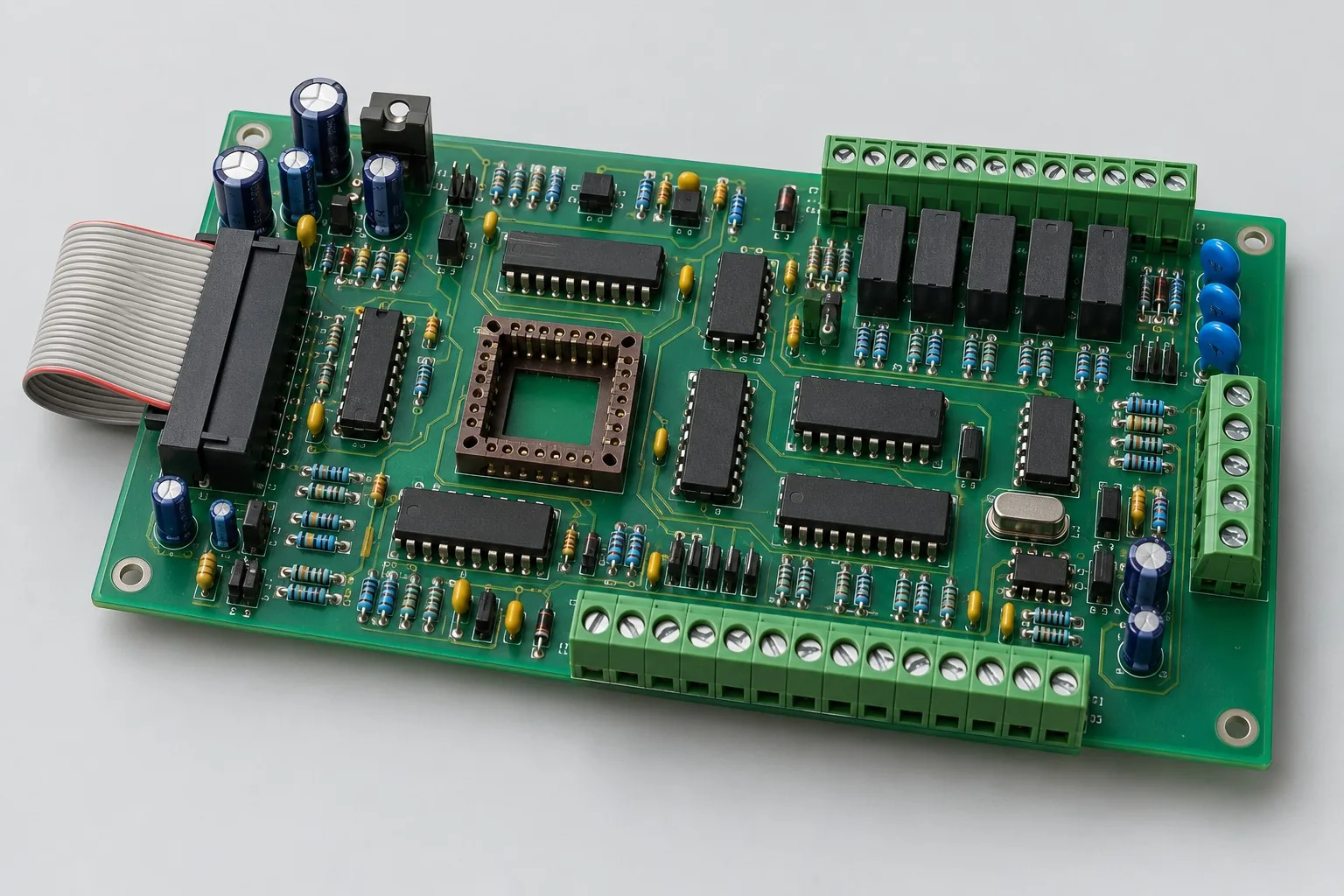
Within customer ownership/written authorization, recover schematics/BOM/PCB from physical boards and equipment baselines. Mark unknown nets/software boundaries first. Build recovery prototypes for comparison, numbering revisions separately.
Custom development reference design. The parameters below are requirement configurations and design targets; validate product performance through agreed prototype tests.
| Functional Partition | Design and verification scope |
|---|---|
| Authorized original board and interface | Check authorization, revisions, wiring, and working samples; fix observable interface/equipment cases. |
| Connection relationship / BOM recovery | Trace nets/markings and cross-check measurements; retain evidence gaps for unknown inner nets. |
| New Schematic and PCB | Recover editable schematics/footprints/PCB; number original mappings and active revisions separately. |
| Legacy device function regression | Compare normal/fault behavior with identical hosts/harnesses/loads. Appearance does not prove equivalence. |
| Power / Timing Comparison | Compare currents, resets, and startup. Preserve grounding/shielding in reroutes. |
| Software scope and differences | Check authorized firmware, readable interfaces, and redevelopment scope. Net recovery is not protected-program recovery. |
How much does industrial board recovery cost, and how are quotes calculated?
Costs depend on missing files, net visibility, layers, and device/footprint data. Firmware availability determines direct functional verification. Separate recovery, missing-function redevelopment, and original-board comparisons rather than pricing area alone.
Quotation terms depend on the approved files, quantity, material supply, tests and delivery requirements.
Prepare a structured RFQ or use the short inquiry form.
| Quotation Items | What services are included | What to Check When Comparing Quotes |
|---|---|---|
| Circuit and PCB Design | Original board network and package data recovery | Reusable portions of existing designs and circuit/mechanical changes |
| Software and Validation | Original board/recovery board function comparison | Physical boards help verify circuits but do not guarantee chip firmware access |
| Prototype Preparation | Bare PCB, BOM procurement, assembly, and agreed prototype quantity | Whether material/component revisions, prototype quantities, and test targets match |
| Subsequent Revision | Record new requirements separately from post-test corrections | How agreed changes, source files, and validation results are delivered |
How do industrial recovery and obsolete-part replacement differ?
Recovery creates editable files/checks original functions; replacements migrate parts/interfaces/software. Check original availability before recovery versus active revision decisions.
Why cannot PCB recovery be priced by area alone?
Layers, net visibility, footprints/data, and software availability determine work. Equal areas may hide different missing connections/files. Price recovery and functional verification separately.
Can one physical board recover control firmware?
Boards help check circuits, not guarantee code access. Define authorization and available sources/firmware before scope. Quote rewriting separately from hardware recovery.
Authorized board-to-editable-file reference configuration
| Configuration Field | Reference Configurations/Selections | Basis and Status |
|---|---|---|
| Service Target | Customer-owned or written-authorized industrial board | Design Objective |
| Reference Function | Legacy 24V controls, RS485, and discrete I/O | Design Objective |
| Input Data | At least 1 physical set; working sample recommended | Design Objective |
| Recovery Range | Connectors, power, BOM, nets, and PCB | Design Objective |
| Layer Boundary | Confirm from hardware; inner layers need appropriate inspection | Design Objective |
| Firmware Boundary | Prioritize authorized sources/readable interfaces; no protected-code recovery commitment | Design Objective |
| Mechanical Constraint | Outline, holes, and connectors compatible with original equipment | Design Objective |
| Device Strategy | Prefer available originals; analyze substitutions separately | Design Objective |
| Output Version | Original board mapped version and revised version numbered separately | Design Objective |
| Prototype Target | Approved functional use case verification for compatibility | Design Objective |
| Safety Boundary | Do not remove equipment safety protections/access controls | Design Objective |
| Delivery Evidence | Net tracing, measurements, sources, and changes | Design Objective |
Data Recovery and Active Revision
Record original-board functions and observable behavior before recovering the circuit. Similar appearance does not establish functional equivalence.
Keep unsupported inner nets uncertain. Use controlled destructive samples/inspection if needed rather than guessing connections.
Stage substitutes separately from recovery to distinguish recovery errors and intentional revisions.
Design budget and trade-off examples
Check design targets with engineering calculations
Build interface comparisons first: for example, 8 inputs, 4 outputs, power, and communication total 14 basic targets. Record original conditions/measurements/new results/differences for each.
Conditions and Scope of Application:Target counts illustrate work breakdown, not coverage. Define authorization, software sources, and unrecoverable functions. Board artwork does not guarantee firmware recovery.
Replace examples with selected components and record margins; calculations support design choices, while prototype records support acceptance.
Authorized board-to-editable-file power and layout
- Recover outlines/holes/interface datums; map photos/coordinates to component IDs.
- Trace power/protection/I/O first; cross-check critical nets by measurement.
- Preserve grounding/shielding in reroutes; identify added-signal compatibility impacts.
Control Board Recovery Design Input
- Ownership/authorization, usage scope, and customer equipment files
- Working original boards, wiring, test steps, and faults
- Firmware sources, substitutes, and fixed mechanical interfaces
If circuit files exist, provide editable schematics, PCB, BOM, and current issues, and agree on review or revision scope. If only functions are defined, freeze this page's inputs before selection and circuit development. Agree separately on control-software and external-application responsibilities, interfaces, and acceptance.
Control Board Recovery Design Delivery
| Stage | Engineering Work for This Proposal | Reviewable Deliverables |
|---|---|---|
| Requirements and Design Freeze | Freeze authorization, functional baselines, and recovery detail | Functional/interface requirements, mechanical revision, acceptance conditions, and open items |
| Schematic and Component Selection | Recover nets/BOM/schematics; mark unknown parts, inferred connections, and missing firmware | Editable schematics, controlled BOM, footprint checks, and design calculations for these circuits |
| Layout and Routing | Recover datums/footprints; route new versions and independently cross-check nets | PCB source files, actual stackup/hole/net constraints, DRC, and assembly-dimension checks |
| Simulation/Calculation | Build original/new net, component, startup, and observable-function difference matrices | Design calculations/models, input conditions, margins, and items awaiting measurement |
| Prototype and Software | Build recovery prototypes; integrate authorized firmware or agreed new software | Recovered schematics/BOM/PCB/manufacturing package, prototypes, tracing evidence, and differences; software limited to authorized software porting/agreed development |
| Testing and Version Closure | Compare interfaces, loads, and faults in original equipment; close errors/archive unknowns | Procedures, wiring, raw results, and decisions for the prototype revision; include issue/change and limitation lists |
Original board and recovery board function comparison
- Original/recovered prototype cases in identical equipment
- Supply currents, waveforms, and fault comparisons
- Revised protection/thermal/critical-load verification
- Net consistency, source/firmware, and manufacturing revision archives
Compare interfaces/loads/faults in original equipment; close errors/archive unknowns. Reports identify equipment, conditions, revisions, and criteria, recording passed/uncovered items.
Original board versus recovery board function comparison worksheet
The table turns authorized board recovery into checks. Freeze samples, equipment, environment, and tolerances; link results to current raw records.
| Verification Object | Pre-Production Freeze | How to Test Prototypes in Practice | Delivery and Acceptance Records |
|---|---|---|---|
| Authorization and recoverable range | Ownership/authorization, original samples, and editable scope | Establish baselines; identify unreadable firmware/unknown parts | Deliver recovered/inferred nets/open items; equal appearance does not mean equivalence |
| Function Comparison | Original equipment, protocol cases, and normal/fault behavior | Compare originals/recovery prototypes item by item in identical equipment | Deliver cases/inputs/both responses; unknown functions cannot be marked passed |
| Manufacturing and Documentation | Footprints/pin checks, substitutes, and delivery lists | Check footprints, loaded prototypes, and equipment regression | Retain changes/issues; sources and manufacturing packages share revisions |
Manufacturing and assembly coordination for this design
- List obsolete parts/authorized firmware shortages first; do not replace unknowns with generic parts directly.
- Independently cross-check recovered schematics/netlists before Gerber output for traceability.
Link design revisions to schematics, BOM, PCB, fabrication, and software documentation. When fabricators adjust stackup, materials, or holes, or Assembly parties propose substitutions, recheck critical electrical and test conditions together.
Common questions on purchasing and customization
How much does industrial board recovery cost, and how are quotes calculated?
A project-specific quotation requires review of the available files, quantity, materials, requested tests, delivery destination, taxes, shipping, and trade terms. Complete development separately prices circuits, firmware, prototypes, and verification. Any formula on this page organizes cost inputs; it is not a quoted rate.View cost items, calculation conditions, and sources.
Why retain working originals for recovery acceptance?
Working samples provide interfaces/states/functions for comparison. Without baselines, define limited verification first. New boards powering on does not complete recovery.
How should recovery files support maintenance?
Deliver editable schematics/PCB/BOM/checked nets, recording unknown parts, firmware state, and corresponding original revisions.
How should legacy recovery budgets address missing files first?
Register authorization, revisions, working samples, readable files, and firmware. First identify nets/parts, then editable design, then functional comparisons. List unknown layers/code limits. Photos/tracing of one board are not complete recovery quotes.
Can existing Gerbers support layout-only reverse recovery?
Gerbers help check outlines/copper but may lack nets, component meanings, and editable footprints. Assess recoverable layers/connections before schematics/BOM/hardware checks. Missing firmware remains separate. Visible manufacturing drawings do not guarantee full functions.
How is recovery quoted when firmware is unavailable?
Separate hardware recovery from authorized interface-based software redevelopment. Without working samples/behavior documents, limit verifiable functions and list open states. No protected-code reading or access-control bypass is promised. Hardware recovery is not software copying.
Which unknowns should recovery sources include?
Deliver mapped schematics/PCB/BOM/tracing/measurements, identifying unknown parts, inner-layer evidence and firmware availability. Number mapping/revisions separately so maintenance distinguishes facts/inferences, beyond unsourced drawings.
How should obsolete parts discovered during recovery change scope?
Check continued original supply, retaining mapped baselines before replacement power/MCU/transceiver parameter/software impacts. Quote substitutes/legacy regression separately. Unrecorded substitutions during tracing destroy comparison baselines.
Can recovered files serve visually identical revisions?
Check silkscreen, population, inner nets, interfaces, and firmware. Similar appearance is insufficient. Reuse verified portions, trace/test differences separately, and state limited acceptance if samples are insufficient. One recovery does not establish full-series compatibility.
How should RFQ files be prepared for industrial board recovery?
Initially describe functions, uses, and files. Quotes confirm rights/scope/equipment; working originals/wiring/tests/faults; firmware/substitutes/fixed mechanics. Provide editable sources/BOM or fault-prototype revisions/reproduction records. List missing-data reviews to avoid differing assumptions.
How should industrial recovery verification costs be compared by condition?
Fix quantities, revisions, equipment, and criteria. Separately check authorization/recovery: frozen documents/samples/scope, baselines/unreadable code/unknown parts; functions: frozen equipment/cases/normal/faults, same-equipment comparisons; fabrication/files: frozen footprints/pins/substitutes/deliverables, inspections/loaded samples/regression. Specify raw-data/closure delivery. One power-on pass is not full verification.
Compare related designs and plan the next step
Compatible control board replacement design for obsolete components
Return to PCB reverse design selection · Select solution by device function · Discuss your design requirements
Documentation Basis and Boundaries
Engineering reference | Gerber manufacturing data: layer functions, drilling, and attributes: Ucamco documentation supports manufacturing-file representation only. It does not establish original nets, firmware recoverability or compatibility; these require samples and measurements.